The Doctor's Appointment
Linda called me on a Tuesday. She asked if I could drive her to a doctor's appointment because Gary was busy and Daniel was at work. I almost said no. But I was curious now, watching for patterns, and I wanted to see what she'd do. The appointment was with her primary care physician. In the exam room, she seemed frail suddenly. Her voice was softer. She told the doctor she'd been having trouble with her memory lately. 'Little things,' she said. 'I'll forget conversations. My family has been worried about me.' I sat there trying to keep my face neutral. The doctor asked her questions. Linda answered with just the right amount of hesitation. Just the right mix of confusion and concern. She mentioned feeling overwhelmed sometimes. Stressed about family dynamics. The doctor took notes. Asked about her support system. Linda glanced at me with this look—was it gratitude? Performance? The doctor looked at me with pity and said, 'It's good she has family support'—and I realized Linda was building a medical record.
 Image by FCT AI
The Lawyer's Card
I drove Linda home and she asked me to grab her phone from her car while she used the bathroom. Her purse was on the passenger seat. I wasn't planning to snoop—I swear I wasn't—but when I picked up the purse to move it, a business card fell out onto the floor. I picked it up. Jeffrey Brennan, Attorney at Law. Elder Law Specialist. The card had a handwritten note on the back: 'Call re: documentation review—Thursday 2pm.' I stood there in the driveway holding this card, my heart pounding. I took a photo of it with my phone, then put it back where I'd found it. That night, I looked up the firm online. Their website was professional, understated. Practice areas listed: estate planning, guardianship proceedings, asset protection. I clicked on the 'About' page. Jeffrey Brennan's bio mentioned his expertise in cases involving family disputes and vulnerable adults. Client testimonials praised his work helping elderly clients protect themselves from financial exploitation. When I looked up the firm online, their specialty was listed as 'elder abuse cases and asset protection'—and my blood ran cold.
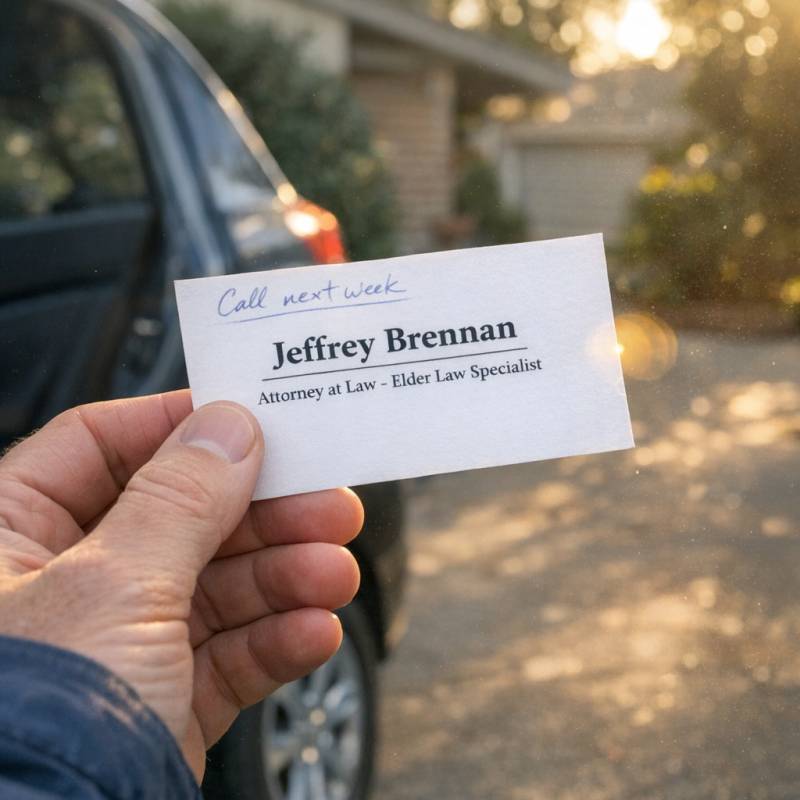 Image by FCT AI
Rebecca's Warning
I needed to talk to someone outside the family. I called Rebecca and asked her to meet me for coffee. I told her everything—the recordings, the money transfers, the doctor's appointment, the lawyer's card. She listened without interrupting, her expression growing darker. When I finished, she pulled out her phone. 'This is going to sound paranoid,' she said, 'but I need you to read something.' She pulled up an article she'd saved from a legal blog. It was about a case in Oregon where an elderly woman had successfully sued her adult children for elder abuse. The woman had recordings, medical documentation, financial records showing her children had isolated her and manipulated her. She'd won. Got a restraining order against her own kids and full control of the family assets. 'The scary part,' Rebecca said, 'is that investigators later found evidence she'd manufactured most of it. But by then, the damage was done.' She looked at me seriously. She said, 'The person won—got control of everything—because they had recordings and documents proving the family was gaslighting them,' and I felt sick.
 Image by FCT AI
The Fake Memory Lapse
The next Sunday, we had dinner at Linda and Gary's house. I was watching her now. Really watching. During dessert, Daniel mentioned a conversation from earlier that afternoon about their summer plans. Linda looked at him blankly. 'What conversation?' she asked. 'Honey, we didn't talk about that.' Daniel insisted. 'Mom, yes we did. You were in the kitchen. You said you wanted to rent a cabin in August.' She shook her head slowly, that confused look spreading across her face. 'I don't remember that at all.' Gary looked concerned. 'Linda, are you feeling okay?' But here's the thing. I'd been in the kitchen too. And after that conversation, I'd watched Linda walk to the dining room and write something in the small notebook she kept by the phone. I'd seen her write 'August cabin rental—D suggested.' She'd documented it. Made notes. And now she was pretending it never happened. She looked at me with such convincing confusion that I almost doubted myself—but I'd seen the notes with my own eyes.
 Image by FCT AI
The Email Chain
Daniel found the emails by accident. He was helping his dad with computer problems—Gary's laptop was running slow—and while clearing old files, he saw a folder labeled 'Legal Correspondence.' Gary had stepped out of the room. Daniel opened it. There were dozens of emails between Linda and Jeffrey Brennan, the attorney from the card. They went back eight months. Daniel forwarded them to himself and deleted the sent message from Gary's computer. We read them together that night. They were careful, formal. Linda describing 'patterns of dismissiveness' and 'concerning family dynamics.' The attorney responding with advice about documentation. Asking questions about financial access. Suggesting she keep detailed records. One email from last month made my hands shake. Brennan had written, 'Continue documenting all family interactions, especially moments of conflict or dismissiveness. Audio recordings are particularly valuable, as are medical records showing stress or cognitive concerns.' Linda had responded: 'Understood. Will maintain detailed logs.' This wasn't paranoia. This wasn't accidental. One line stood out: 'Continue documenting all family interactions, especially moments of conflict or dismissiveness'—this was coordinated.
 Image by FCT AI
The Family Meeting
We met at Marcus's apartment because it felt like the only neutral ground left. Daniel had called him the night we found the emails, and Marcus drove in from Brooklyn the next morning. I'd met Marcus maybe a dozen times over the years—Daniel's younger brother, the graphic designer who'd moved away after college and kept his distance from family drama. But when he walked in that morning, he looked as wrecked as we felt. Daniel showed him the emails. Marcus read them twice, then set the laptop down carefully. 'She did this before,' he said quietly. 'Not to us. To her parents.' We stared at him. He explained that Linda had accused her own parents of financial abuse when he was in high school, that there'd been lawyers and recordings and a whole court case. He'd been too young to understand it then, but Janet had told him years later what really happened. The three of us sat there passing the laptop back and forth, reading Linda's emails to the attorney, and something solidified between us—this weird, grim alliance. Marcus said, 'We need to figure out what she's planning before it's too late'—and we all knew he was right.
 Image by FCT AI
Janet's Confession
Janet came over two days later. I'd never spent time alone with Linda's sister—she lived upstate, visited rarely, always seemed vaguely uncomfortable at family gatherings. But when Daniel called and asked if she'd talk to us, she said yes immediately. She sat at our kitchen table with her hands wrapped around a mug of tea she never drank. 'I should have warned you years ago,' she said. 'I just didn't think she'd do it again.' Then she told us everything. How Linda had spent two years building a case against their parents, claiming they were mentally declining and financially abusing her. How she'd recorded conversations, taken them to doctors' appointments and documented every confused moment, every time they forgot a name or mixed up a date. How she'd found witnesses—neighbors, their accountant, a home health aide—who testified that Linda was the devoted daughter trying to protect her vulnerable parents from their own poor judgment. Janet's voice cracked. She said, 'Linda built a case over two years—recordings, documents, witnesses—and by the end, everyone believed our parents were abusing her.'
 Image by FCT AI
The Consultation
The attorney's office smelled like leather and old paper. Daniel had found her through a colleague—someone who specialized in elder law and family disputes. We brought everything: the emails, Janet's account, the timeline we'd started building. The attorney, a woman in her fifties with sharp eyes and a kind face, listened without interrupting. Then she asked questions. How long had this been going on? What documentation did we have? Had Linda filed anything official yet? We answered as best we could, but with every question I felt the ground shifting under us. Finally, she leaned back in her chair. 'Here's the problem,' she said. 'Everything you're describing is legal. Recording conversations in your own home, keeping detailed notes, consulting an attorney—none of that is actionable. And if she's been doing this for eight months and you're just starting now...' She didn't finish the sentence. She didn't have to. The attorney said, 'If she's building a case like you describe, you're already at a disadvantage—she has months of documentation and you have speculation.'
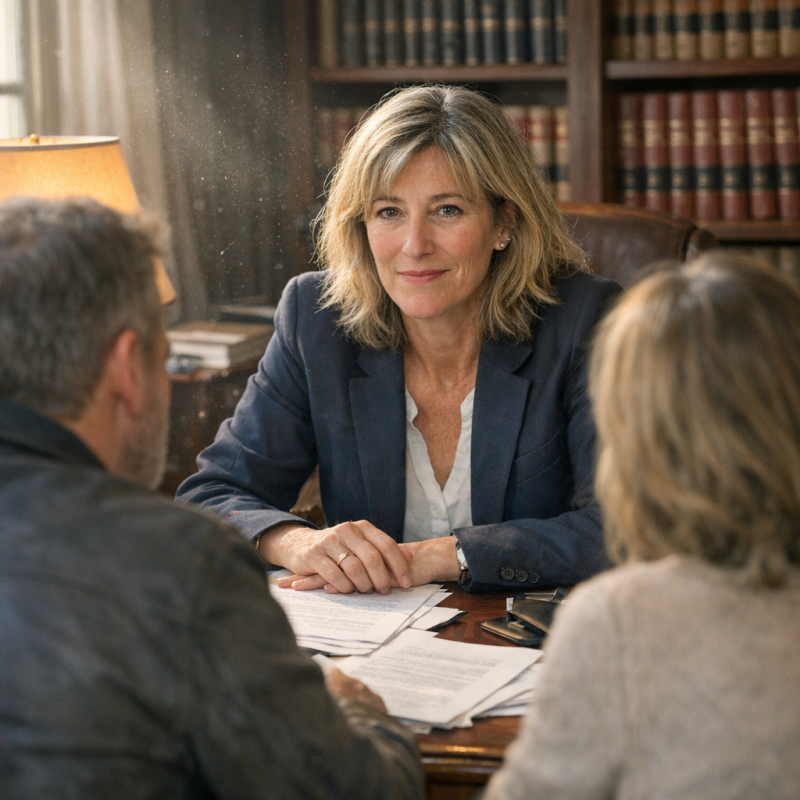 Image by FCT AI
The Setup
Linda called on Thursday and invited us to dinner. Just the four of us—her, Gary, me, and Daniel. 'I feel like we've all been so distant lately,' she said, voice warm and concerned. 'I'd love to reconnect.' Daniel and I exchanged looks. We almost said no. But then we realized this might be our only chance to see what she was actually doing. So we went. Linda was radiant that night—gracious, attentive, asking about our work and our apartment renovation. Gary was quiet, but that wasn't unusual. What was unusual was Linda's phone, sitting face-up on the table beside her water glass. Screen on. I watched her glance at it every few minutes. Then I noticed the red dot in the corner—voice memo, recording. She kept the conversation flowing, asking Gary questions about his childhood, about how he felt about family, about whether he thought children owed their parents respect and care. He answered carefully, looking confused. She kept steering conversations toward topics about respect for elders and family obligation—and I realized she was creating a script.
 Image by FCT AI
Gary's Breakdown
Gary showed up at our apartment alone three days later. I almost didn't recognize him—he looked ten years older, shoulders hunched, hands shaking. Daniel let him in and he just stood in our entryway like he didn't know what to do with himself. 'Is Linda with you?' I asked. He shook his head. Then he started crying. Not quiet tears—full, broken sobbing. Daniel got him to the couch and I brought water he didn't drink. It took twenty minutes before he could talk. When he finally did, everything spilled out. How Linda had been planning this for years. How she'd told him exactly what she was doing—building a case, documenting everything, preparing to prove that Daniel and I were manipulating him, isolating him, taking advantage of his age and his money. How she'd promised that if he helped her, if he played along and backed up her version of events, she'd take care of him. But if he didn't... He sobbed and said, 'If I don't help her, she'll do to me what she did to her parents—and I'll end up with nothing.'
 Image by FCT AI
The Timeline Reconstruction
I couldn't sleep that night, so I did what I always do when my brain won't shut off—I made a spreadsheet. Every incident, every weird comment, every strange behavior from Linda over the past eight months. The Colosseum comment—documented. The museum meltdown—documented. The pharmacy recordings—documented. Her sudden interest in Gary's health, her comments about how stressful our jobs must be, her suggestions that we were 'demanding' too much of Gary's time and energy—all documented. I color-coded them: red for public incidents, blue for comments about family dynamics, green for anything involving Gary's wellbeing or finances. The pattern was so clear it made me nauseous. Every single incident had witnesses. Every comment about our 'treatment' of Gary had occurred when someone else was present or when Linda's phone was conveniently nearby. The escalation was methodical—starting with seemingly innocent confusion, building to emotional outbursts, always with documentation. Looking at it all laid out, I could see the pattern—months of manufactured chaos, all carefully documented—but I still didn't know what the final move would be.
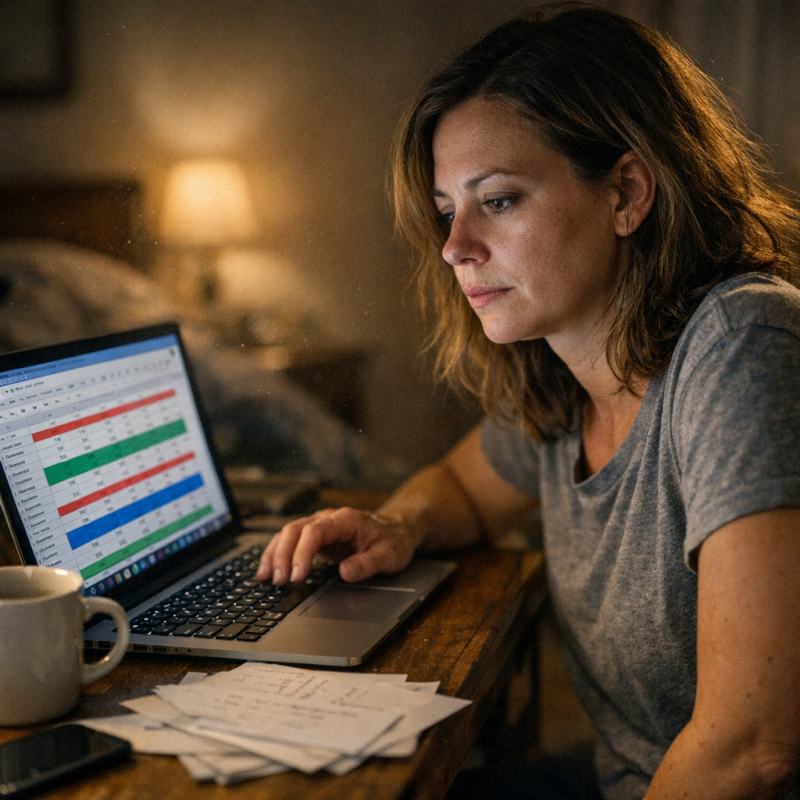 Image by FCT AI
The Discovered File
Daniel went to his parents' house while Linda was at her book club. Gary had given him the spare key and the password to Linda's computer—a final act of defiance, or maybe just exhaustion. He found the file in less than ten minutes. It was labeled 'Family Documentation Project,' and it was massive. Hundreds of pages of typed notes, transcripts of recordings, photographs, medical records. There were files for each of us—me, Daniel, Marcus, even Gary. Detailed logs of every interaction, every conversation, annotated with Linda's commentary about tone, intent, implications. There were emails to witnesses, drafted testimonials, research on elder abuse statutes. And there, at the bottom of the folder, was a document dated for next week. Daniel photographed everything and came home shaking. We opened the final document on our laptop together, and I had to read it three times before it sank in. The last document was dated for next week—it was a petition for guardianship, claiming Gary was being financially exploited and emotionally abused by his own children.
 Image by FCT AI
The Truth Revealed
We drove to their house the next morning. Linda answered the door in yoga pants and a soft sweater, looking serene. 'What a nice surprise,' she said. We didn't wait for her to invite us in. Daniel pulled out his phone and showed her the photographs of her files. Her expression didn't change at all—and somehow that was more terrifying than anything else. She looked at the screen, then at us, and smiled. 'Come in,' she said. 'We should talk.' We sat in her pristine living room and she didn't even pretend anymore. She explained it like she was describing a recipe—how she'd spent eight months building a legal case for elder abuse. How every absurd comment, every public meltdown, every recording was carefully designed to show Gary being manipulated by his ungrateful children while she, the devoted wife, tried desperately to protect him. How she'd position herself as the vulnerable victim of family exploitation, the only one who truly cared about Gary's wellbeing. How a judge would see months of documented abuse and have no choice but to grant her guardianship of Gary and his assets. She smiled and said, 'You think you're the first to figure it out? It doesn't matter—I have everything I need, and who do you think a judge will believe?'
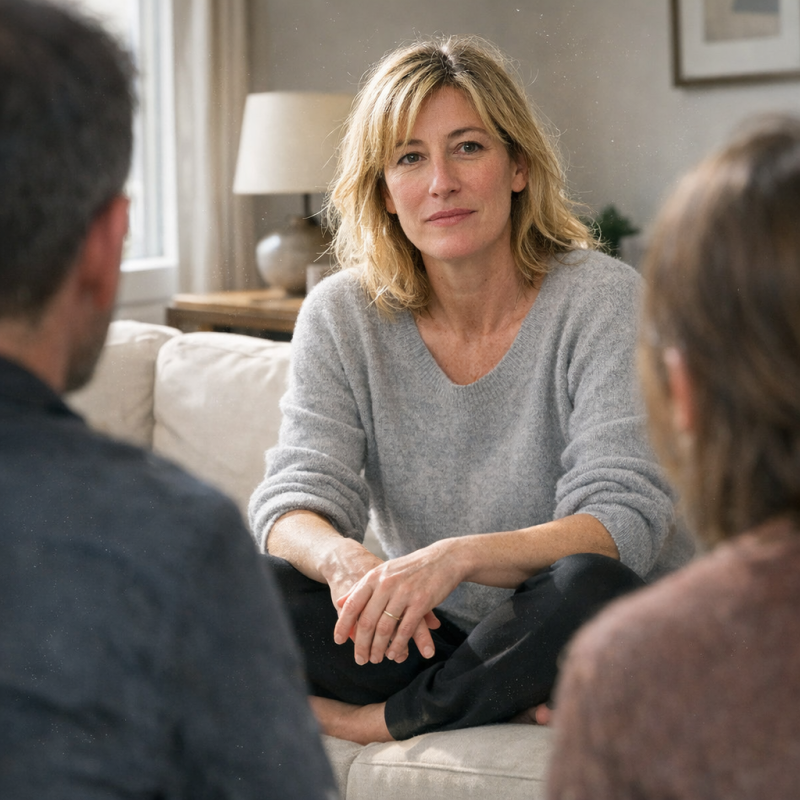 Image by FCT AI
The Evidence Review
We sat in our attorney's office with everything spread across the conference table—printed emails, screenshots of Linda's files, transcripts of her recordings. Our attorney, Sarah, went through it piece by piece, her expression growing darker with each document. 'This is incredibly sophisticated,' she said, tapping a timeline Linda had created. 'She's documented eight months of alleged incidents, all time-stamped, all with corroborating photos or recordings.' Daniel leaned forward. 'But it's all manufactured.' Sarah nodded. 'I know. But look at how carefully she's built the narrative. Every public incident positions Gary as confused and Daniel as controlling. Every recording has her trying to de-escalate while you appear confrontational.' I felt sick watching her analyze it. Linda had thought of everything—witness statements from strangers who'd seen her 'upset' at restaurants, medical appointment summaries showing Gary's 'cognitive concerns,' financial records she'd manipulated to show suspicious transactions. 'She even has character references lined up,' Sarah said, showing us letters from Linda's yoga instructor and book club friends. My hands were shaking. This wasn't just some angry mother-in-law lashing out. The attorney said, 'She's been planning this for over a year—this isn't amateur hour, she knows exactly what she's doing.'
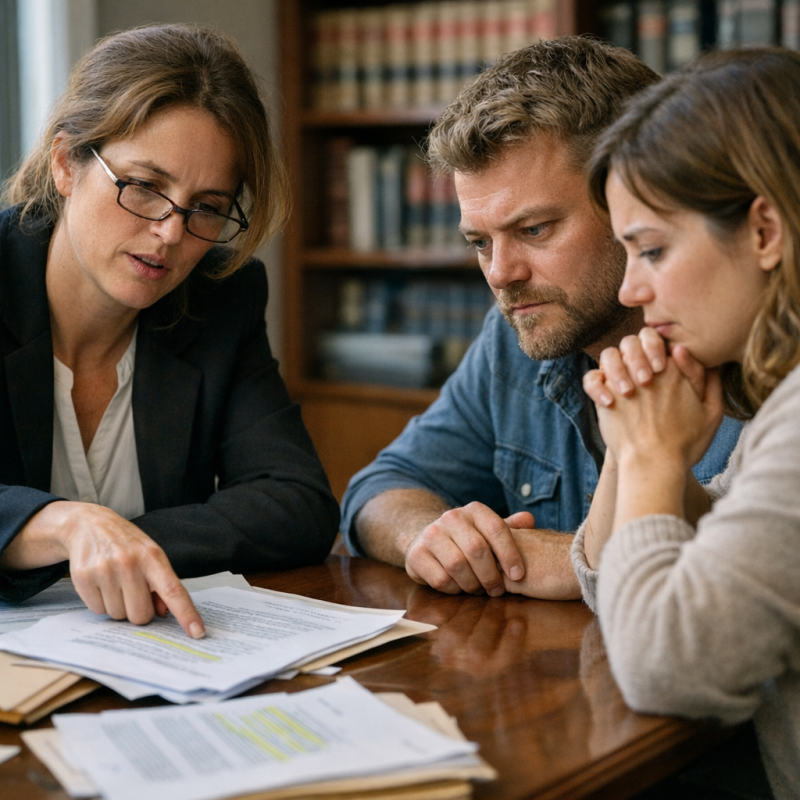 Image by FCT AI
The Counter-Strategy
Sarah pulled out a legal pad and started making lists. 'Okay, here's what we do. We need our own documentation, our own timeline, our own witnesses.' She looked at us seriously. 'Can you get Gary to talk on record? About what she's been doing, how she's coached him, the truth about their relationship?' Daniel nodded immediately. 'I think so. He's been waiting for someone to ask.' We spent the next two hours planning our counter-strategy. Sarah wanted medical records showing Gary's actual cognitive function—completely normal for his age. She wanted witnesses who could testify to Linda's manipulative behavior. She wanted every piece of evidence we had about her scheme, properly documented and notarized. 'The key advantage we have,' Sarah said, checking her watch, 'is that Linda doesn't know you've figured it out. She thinks you're still reacting emotionally, not building a legal defense.' I thought about Linda's smug smile in her living room. 'How long do we have?' Sarah's expression turned grim. 'Hard to say. She could file the guardianship petition any day now. Once she does, we're playing defense.' Our attorney said, 'We have one advantage—she doesn't know you know—so we need to move fast before she files.'
 Image by FCT AI
The Recording Session
Daniel met Gary at a coffee shop the next morning, and I came separately to avoid suspicion. Gary looked smaller somehow, hunched over his coffee cup like he was trying to disappear. Daniel had a small recorder in his jacket pocket—legal in our state as long as one party knew. 'Dad,' Daniel said gently, 'I need you to tell me the truth about Mom. All of it.' And Gary just—broke. He started talking and couldn't stop. He told us about how Linda had isolated him from friends over the years, how she monitored his phone calls, how she'd convinced him his memory was failing when it wasn't. 'She rehearses conversations with me,' he said, his voice barely above a whisper. 'She tells me what happened, what I said, until I believe her version instead of mine.' My throat tightened. Twenty years of this. 'She said if I ever tried to leave, she'd make sure everyone knew I was senile. That I'd end up in a home.' Daniel reached across the table. 'Dad, we're not going to let that happen.' Gary looked at us with tears in his eyes. Gary's voice shook as he said, 'I've been her prisoner for twenty years,' and I finally understood the depth of what we were fighting.
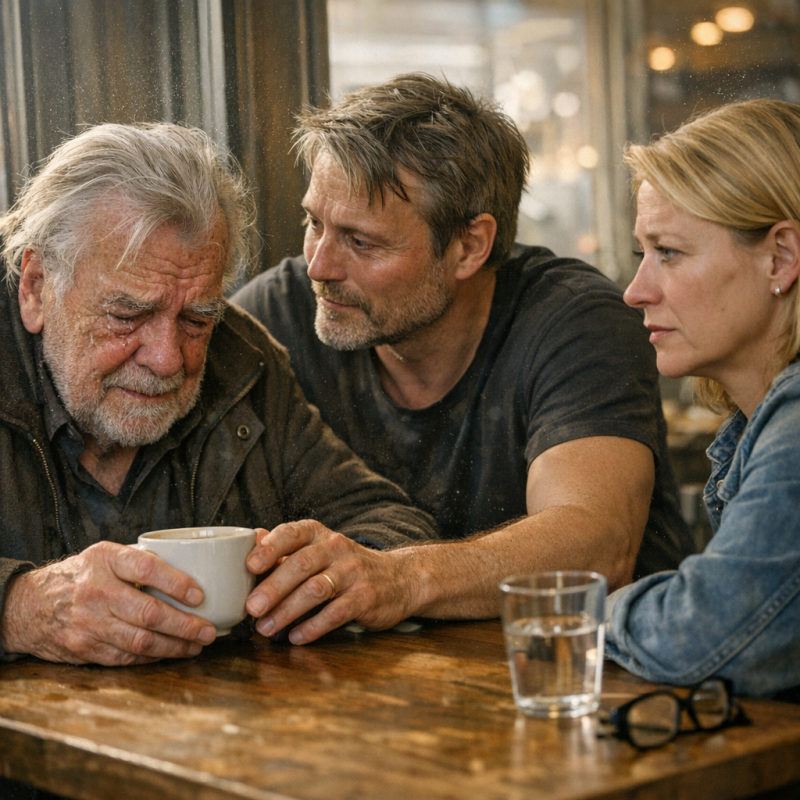 Image by FCT AI
The Confrontation at the Attorney's Office
Sarah called us two days later. 'Linda just scheduled an appointment with her attorney for tomorrow at two. I'm guessing that's when she's filing.' We'd been preparing for this. Sarah had arranged for us to be in a conference room at the same law office—different attorney, same building. When Linda walked in with her lawyer, we were already sitting there with Gary, Sarah, and Officer Chen, who'd agreed to be present as a witness. The look on Linda's face—God, I'll never forget it. For just a second, her mask slipped completely. I saw rage, then calculation, then something like panic flash across her features. Then just as quickly, she rearranged her expression into devastated shock. Her hand went to her throat. Her eyes filled with tears. She turned to her attorney, voice breaking. 'They—they ambushed me. I came here to protect my husband and they—' She gestured at Gary like he was being held hostage. Her attorney looked confused, glancing between our group and his client. Gary sat perfectly still, but I could see his hands trembling. Linda's performance was flawless—the wounded wife, the devoted partner betrayed by her ungrateful family. When she saw us sitting there, her face went completely blank—and then she turned to her attorney and started crying, claiming we'd ambushed her.
 Image by FCT AI
The Evidence Presentation
Sarah slid a folder across the conference table toward Linda's attorney. 'Before your client files anything, I think you should review this.' He opened it slowly, and I watched his expression change as he read. Page after page of evidence—screenshots of Linda's own files detailing her scheme, the timeline of manufactured incidents, witness statements from people she'd manipulated. Sarah had organized everything chronologically with tabs and annotations. 'We also have recorded testimony from Gary Mitchell,' Sarah continued, 'in which he describes twenty years of coercion, isolation, and psychological manipulation.' Linda was still crying, shaking her head. 'This is insane. They've fabricated—' But her attorney held up a hand, still reading. He got to the medical records showing Gary's normal cognitive function. Then the emails Linda had sent planning specific incidents. Then Gary's statement. I watched the color drain from his face. He leaned over to Linda, and they had a whispered conversation I couldn't hear. But I saw her jaw clench, saw her hands grip the armrest of her chair. Whatever he said, it wasn't what she wanted to hear. Linda's attorney went pale as he read through the documents, and I saw him lean over and whisper something to her—something that made her jaw clench.
 Image by FCT AI
Linda's Last Performance
Linda stood up slowly, dabbing at her eyes with a tissue. When she spoke, her voice was trembling but somehow still controlled. 'I have devoted my entire adult life to this family,' she said, looking at each of us. 'I have sacrificed everything for Gary, for Daniel. And this is how you repay me? With accusations and lies?' It was a beautiful performance, honestly. Even knowing everything, part of me almost believed the pain in her voice. 'You've turned my own husband against me. You've twisted everything I've done out of love into something ugly.' Her attorney touched her arm. 'Linda, we need to talk privately.' She ignored him. 'I came here today to protect Gary from exploitation, and instead I find myself attacked—' 'Mrs. Mitchell,' her attorney said more firmly. 'I strongly advise you to withdraw the petition.' The room went silent. Linda stood there, tissue in hand, tears on her cheeks—but her eyes were completely cold. She looked at Gary, then Daniel, then me. The hatred in that look was so pure and undisguised that I physically stepped backward. Then her expression shifted again and she smiled. She looked at each of us with such hatred that I took a step back—and then she smiled and said, 'This isn't over.'
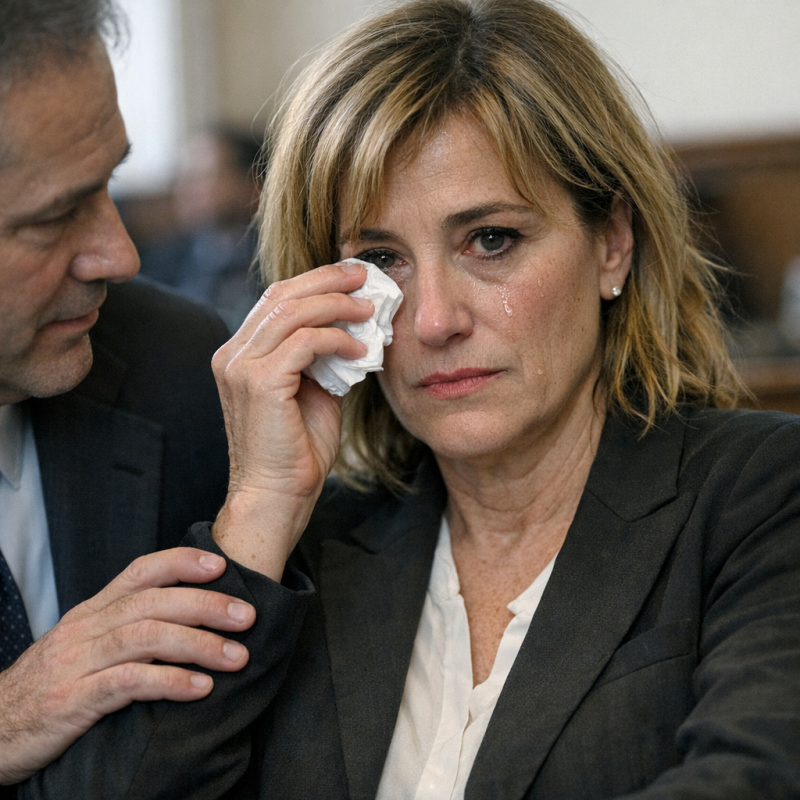 Image by FCT AI
The Restraining Order
Gary filed for the restraining order the next day. We sat in family court while his attorney—Sarah had referred him to a specialist—presented the evidence of Linda's pattern of coercive control. Linda showed up perfectly dressed, perfectly composed, with her own lawyer. She didn't make a scene. She didn't cry or protest. She just sat there, back straight, watching the proceedings like she was observing something mildly interesting. The judge reviewed Gary's testimony, the recordings, the documented timeline. He asked Gary directly if he felt safe. Gary's voice was steady when he said, 'No, Your Honor. I don't.' The judge granted a temporary restraining order—Linda had to stay at least 500 feet away from Gary, couldn't contact him directly, couldn't access their joint accounts until the divorce proceedings were complete. When the decision was read, Linda stood up smoothly, collected her purse, and walked toward the exit. She didn't look at Gary. Didn't look at any of us. Just walked out with her head high, her lawyer hurrying after her. Daniel squeezed my hand. 'It's over,' he whispered. But I was watching Linda's back disappear through the courtroom doors. When the judge granted the order, Linda stood up and walked out without a word—but I knew this was just the beginning of a different kind of war.
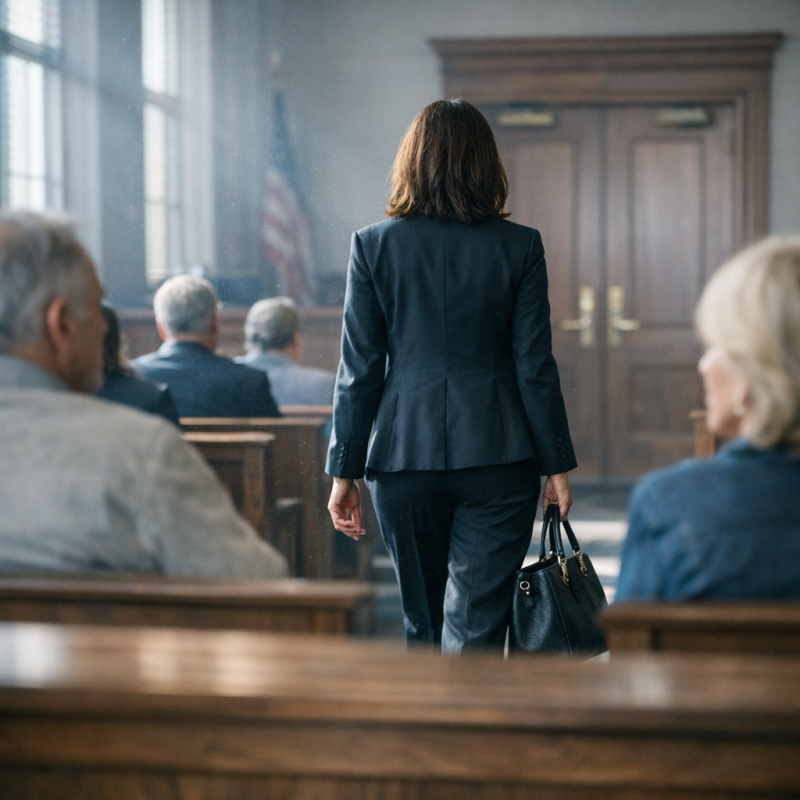 Image by FCT AI
The Aftermath Documents
The first letter arrived three days later. It was from Linda's attorney, typed on official letterhead, demanding we cease and desist from making 'defamatory statements' about his client. It threatened legal action for emotional distress, reputational damage, and harassment. I called Sarah immediately. 'It's a scare tactic,' she said calmly. 'She has no case. You've made no public statements, and everything you've said to authorities is protected.' But two days later, another letter came. This one demanded we retract 'false allegations' made during the restraining order hearing. Then another, claiming Gary had been coerced into testifying against her. Then one threatening to sue Daniel's employer for allowing him time off to participate in elder abuse. They were all baseless—Sarah confirmed that over and over. But they kept coming, each one finding some new angle, some new threat. It was exhausting. Every time I opened the mailbox, my stomach dropped. Every time my phone rang, I worried it was another legal threat. Linda couldn't contact us directly because of the restraining order, but she'd found another way to make her presence felt. Our attorney said, 'She's trying to intimidate you, but legally she has no case'—still, the letters kept coming, one every few days.
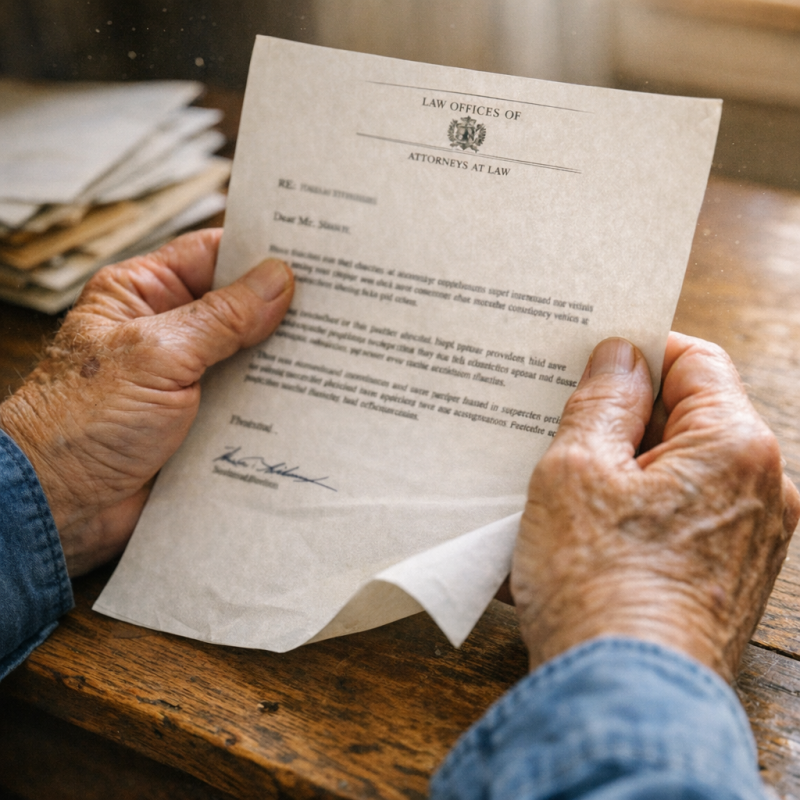 Image by FCT AI
The Final Move
Daniel called me from work, his voice shaking. 'She's here. She's in the lobby.' I could hear the panic rising as he explained—Linda had shown up claiming there was a family emergency, demanding to see him immediately. Security had stopped her at the front desk, but she was refusing to leave. I told him to stay calm, to remind security about the restraining order. When I got there twenty minutes later, she was still in the lobby, perfectly composed in a cream blazer, talking to the security guard like they were old friends. The moment she saw me, her expression shifted—just for a second, something cold and calculating flickered across her face. Then she turned back to her performance, dabbing at her eyes with a tissue. Security escorted her out while she protested loudly about being treated like a criminal, about a mother's right to see her son. Daniel stood frozen by the elevators, watching the whole thing unfold. As security escorted her out, she looked back at Daniel and mouthed something—and even though I couldn't hear it, I knew she'd said, 'I'll wait.'
 Image by FCT AI
Rebuilding Trust
We started therapy the following week. Dr. Patel's office was small and comfortable, with plants on the windowsill and soft lighting that made it easier to talk about hard things. Daniel sat beside me on the couch, his knee bouncing nervously as we explained everything—the letters, the workplace incident, the constant feeling of being watched. Dr. Patel listened without judgment, occasionally taking notes. 'What you've experienced is a specific form of psychological abuse,' he said gently. 'Recovery isn't linear. Some days will feel harder than others.' We talked about boundaries, about rebuilding our sense of safety, about learning to trust our instincts again. Daniel admitted he still felt guilty sometimes, like he'd betrayed his mother. I admitted I still checked the locks three times before bed. Dr. Patel nodded like these were the most normal things in the world. By the end of the session, something had shifted—not fixed, but lighter. Dr. Patel said healing would take time, but at least now we could start—and I finally believed him.
 Image by FCT AI
Gary's New Life
Gary moved into a one-bedroom apartment in a quiet neighborhood across town. When I visited for the first time, I barely recognized the place—or him. He'd hung photos on the walls, pictures from before Linda, friends I'd never met. There were books on the shelves, actual books he'd chosen himself. He'd joined a community center and reconnected with his old college roommate. We sat at his small kitchen table drinking coffee, and he told me about his week—a woodworking class he'd signed up for, a dinner with neighbors, simple things that felt revolutionary. 'I forgot what it felt like to make my own decisions,' he said, his voice thick with emotion. 'To not second-guess everything.' He showed me the coffee table he was building, running his hand over the smooth wood with pride. There was color in his face now, a lightness in his movements. He told me, 'I forgot what it felt like to breathe,' and for the first time in years, I saw him smile—really smile.
 Image by FCT AI
The Lesson Learned
Looking back now, I can see how it all happened so gradually—the small comments that eroded Daniel's confidence, the way Linda positioned herself as the reasonable one while making us feel crazy. I've learned that the most dangerous manipulation isn't always obvious. It doesn't announce itself. It slips in quietly, making you question whether you're overreacting, whether you're the problem. We're doing better now. Daniel and I have rebuilt something stronger, something that doesn't crumble at the first sign of pressure. Gary's thriving in his new life. The restraining order is still in place. Linda's attorney stopped sending letters months ago. But I'd be lying if I said we've completely moved on. I still tense up when I see a woman with silver hair in a grocery store. I still double-check that our address isn't listed anywhere public. Sometimes that vigilance feels exhausting, but it also feels necessary. I still check my phone sometimes, expecting to see her name—but now I know that the best revenge isn't confrontation, it's freedom, and we finally have ours.
 Image by FCT AI