The Accident Report
I'd been avoiding it, if I'm honest. Looking up the details felt invasive somehow, like reading someone's diary. But after that email, I needed to understand. Public records requests aren't difficult when you know what you're looking for, and workplace fatalities get investigated thoroughly. The accident report for David Chen arrived as a PDF three days later. I read it at my kitchen table, late evening, laptop screen glowing in the dim light. Commercial electrical work on a renovation project. An energized panel that should have been locked out. Inadequate personal protective equipment. The language was clinical, bureaucratic—'victim made contact with live conductors' and 'fatal electrical shock.' But between the sterile phrases, I could see what had actually happened. A man, Maya's father, doing his job. A series of small oversights, easily preventable mistakes. The kind of thing my presentations were supposed to prevent. And then, near the end of the report, one line that made me feel sick: 'Contributing factors include lack of awareness of proper safety protocols and insufficient lockout/tagout procedures.' The report cited 'lack of awareness of proper safety protocols' as a contributing factor.
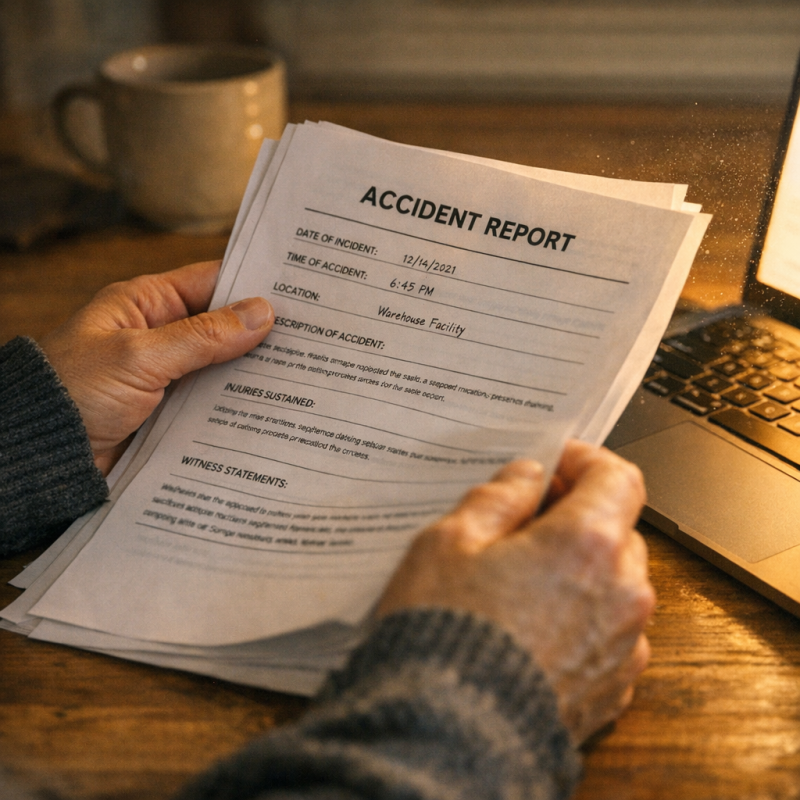 Image by FCT AI
What She Must Have Felt
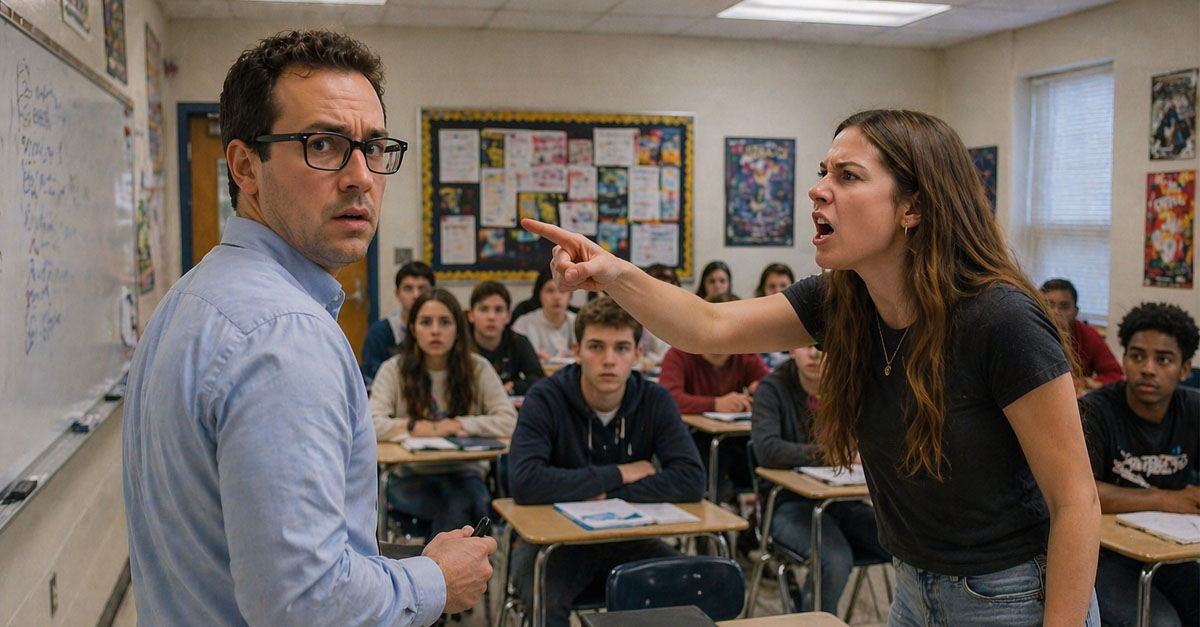
I kept thinking about that first assembly. The one where Maya had stood up and called me a liar. What must it have been like for her, sitting in that auditorium? Listening to me talk about electrical safety with my casual confidence, my statistics, my generic warnings about things that could happen. Watching me treat her father's death as an abstract possibility instead of a devastating reality. I'd been performing, essentially. Making sure I hit all the required points, kept the students' attention, finished on time. Meanwhile, she'd been sitting there knowing—really knowing—what happens when those protocols fail. She'd lived through the aftermath. The phone call, the hospital, the funeral. Whatever came after. And I'd stood at the front of that room acting like I understood, like my presentations mattered, like I cared. When really, I'd just been going through the motions. No wonder she'd been angry. No wonder she'd wanted to disrupt everything, to make me actually feel something. And suddenly her anger—and her determination—made a kind of terrible sense.
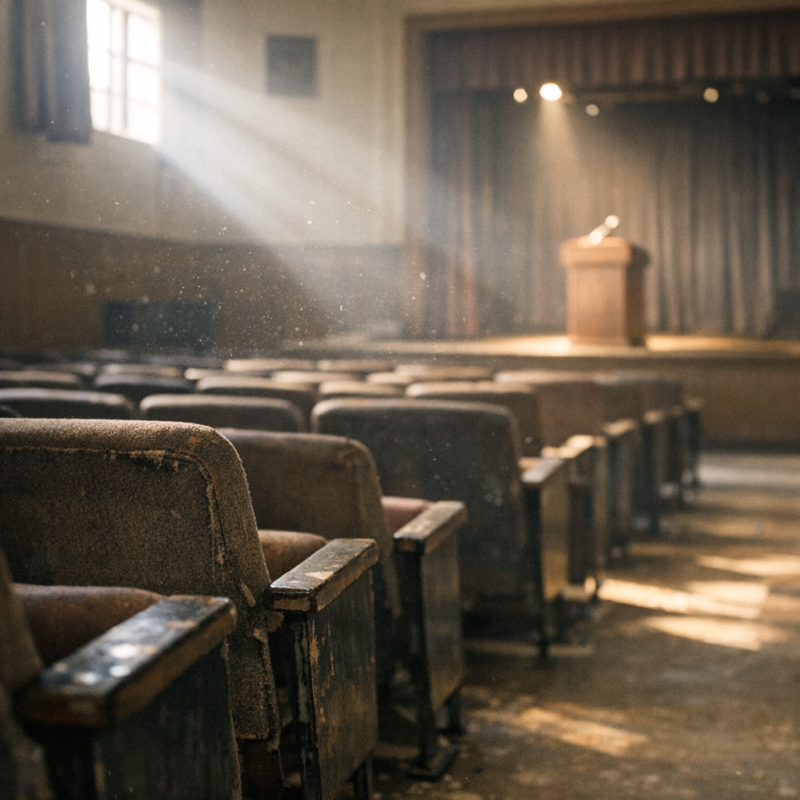 Image by FCT AI
The Presentation She Wanted
I went back through my notes from all those conversations with Maya. Every question she'd asked, every 'correction' she'd insisted on, every time she'd pushed back on my generic examples. And I started to see a pattern I'd missed before. When she'd wanted me to use specific scenarios instead of vague warnings—that made the dangers concrete, real, easier to remember. When she'd questioned my statistics—that forced me to actually understand the data, not just recite it. When she'd insisted on explaining the 'why' behind each safety rule—that gave students a reason to care, not just a rule to forget. She'd systematically pushed me to make every presentation more emotionally engaging, more memorable, more likely to actually stick with students after they left the auditorium. Every single change she'd suggested had made me a better educator. I'd thought she was trying to embarrass me, to catch me in mistakes, to prove I didn't know what I was talking about. But she hadn't been focused on me at all. She'd been focused on them—on the students who might someday work with electricity, who might face the same choices her father had faced. She hadn't been trying to sabotage me—she'd been trying to save the next person.
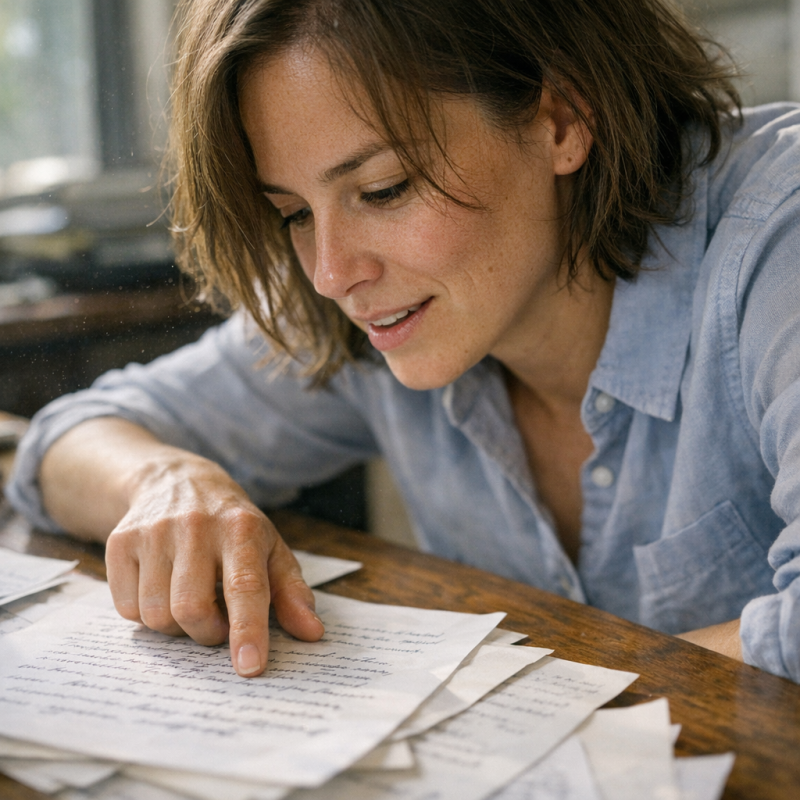 Image by FCT AI
Why Confrontation Works
I fell down a research rabbit hole that night. Educational psychology, memory formation, the neuroscience of learning. Turns out there's solid science behind what makes information stick in people's minds versus what gets forgotten the moment they leave the room. And emotionally charged moments? Those create significantly stronger memory retention than neutral presentation of facts. Conflict, surprise, personal challenge—these things trigger deeper cognitive processing. Students don't remember the smooth presentations. They remember the disruptions, the moments that made them uncomfortable, the times when something unexpected happened. I found study after study confirming it. The research was clear: we remember what makes us feel something. Maya had somehow understood this—or maybe she'd just intuitively known that my forgettable presentations weren't good enough. So she'd created conflict. Made the presentations uncomfortable. Turned each session into an event that students would actually remember weeks or months later when they encountered a dangerous situation. She'd used me, essentially. Made me the antagonist in a drama that would stick in students' minds. Maya had turned my presentation into something unforgettable—by making me part of the conflict.
 Image by FCT AI
Testing the Theory
I needed to know if it had actually worked. So I designed a simple survey and sent it to students who'd attended that first presentation—the chaotic one where Maya had called me a liar. Just basic questions about what they remembered. The responses started coming back within hours, and I sat at my desk reading them with growing astonishment. 'I remember the girl who kept challenging you.' 'You talked about lockout/tagout procedures—I remember because of the argument about whether you'd actually done electrical work.' 'The GFCI demonstration was memorable because someone questioned whether you were qualified to teach it.' Question after question, they could recite the key safety rules. Not because I'd presented them well, but because Maya had made sure the entire experience was impossible to forget. Students from presentations I'd done months earlier often couldn't tell me a single specific safety protocol. But these students? They remembered everything. One wrote: 'Honestly, I remember that presentation better than any other assembly this year. The disruption made it feel important.' Every single one could recite the key safety rules—and most of them mentioned the disruption specifically.
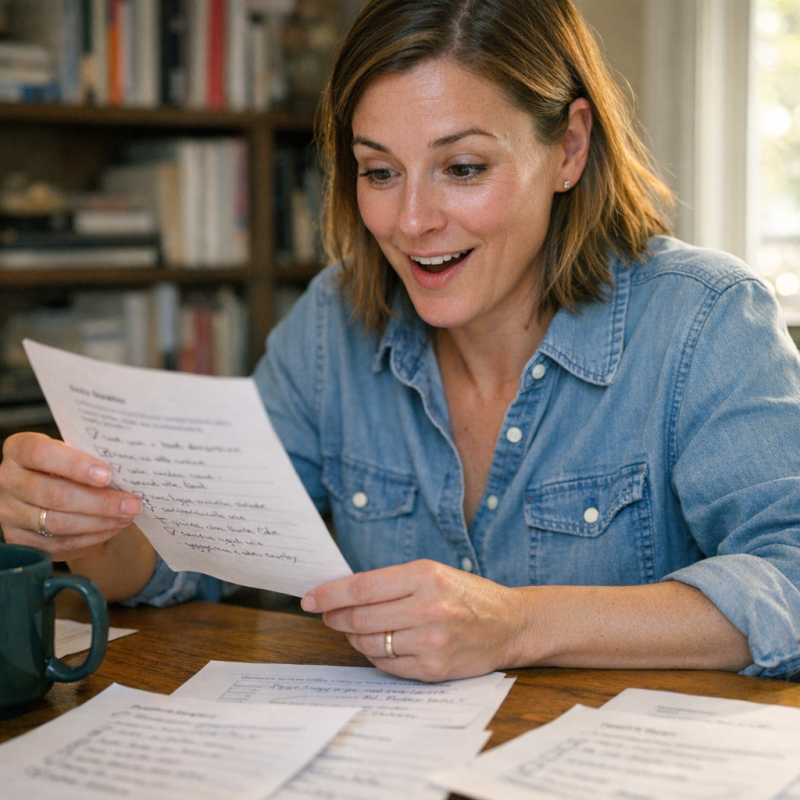 Image by FCT AI
The Question I Needed to Ask
I stared at the survey results for a long time. Then I picked up my phone and called the number Carol had given me months ago. She answered on the second ring. 'Mr. Brennan,' she said, like she'd been expecting this. 'I need to talk to Maya,' I said. 'About everything. About what she's been doing, why she's been doing it. I think I finally understand, but I need to hear it from her.' There was a pause on the other end. Then Carol's voice, quieter now: 'She's been waiting for you to figure it out.' 'What do you mean?' 'Maya told me weeks ago that if you were worth it, you'd eventually understand. That you'd stop being defensive and start seeing what she was actually trying to accomplish.' Another pause. 'She's been very patient with you, Mr. Brennan.' My throat felt tight. 'Can I meet with her? Properly, I mean. Not at a presentation.' 'I think that would be good,' Carol said. 'She has things she wants to tell you. Things she's been waiting to say until you were ready to really listen.' But when I called her mother to request a meeting, Carol said Maya had been waiting for me to figure it out on my own.
 Image by FCT AI
Meeting at the Memorial
The memorial bench was tucked into a corner of the park I'd never noticed before, under a maple tree that probably looked beautiful in autumn. It had a small brass plaque that read 'In Memory of Thomas Chen, 1978-2021, Beloved Father and Friend.' I got there ten minutes early, which felt important somehow, like being on time for a job interview or a first date. But Maya was already sitting there, completely still, wearing a gray hoodie despite the warmth of the day. She had something on her lap—a thick book or manual of some kind. When she heard my footsteps on the path, she looked up, and I saw something in her expression I'd never seen before. Not defiance or anger or even that calculating intelligence. Just exhaustion, maybe, or relief. 'Mr. Brennan,' she said quietly. 'Thanks for coming.' I sat down beside her, leaving a respectful distance between us. Neither of us spoke for a moment. Then she lifted the thing on her lap so I could see the cover. When I arrived, she was already there—and she had her father's old electrical safety manual with her.
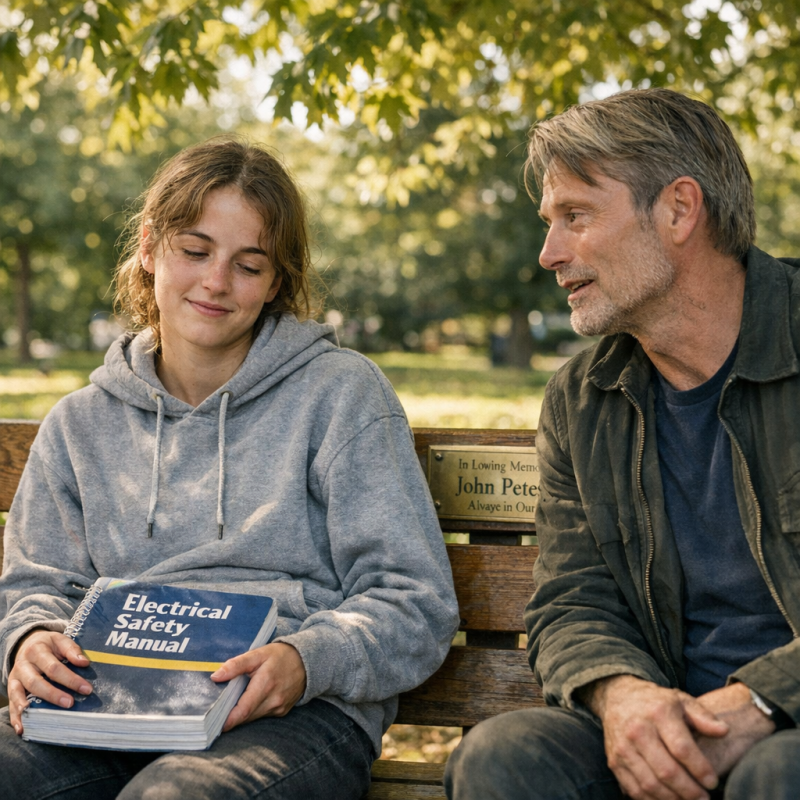 Image by FCT AI
Her Father's Manual
The manual was worn, the kind of worn that comes from actual use, not just sitting on a shelf. The cover was faded blue with white lettering: 'Electrical Safety Standards and Procedures, 2019 Edition.' Maya opened it carefully, like it was something precious and fragile. Every page I could see had handwritten notes in the margins—neat, precise handwriting in blue ink. 'He studied this for work,' Maya said, her voice barely above a whisper. 'He was trying to get his electrician's license. He took it really seriously.' She flipped through the pages slowly, and I could see where her father had underlined passages, drawn arrows, added little exclamation points next to particularly important information. It wasn't just studying—it was someone who genuinely cared about understanding the material. Then she stopped on a page about downed power lines and outdoor hazards. There, in the margin, in that same careful handwriting, was a note that made my chest tighten. On the page about downed power lines, he'd written: 'This stuff could save lives if anyone paid attention.'
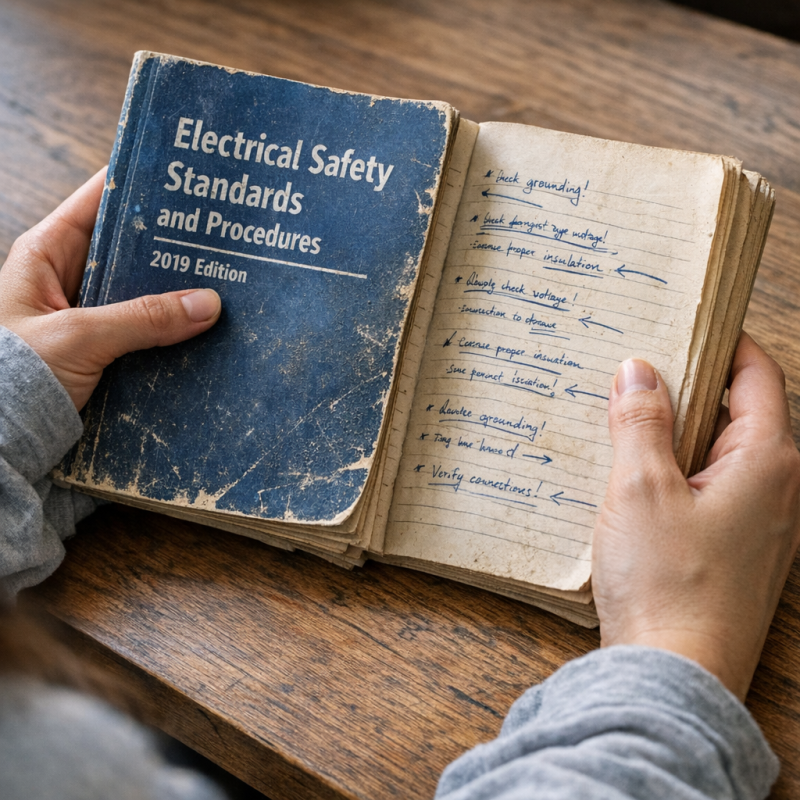 Image by FCT AI
What She'd Been Planning
Maya kept the manual open to that page, her finger resting on her father's words. 'After he passed, I found this in his workshop,' she said. 'I read the whole thing. Every page he'd marked, every note he'd made. And then I started researching.' She looked at me directly now. 'I spent months reading about educational psychology, about how people actually learn and retain information. About what makes teaching effective versus what just feels like teaching.' I realized I'd been holding my breath. 'I learned about emotional arousal and memory formation,' she continued. 'About the difference between passive listening and active engagement. About how conflict and surprise and even embarrassment can make information stick in ways that polite lectures never do.' Her voice was steady, clinical almost, like she was reciting research findings. 'I read studies about workplace safety training and why so much of it fails. Why people sit through presentations and then go out and make the exact same mistakes.' She closed the manual carefully. She'd known exactly what she was doing in that classroom—every word had been deliberate.
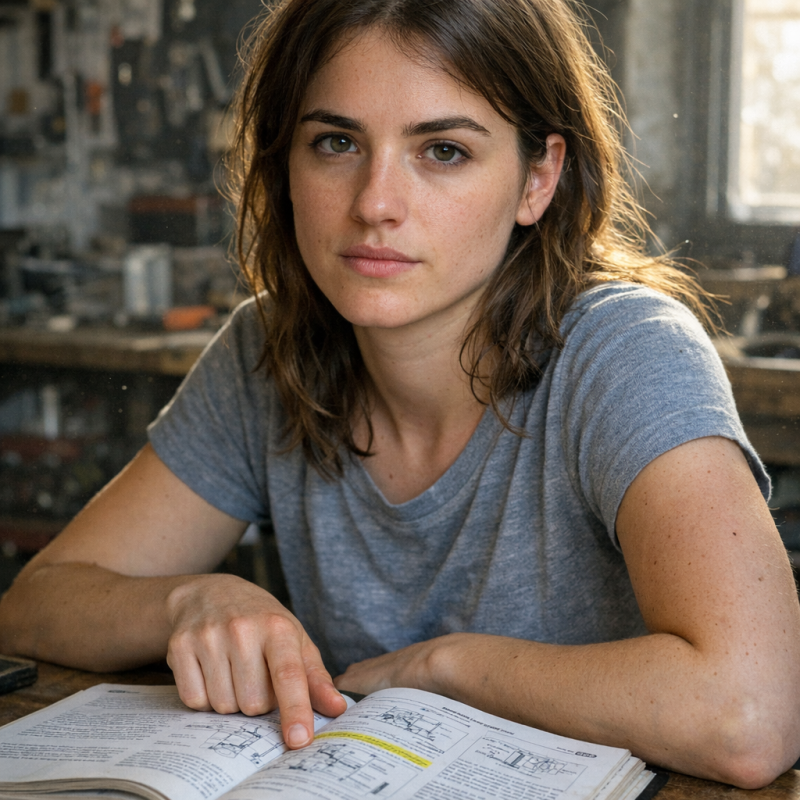 Image by FCT AI
The Cousin Was Fake
I stared at her. 'The cousin,' I said. 'The one building the shed.' Maya's expression didn't change. 'There is no cousin,' she confirmed. 'I made him up. I needed a relatable authority figure—someone the other students would identify with more than a safety expert. Someone who sounded confident but wrong.' She shifted on the bench. 'People remember arguments better than facts. They remember when someone challenges something they thought they knew. If I'd just asked polite questions, you would have answered politely, and everyone would have forgotten everything by the next day.' My mind was racing back through that presentation, seeing it all differently now. 'But if I created controversy,' Maya continued, 'if I made you defend your position, made the other students pick sides, made everyone feel something about electrical safety instead of just hearing about it...' She trailed off. 'That's what I needed. Not agreement. Engagement.' I felt like I'd been running a race I hadn't known I was in. She said real people remember arguments better than lectures—and she'd needed me to argue.
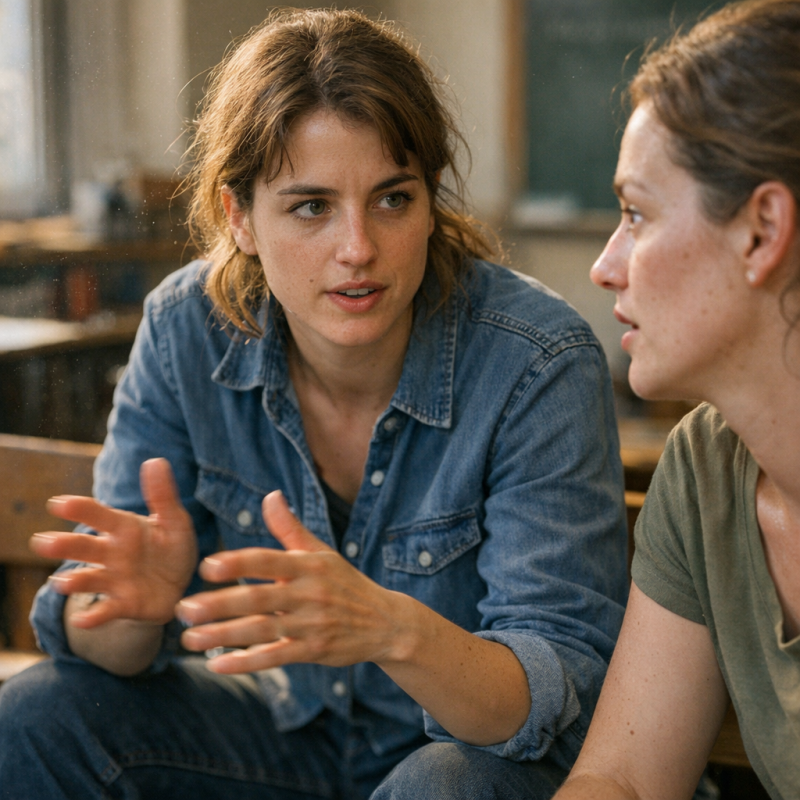 Image by FCT AI
Why She Called Me a Liar
Maya pulled her sleeves down over her hands, like she was cold despite the weather. 'The word liar was calculated too,' she said quietly. 'I'm sorry if it hurt you, but confrontational language creates emotional arousal. When you feel something strong—anger, embarrassment, surprise—your brain pays attention differently. It forms stronger memories.' She looked at the manual again. 'I could have politely disagreed with you. Could have raised my hand and said, 'Actually, I think there might be some additional considerations.' But everyone would have tuned out. You would have given me a nice answer, and we'd have moved on, and nobody would have remembered anything.' Her jaw tightened slightly. 'But if I called you a liar in front of everyone, if I made it uncomfortable and tense and weird—that's when people start paying attention. That's when information actually sticks.' I thought about the survey results, about how many students had remembered the power line discussion specifically. 'You needed us to feel something,' I said slowly. She'd called me a liar because she needed the entire class to feel something—anything—about electrical safety.
 Image by FCT AI
The Statistics She'd Memorized
Maya straightened up on the bench, and suddenly she sounded different—like she was giving a presentation of her own. 'In 2020, there were approximately 126 workplace fatalities from electrical exposure in the United States,' she said. 'Studies show that up to seventy percent of electrical accidents could be prevented with proper training and adherence to safety protocols.' She wasn't reading from anything. This was memorized. 'The most common causes of electrical fatalities are contact with overhead power lines, improper use of extension cords, and failure to de-energize equipment before maintenance. The average age of victims is thirty-four. Many of them had received some form of safety training.' Her voice wavered slightly on that last part. 'Most electrical accidents happen because people either didn't know the correct procedure or they knew it but didn't take it seriously enough in the moment. They thought they'd be careful. They thought they'd be quick. They thought it would probably be fine.' She turned to face me fully. Then she looked at me and said: 'My dad is in those statistics. I don't want anyone else to be.'
 Image by FCT AI
The Night Before the Presentation
I didn't know what to say, so I just listened as Maya kept talking. 'The night before your presentation, I barely slept,' she said. 'I practiced what I'd say, how I'd say it. I timed my interventions—waited until you were confident, until the class was settling into passive listening mode, and then disrupted it.' She gave a small, sad smile. 'I knew I'd have to sound confident enough to be taken seriously but wrong enough that you'd correct me. I had to make you think I was being difficult without making you shut down completely.' The sophistication of it was staggering. 'I even prepared for different responses you might have,' she continued. 'If you'd gotten really angry, I had a backup plan. If you'd dismissed me immediately, I would have pushed harder. I was ready to adapt.' She looked down at her hands. 'And I planned for you to laugh at me, actually. I figured you would—most adults do when teenagers challenge them. And I knew that would make you feel guilty afterward, would make you think about me more, take the whole thing more seriously.' She'd even planned for me to laugh—because she knew I'd feel guilty afterward and take it more seriously.
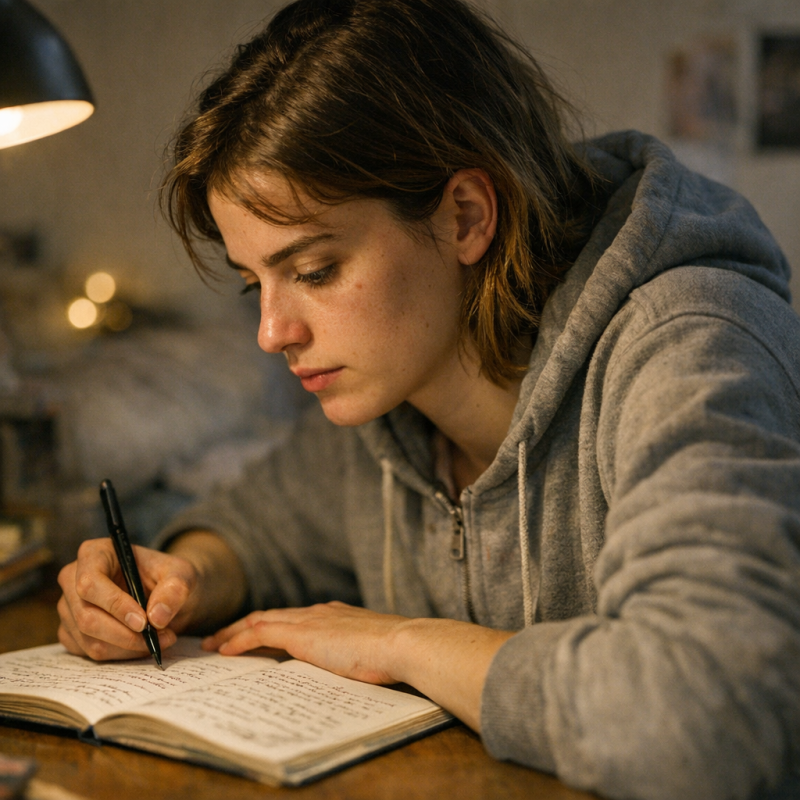 Image by FCT AI
The Real Reason
Maya took a shaky breath, and I realized she was trying not to cry. 'I disrupted your presentation because boring safety training kills people,' she said. 'Because my dad sat through training sessions, probably ones just like yours, and he probably nodded along and thought he understood. But when the moment came, when he was actually standing in that yard with that tree branch and those power lines, the training didn't stick. It wasn't real enough. It wasn't memorable enough. It didn't save him.' Her voice broke slightly. 'After he passed, I read his manual. I saw how much he'd studied, how seriously he'd taken it. And I realized that knowing the information isn't enough. You have to feel it. You have to have it burned into your memory so deeply that even when you're tired or rushed or distracted, you still stop and think.' She looked at me with those steady, heartbroken eyes. 'I forced you to teach my class the way someone should have taught my dad. With passion and conflict and emotion and stakes. The kind of teaching that actually saves lives.' She'd learned about electrical safety from her father's manual after he died, and she'd realized that if someone had taught him the way she'd forced me to teach her class, he might still be alive.
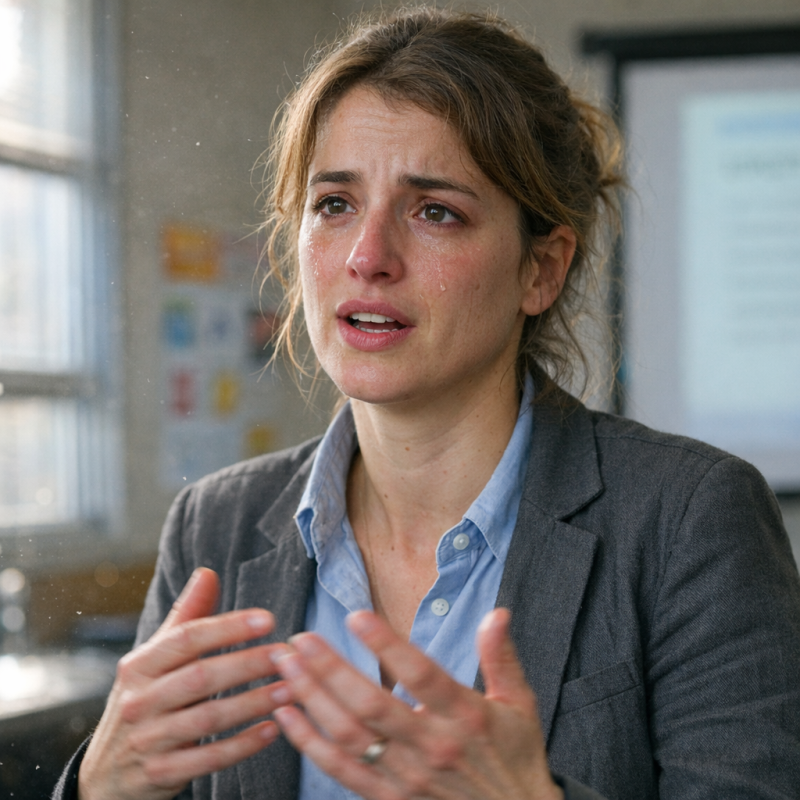 Image by FCT AI
What I Should Have Seen
I sat there for a long moment, just processing everything. Every disruption replayed in my mind with this new lens—not as attacks, but as teaching moments she'd engineered. The interruption about my credentials wasn't to humiliate me; it was to make me prove my expertise in a way students would remember. The dangerous scenario she'd described wasn't to derail my presentation; it was to force me to engage with real consequences instead of abstract statistics. Even calling me a liar and making me defend myself—that had created the exact kind of emotional stakes that burn information into memory. She'd turned my boring, forgettable safety presentation into something visceral and unforgettable, the kind of experience that actually sticks when someone's standing in a dangerous situation. And she'd done it all for a reason I'd never considered. I looked at Maya with completely new eyes, seeing not the antagonist I'd thought she was, but someone far more remarkable. She hadn't been fighting me at all. She'd been fighting for every person who would ever sit through one of my presentations, hoping they'd remember enough to make it home alive.
 Image by FCT AI
Apology Rewritten
I took a breath. 'Maya, I need to apologize to you,' I said. 'But not for the reasons I thought I did.' She looked up at me, uncertain. 'I came here planning to apologize for laughing at you, for not taking you seriously in the moment. And I am sorry for that. But what I'm really sorry for is that I didn't see what you were trying to do. You were teaching me how to be better at the most important part of my job—keeping people safe—and I was so defensive that I completely missed it.' My voice caught slightly. 'You lost your father because training failed him. And instead of letting that destroy you or make you bitter, you turned it into something incredible. You engineered an entire learning experience to make sure other people's parents come home.' I shook my head in amazement. 'That's not the behavior of a problem student. That's heroism, Maya.' She wiped her eyes quickly, nodding. 'I accept your apology,' she said quietly. And just like that, everything between us shifted. I wasn't sorry for laughing anymore—I was sorry for not seeing what she was trying to do from the very beginning.
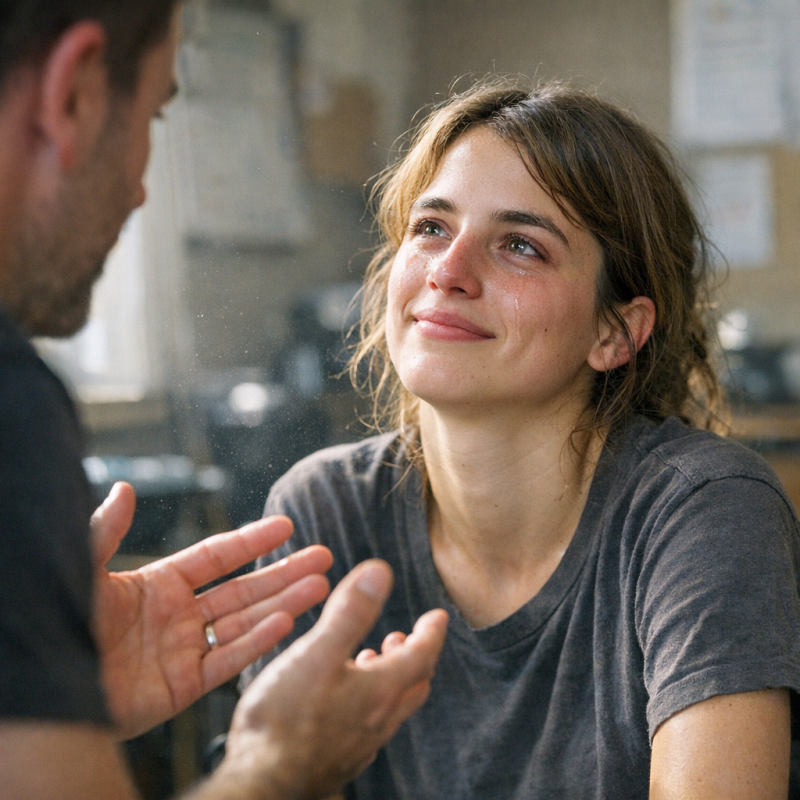 Image by FCT AI
The Presentation We Built Together
An idea hit me right then, and I knew it was the right one. 'Maya, I want to ask you something,' I said. 'I need to rebuild my entire presentation from the ground up. Everything I thought I knew about safety education was wrong—or at least incomplete. And I can't do it without you.' She tilted her head, listening. 'Would you help me create the definitive safety presentation? One that incorporates everything you've taught me about making information stick through emotion and conflict and real stakes?' I could see her considering it carefully. 'We could make something that would have saved your father. Something that could save hundreds of other people's fathers and mothers and kids.' She was quiet for a moment, and I worried she might say no, that I was asking too much. Then she nodded slowly. 'I'll help you,' she said. 'But I have one condition.' Her expression was serious, determined. 'And it's not negotiable.' I agreed before I even knew what she was going to ask. Whatever she wanted, she'd earned it. She agreed—on one condition that would change everything.
 Image by FCT AI
Her One Condition
Maya's condition was simple and devastating: the new presentation had to include her father's story, the real details of what happened and why the training failed him. And she had to be the one to tell it. 'People need to hear it from someone who lived through the aftermath,' she explained. 'From someone who knows what it costs when we treat safety training like a checkbox.' I understood immediately why this mattered. Statistics don't change behavior—stories do. Especially stories told by someone with everything at stake. We spent the next two weeks building the presentation together. I brought the technical expertise; she brought the emotional truth. We structured it around her disruptions, using conflict and questions to engage the audience. And at the heart of it was Maya's five-minute testimony about her father. The first time we delivered it together was to a group of new electrical workers at the training center. I watched the room go completely silent as Maya spoke. She didn't cry or dramatize. She just told the truth, plainly and powerfully. When we delivered the presentation together for the first time, I watched her transform the room completely.
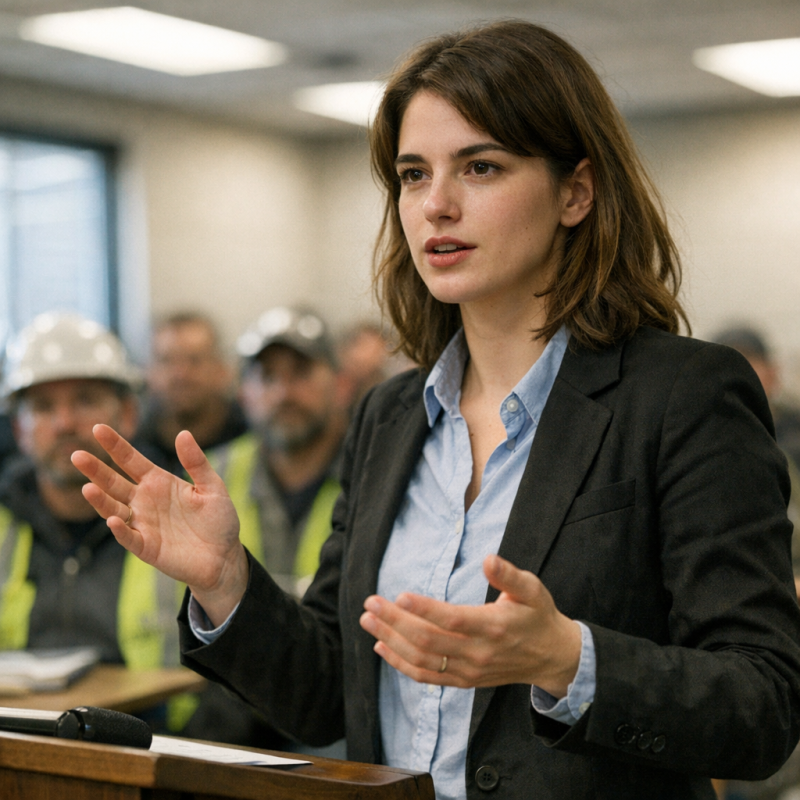 Image by FCT AI
The Room That Listened
The difference was stunning. Every student in that room was leaning forward, fully engaged. When I asked questions, hands shot up. When Maya described her father's accident, you could have heard a pin drop. When we demonstrated proper safety procedures, people took notes without being told. This was the exact kind of memorable, emotional experience Maya had engineered from the beginning—but now it was intentional, refined, and incredibly powerful. The statistics I presented weren't just numbers anymore; they were connected to Maya's story, to real human cost. The safety protocols weren't just rules; they were the difference between her father coming home and the day everything changed. You could see it clicking for people in real time, that shift from abstract knowledge to visceral understanding. After the presentation, three students approached us—not with complaints, but with questions that showed they'd genuinely absorbed the message. One asked about a specific hazard at his workplace. Another wanted to know how to convince coworkers to take safety seriously. The third just said, 'Thank you. I won't forget this.' Afterward, three students approached us with questions that showed they'd genuinely absorbed the message.
 Image by FCT AI
Rebecca's Response
Rebecca attended our third presentation together, sitting quietly in the back. I'd told her about the collaboration with Maya but hadn't explained the full transformation. As Maya delivered her testimony, I watched Rebecca's expression shift from professional observation to genuine emotion. When we finished, the students gave us spontaneous applause—something I'd never experienced in fifteen years of safety training. Rebecca approached us immediately. 'Daniel, Maya—I need to speak with you both,' she said. My stomach dropped for a second, old defensive habits kicking in. But her expression wasn't critical; it was almost reverent. 'I've been overseeing safety education for twelve years,' Rebecca continued. 'I've sat through hundreds of presentations. Most of them are forgotten before students leave the parking lot.' She looked directly at Maya. 'But this? This will save lives. I'm approving this for district-wide implementation immediately. Every safety educator in our program needs to learn this approach.' Then she pulled me aside afterward, her hand on my shoulder. 'This is what safety education should have been all along,' she said quietly.
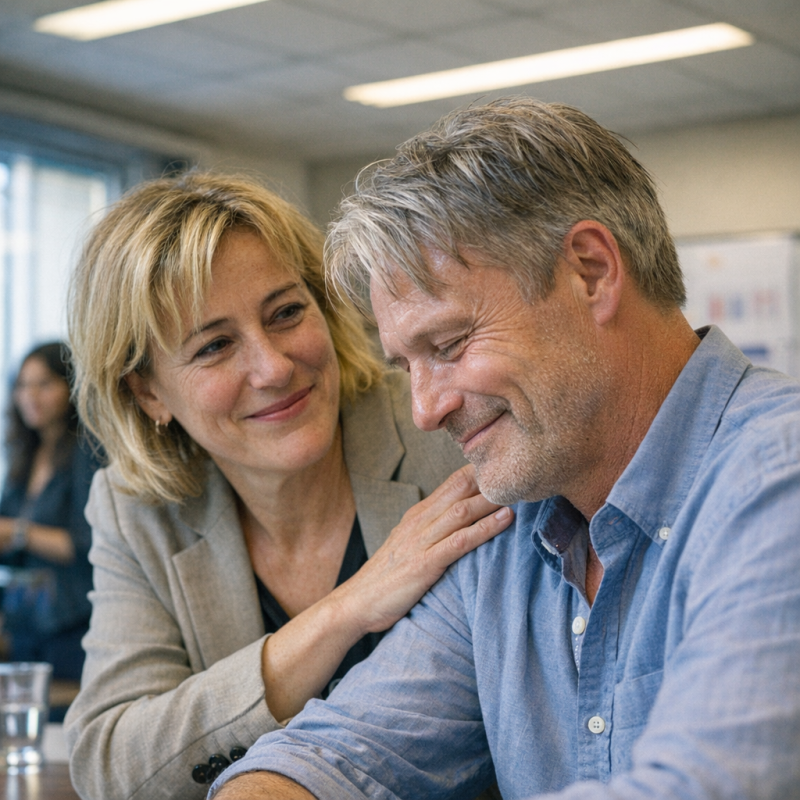 Image by FCT AI
The Complaint Withdrawn
Two days later, Rebecca forwarded me an email from Carol. My stomach clenched when I saw the name, but the subject line read: 'Formal Withdrawal of Complaint.' I opened it carefully. Carol had written a detailed letter to the district explaining that she was withdrawing her complaint entirely and replacing it with a formal commendation. She described attending one of our joint presentations and watching her daughter share her father's story with a room full of strangers. 'My complaint was filed from a place of pain and misunderstanding,' Carol wrote. 'I thought Maya was being harmed, when in reality she was transforming tragedy into purpose. She was doing something I couldn't do—turning our grief into something that might prevent other families from experiencing what we've been through.' The letter went on to praise both of us, but especially Maya's courage and vision. The final line destroyed me: 'My daughter has done what I couldn't—she's made sure her father's death meant something.' In it, she wrote that her daughter had done what she herself couldn't—turn grief into something that saves lives.
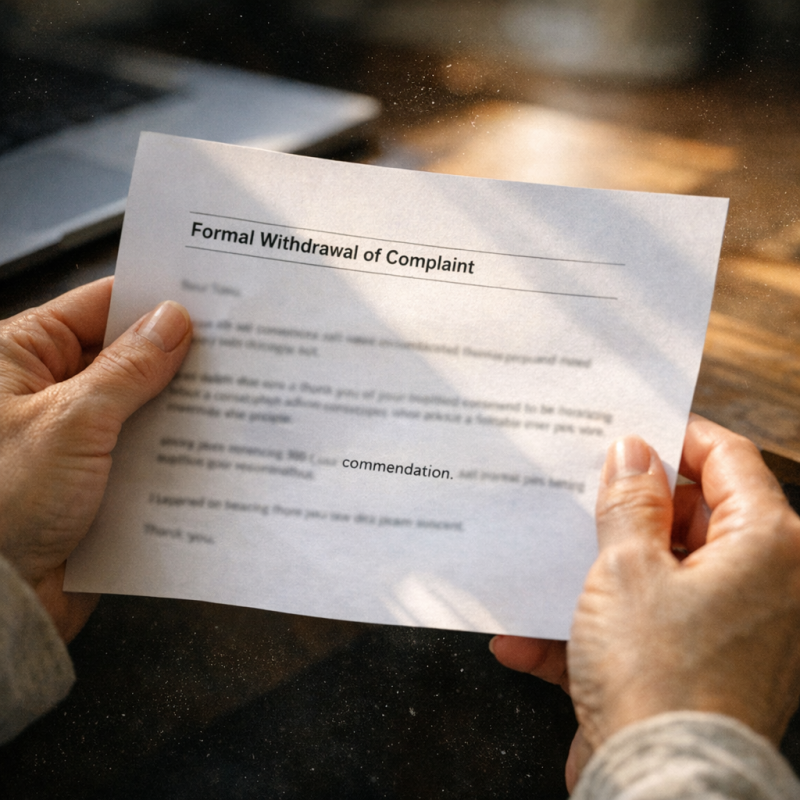 Image by FCT AI
Training Other Educators
With Rebecca's backing, Maya and I started training other safety educators in our methodology. We ran workshops showing them how to build emotional engagement, how to create productive conflict, how to make information stick through storytelling rather than statistics. Maya was incredible at it—she had a way of explaining why traditional training fails that made veteran educators completely rethink their approaches. We trained twelve instructors in the first month. They took our model back to their own programs, adapting it for different industries and contexts. Some worked in construction, others in manufacturing or utilities. Each one promised to report back on the results. Three weeks after our first training session, I got an email from one of the instructors—a guy named Marcus who worked for a manufacturing company. 'I used your approach yesterday,' he wrote. 'One of my students stopped a coworker from bypassing a safety guard this morning. He said the training was so memorable he couldn't not speak up.' Marcus's email ended with one simple line. The first trainer who learned the approach told us it had already prevented an accident at his workplace.
 Image by FCT AI
The Award Maya Didn't Want
The regional safety coalition nominated Maya for their Youth Community Leadership Award three months after we started the training program. She was fourteen years old and had already influenced how twelve organizations approached safety education. When they called to tell her, she asked if the award could be given in her father's name instead. They said no—the award recognized her contributions, not his legacy. So she agreed to accept it, but only if she could say something at the ceremony. I went with Carol, both of us sitting in the audience of the hotel ballroom while Maya stood at the podium in a simple black dress. She talked for seven minutes about why safety training fails, about the difference between information and engagement, about the responsibility educators have to make people care enough to act. Then she said: 'My dad died because someone didn't care enough to double-check their work. I don't want anyone else to lose someone that way.' The room went completely silent. At the ceremony, she gave a speech that made everyone in attendance rethink how they taught safety.
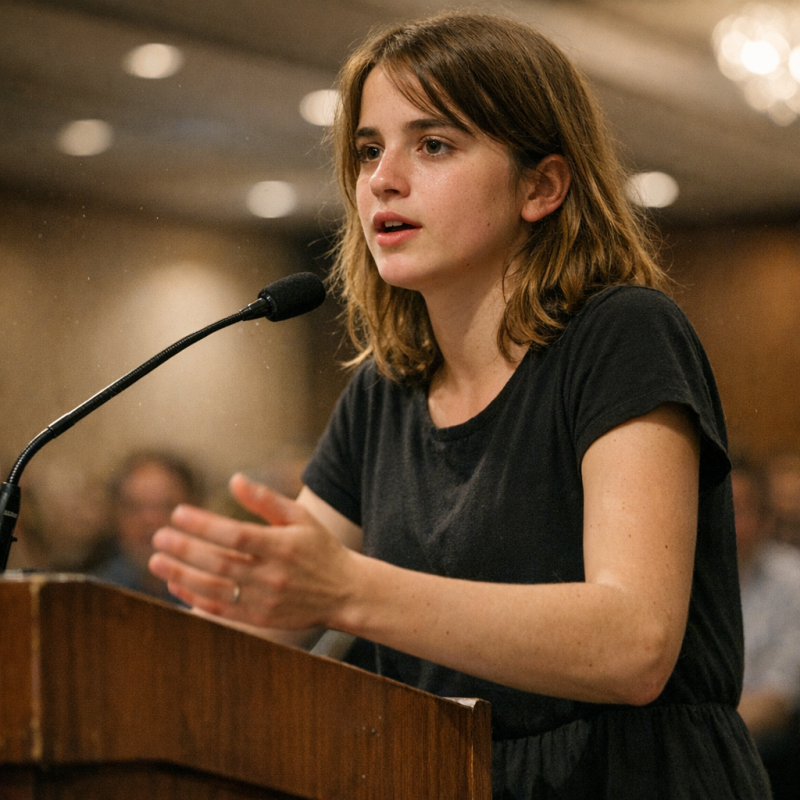 Image by FCT AI
One Year Later
I returned to Mr. Callahan's classroom exactly one year after Maya had called me a liar in front of his students. The room looked the same—same fluorescent lights, same arrangement of desks, same periodic table poster on the back wall. But everything else felt different. I'd kept in touch with Callahan over the months, updating him on what Maya and I were building. He'd been the one to suggest I come back for this follow-up session, to show his new crop of students what we'd developed. I set up my laptop at the front of the room, the same spot where I'd stood when Maya challenged me. The students filed in, chatting and settling into their seats. Then Maya walked through the door. She wasn't in a student desk this time. Callahan had invited her to co-present, to share her perspective on why traditional safety training doesn't work and what we'd built to replace it. This time, Maya sat in the audience as a peer educator—not a student.
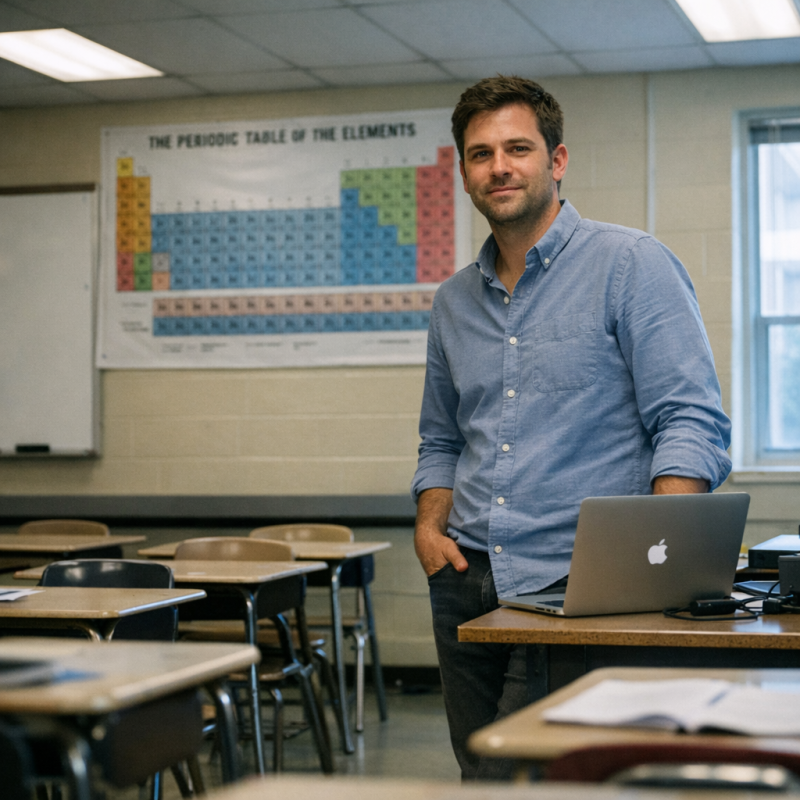 Image by FCT AI
What She Taught Me
Looking back now, I can see exactly what Maya taught me, though it took months to fully understand it. She taught me that passion isn't optional in education—it's the entire foundation. She taught me that being defensive about criticism is just ego protecting itself from growth. She taught me that the people who challenge you hardest are often the ones who believe most deeply in what you could become. I'd spent fifteen years giving the same presentation, thinking competence was enough. Maya showed me that competence without purpose is just going through motions. Every worker I'd trained over those years deserved better than what I'd been giving them—they deserved someone who cared as much about their safety as Maya cared about her father's memory. She was fourteen and grieving, and she still found the strength to demand better from me. That kind of courage changes you if you let it. I realized that being called a liar in front of a classroom was the best thing that ever happened to my career.
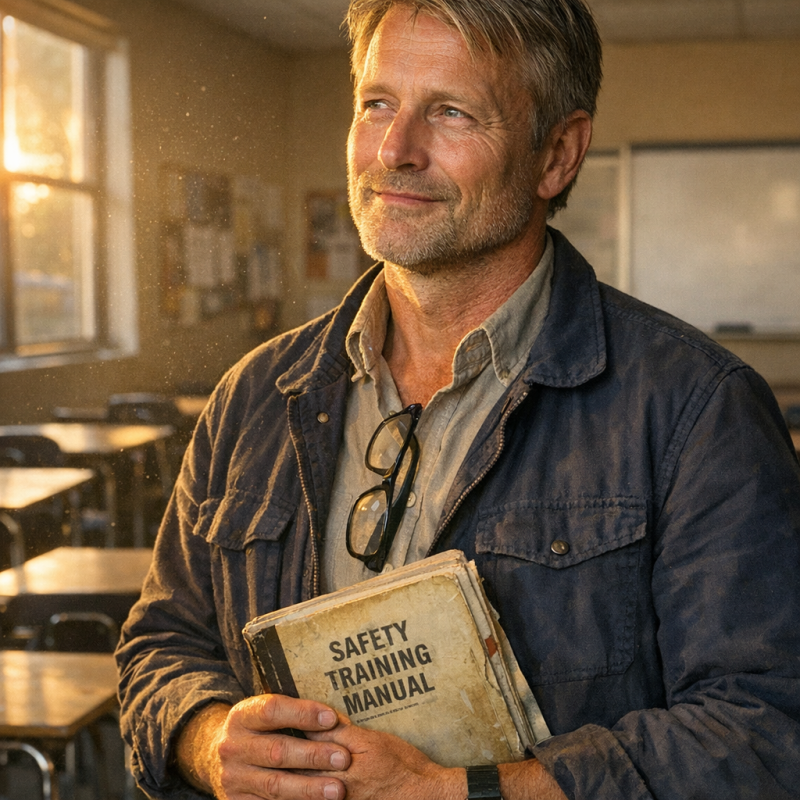 Image by FCT AI
The Day Someone Listened
Six months after Maya's award ceremony, I got a letter from a power company in Oregon. The return address meant nothing to me, but the first line stopped me cold: 'Your presentation saved my life last week.' The worker's name was James. He'd been trained by one of our certified instructors using the methodology Maya and I developed. During a routine maintenance call, he'd noticed something off about an electrical panel—a smell, a slight discoloration on the housing. The old training would've given him procedures to follow. Our training had made him understand why those procedures mattered, what happened to real people when safety failed. He'd remembered Maya's father. He'd shut down the system and called for backup. The panel had been on the verge of catastrophic failure. James wrote: 'I remembered everything because I cared—and I cared because the person teaching me cared.' That's when I understood what Maya had really given me: not just a better presentation, but a better reason to give it.
 Image by FCT AI