The Question
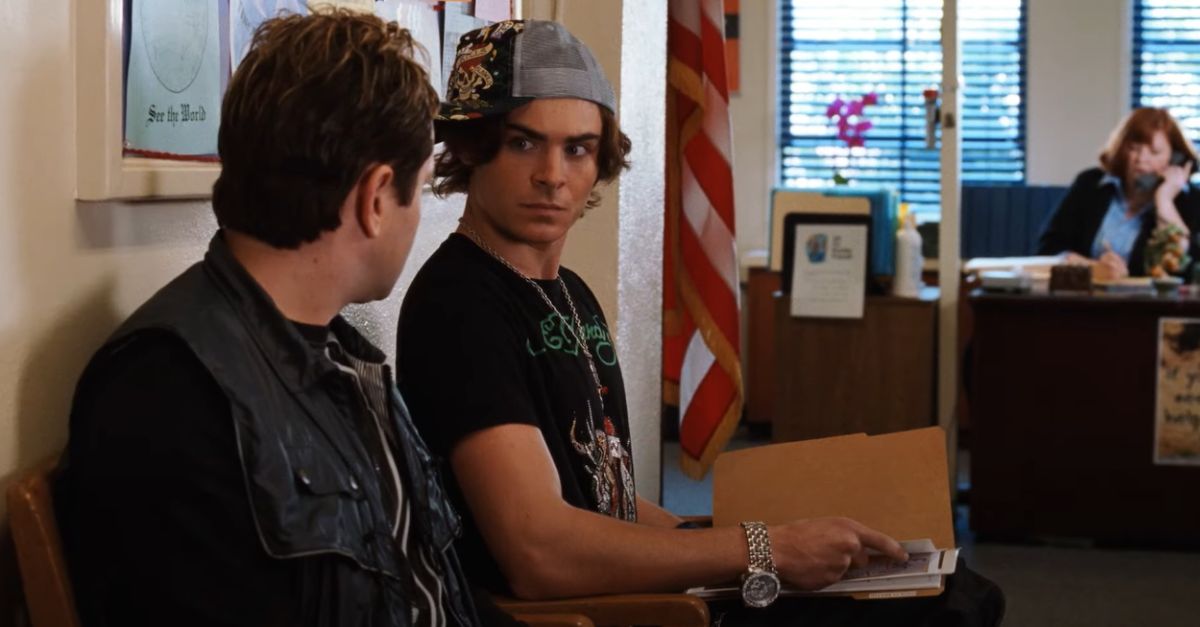
I raised my hand. My voice came out steadier than I expected. 'Mr. Thompson, I have a question about the rounding policy.' He nodded, waiting. 'The policy states that time punches are rounded to the nearest quarter hour. I'm wondering—are those rounding adjustments supposed to work in both directions equally? Meaning, should they balance out over time, or is it acceptable if they consistently favor the employer?' His expression shifted. The polite, professional mask gave way to something sharper, more focused. He uncapped his pen. 'That's an excellent question,' he said, leaning forward slightly. 'In fact, that's exactly the kind of pattern compliance audits are designed to identify. Can you explain further what you've observed?' My supervisor's arms uncrossed. Her performance smile flickered. I could see HR's posture stiffen. The room felt suddenly smaller, the air thicker. This was the moment—everything I'd documented, everything I'd endured, everything I'd prepared for. Thompson's pen was poised over his notepad, and he asked me to explain further.
 Image by FCT AI
The Documentation Handoff
I pulled the folder from my bag. Three months of timecards, each one marked with highlighting where my actual punch time differed from my recorded hours. Pay stubs showing the pattern of deductions. A spreadsheet I'd created tracking thirty-seven instances where I'd been rounded down, zero instances where I'd been rounded up. Photos of the employee handbook sections on rounding policy. Emails documenting schedule changes and the subsequent payroll discrepancies. I'd organized everything chronologically, with a summary sheet on top. 'I've been tracking this since the incident with my father,' I said, handing the folder to Thompson. 'These are copies—I have the originals at home.' He opened the folder, flipping through pages with increasing attention. His eyebrows rose slightly. He made notes. Asked clarifying questions. Requested permission to make copies, which I granted. Across the room, my supervisor had gone absolutely pale. She was watching me hand over months of documentation, evidence she didn't know I'd been collecting. The power dynamic in that room shifted so hard I could almost hear it click into place.
 Image by FCT AI
The Investigation Begins
Thompson closed my folder and looked at HR. 'I'm going to need access to all timekeeping records for the past three years,' he said. 'Not just for this employee—for the entire nursing staff. I need to see the raw punch data, the rounded adjustments, and the final payroll submissions. I'll also need documentation of the rounding policy as it was communicated to staff, and any training materials related to timekeeping procedures.' The HR director's face went tight. 'That's... that's quite extensive. We'll need to coordinate with corporate IT, pull archives—' 'I understand,' Thompson said calmly. 'I'll be here all week. Take the time you need, but I'll need those records before I leave.' He stood, gathering his materials. Through the conference room window, I watched my supervisor corner the HR director in the hallway. Urgent, hushed conversation. Hand gestures. The director made a phone call, pacing. My supervisor kept glancing back toward the conference room, toward me. They were scrambling, and everyone could see it.
 Image by FCT AI
Colleague Testimonies
Jenny found me in the break room that afternoon. She closed the door, looked around, then sat down across from me. 'Is it true you're talking to the auditor about the time rounding?' she asked quietly. I nodded. She exhaled slowly. 'I think it's been happening to me too. I never tracked it like you did, but I've noticed—I'm always losing minutes, never gaining them.' By the end of the day, three more nurses had approached me privately. Marcus pulled me aside after shift change. 'I compared my punch times to my paychecks last night,' he said. 'Six months of data. I'm short at least forty hours.' Linda started collecting statements, organizing testimonies. The scope of what I'd thought was just my problem kept expanding. Dozens of employees, all experiencing the same pattern. Some had been there for years, accepting the discrepancies as normal, as 'just how payroll works.' The numbers started adding up in my head—if it was happening to me, to Jenny, to Marcus, to all these others... how much money were we talking about? What I'd thought was personal retaliation was actually affecting dozens of people.
 Image by FCT AI
The Supervisor's Defense
My supervisor submitted a twelve-page statement defending the rounding policy. Linda got me a copy through her union contacts. It was impressively thorough—citations of industry standards, references to payroll best practices, explanations of system limitations that necessitated rounding. She argued that the policy was applied uniformly, that any perceived imbalances were coincidental, that the facility had always operated within legal guidelines. It was the kind of defense that would have been convincing if you didn't have data showing otherwise. Thompson called her in for a follow-up interview. I wasn't present, but Jenny was working the desk outside the conference room. She texted me updates. He kept asking the same question in different ways: 'If the rounding is random, why does it consistently favor the employer? If the system rounds both up and down, why do the records show a directional bias? If this is standard practice, why can't you provide examples of employees gaining hours?' My supervisor's defense was thorough, professional, and well-reasoned. But Thompson's questions kept focusing on why the rounding only seemed to go one direction.
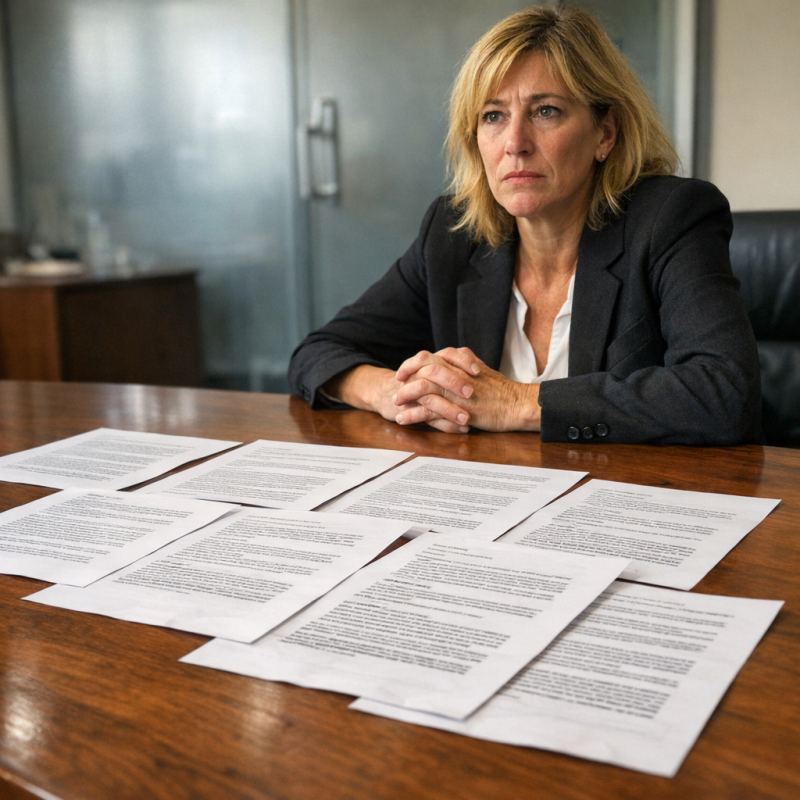 Image by FCT AI
Waiting for Answers
The audit stretched into its second week. I'd expected maybe three days, a quick review of the records I'd provided, and then some kind of resolution. But Thompson was methodical. He kept requesting additional documentation—older timecards, payroll records going back years, policy manuals from different periods. The hospital provided everything he asked for, boxes of files wheeled into the conference room where he'd set up shop. I saw him there late one evening, laptop open, spreadsheets glowing on the screen, taking notes in a precise hand. The tension in the building was thick enough to choke on. Staff walked past the conference room trying not to look obvious about it. My supervisor maintained her usual professional demeanor, but I noticed she was staying later than usual, her office light visible from the parking lot when I left after night shifts. Jenny kept me updated on the gossip—everyone had theories, nobody knew anything concrete. I kept working my shifts, maintaining the same careful competence I'd always brought to the job, waiting for findings I hoped would validate everything I'd sacrificed.
 Image by FCT AI
The Administrator's Arrival
A senior hospital administrator flew in from corporate on day nine of the audit. I'd never seen him before—tall, expensive suit, the kind of polished presence that screamed executive management. His arrival wasn't announced, but word spread through the hospital within an hour. They were calling it 'the situation' now, which felt both ominous and validating. Corporate doesn't fly someone in for minor payroll discrepancies. I saw him in the hallways twice, both times walking with purpose, phone pressed to his ear. The second time, he was headed toward the conference room where Thompson had been working. I was at the nurses' station when I noticed them—the administrator, Thompson, and my supervisor, all disappearing into that room together. The door closed. The blinds were already drawn. Jenny caught my eye from across the hall and raised her eyebrows. That meeting lasted over three hours. When I saw him in a closed-door meeting with Mr. Thompson and my supervisor, I knew something big was happening.
 Image by FCT AI
Jenny's Warning
Jenny pulled me aside in the break room two days later. She glanced around to make sure we were alone, then leaned in close. 'You need to know something,' she said quietly. 'Your supervisor's been asking people to sign statements.' My stomach dropped. 'What kind of statements?' I asked. She explained that my supervisor had been approaching staff individually, asking them to document any instances where I'd been difficult to work with, unprofessional, or had made errors. The implication was clear—build a case that I was a problematic employee with an axe to grind. 'What are people saying?' I asked. Jenny shook her head. 'Most people are refusing. Like, straight-up telling her no. But...' She hesitated. 'A few people close to management have signed something. I don't know what they said, but I saw them in her office.' The betrayal stung, even though I'd half-expected it. She said most people refused, but a few who were close to management had complied.
 Image by FCT AI
The Data Analysis
Mr. Thompson requested a meeting with me on the audit's fourteenth day. Not in the conference room where he'd been working, but in a smaller office that offered more privacy. He had his laptop open and several printed spreadsheets arranged in front of him. 'I wanted to show you what I've found so far,' he said, his tone careful and professional. 'These are preliminary findings, you understand, but I think you should see them.' He turned the laptop toward me. The spreadsheet showed hundreds of entries—employee names, clock-in times, clock-out times, rounded times, and the differences. He'd color-coded them. Red for time lost by employees. Green for time gained. The screen was almost entirely red. 'I analyzed three years of timecard data for every non-salaried employee,' he explained. 'I looked at every instance where rounding occurred.' He pointed to a column of numbers. 'This shows the direction of each rounding event. Notice anything?' The numbers he showed me revealed a pattern even more systematic than I'd imagined.
 Image by FCT AI
The Numbers Don't Lie
Thompson pulled up another spreadsheet, this one showing aggregate totals. 'Over the three-year period I examined,' he said, his voice taking on a harder edge, 'the directional rounding cost employees over $200,000 in total compensation.' I felt the air leave my lungs. Two hundred thousand dollars. He continued, pointing to different sections of the data. 'It affected dozens of employees. Some lost only a few dollars per pay period. Others—particularly those working irregular shifts like you—lost significantly more. But it was systematic. Every department. Every shift pattern. The rounding always favored the employer.' He leaned back in his chair. 'I've investigated wage and hour complaints for fifteen years. I've seen a lot of creative ways employers try to trim labor costs. But this...' He shook his head. 'Rarely this systematic. Rarely this well-disguised as legitimate policy.' He said he'd seen wage theft before, but rarely this systematic or this well-disguised.
 Image by FCT AI
The Efficiency Reports
Thompson wasn't finished. He pulled out a stack of printed documents—internal reports I'd never seen before. 'These are quarterly efficiency reports your supervisor submitted to hospital administration,' he explained. I recognized her signature at the bottom of each page. He pointed to highlighted sections. 'Here, and here, and here—she's claiming credit for reducing labor costs in her department. She specifically mentions improved payroll efficiency and better time management systems.' The dates corresponded with when the rounding policy had been implemented. 'She reported consistent quarter-over-quarter reductions in labor costs,' Thompson continued. 'Which looked impressive on paper. Made it seem like she was running a tighter ship, getting the same work done with fewer paid hours.' He met my eyes. 'The cost reductions she claimed weren't from efficiency. They were from rounding employees' time down.' I felt something cold settle in my stomach as I began to understand what this had really been about.
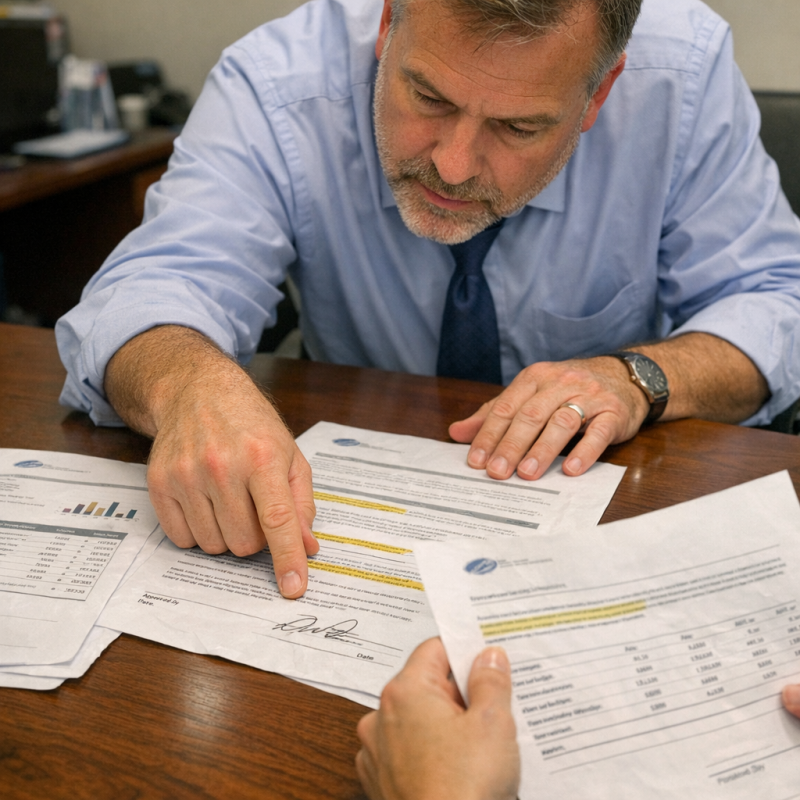 Image by FCT AI
The Bonus Structure
Linda showed up at my apartment that evening with a folder of documents. 'You're going to want to see this,' she said, spreading papers across my kitchen table. She'd gotten copies of the hospital's supervisory compensation structure through her union contacts. 'Look at this section,' she said, pointing to a clause in the bonus policy. Supervisors received quarterly performance bonuses based on several metrics, including—and this part was highlighted—'demonstrated cost reduction and operational efficiency.' The bonus could be up to 15% of base salary. 'Now look at this,' Linda continued, pulling out another document showing my supervisor's reported cost reductions over the past three years. The numbers matched what Thompson had shown me from the efficiency reports. 'If her bonuses were calculated based on these cost reductions...' Linda did quick math on her phone. 'She could have personally received tens of thousands in bonus payments.' The pieces were coming together in a way that made me feel sick—this hadn't been bureaucracy, it had been profit.
 Image by FCT AI
The Scheme Exposed
Mr. Thompson called me the next morning and asked if I could come in immediately. His voice had a different quality now—not just professional, but urgent. I met him in the same small office. He closed the door carefully. 'I need to confirm my findings with you before I submit my final report,' he said. He walked me through it systematically. My supervisor had been manipulating the rounding policy for years. She'd implemented it knowing it would consistently reduce paid hours. She'd monitored the results and adjusted the policy parameters to maximize the impact. The false labor savings went into her quarterly reports as efficiency improvements. Those reports triggered performance bonuses tied directly to cost reduction. 'She was stealing from dozens of employees,' Thompson said bluntly. 'Hundreds of small thefts that added up to over $200,000 in unpaid wages. And she personally profited through bonuses based on those stolen wages.' What I'd thought was cold bureaucracy had actually been calculated theft, and my fifteen minutes had exposed it all.
 Image by FCT AI
The Legal Implications
Mr. Thompson's expression turned grave. 'I need to be clear about what we're dealing with here,' he said, his hands flat on the desk. 'This isn't just a policy violation or an HR issue. What your supervisor did constitutes fraud—deliberate, calculated fraud.' The word hung in the air between us. He walked me through the legal definition. She'd knowingly implemented a system designed to reduce employee wages. She'd concealed the true nature of the policy from oversight. She'd personally profited from the theft through performance bonuses. 'That makes it criminal,' he said. 'Not civil. Criminal.' My stomach twisted. I'd wanted accountability, but this was beyond anything I'd imagined. 'The hospital's legal team will need to review everything,' he continued. 'And honestly, I expect this will be referred to law enforcement. The dollar amounts involved, the duration, the premeditation—it all adds up to potential criminal charges.' I nodded, trying to process it. What had started with fifteen minutes and a hundred dollars had uncovered something that could destroy someone's entire life. Mr. Thompson closed his folder carefully and said, 'The hospital will need to decide how to proceed, but I can tell you this is going to involve attorneys and possibly prosecutors.'
 Image by FCT AI
The Confrontation
I was at my desk two days later when I saw them gathering in the administrator's conference room. Through the glass walls, I watched my supervisor walk in—she didn't know yet what was coming. The hospital administrator was there. Mr. Thompson. Two people I'd never seen before in expensive suits, carrying leather portfolios. Attorneys, obviously. I couldn't hear anything, but I couldn't look away either. My supervisor sat down, her posture confident at first. Then I watched it change. Her back straightened. Her head tilted. She started shaking it—small, quick movements. One of the attorneys slid documents across the table. She picked them up, and even from where I sat, I could see her hands trembling. The meeting lasted forty minutes. When the door finally opened, she looked like a different person. Her face was chalk white. Her hands were still shaking as she gathered her things. The administrator gestured to someone in the hallway, and a security guard appeared. They didn't touch her, but they flanked her. She walked between them toward HR, her footsteps unsteady. She never once looked in my direction, but I knew she knew exactly who had started this. Watching her leave that conference room, pale and shaking with a security escort, I realized there was no going back from this.
 Image by FCT AI
Suspension
The email came out that afternoon. 'Effective immediately, [Supervisor's Name] has been placed on administrative leave pending an internal investigation into payroll irregularities.' That was it. Two sentences that set the entire department on fire. Within minutes, people were clustered in hallways, voices low but urgent. I kept my head down, but Jenny appeared at my desk almost immediately. 'Did you know about this?' she whispered. I nodded slightly. 'What happened?' I told her I couldn't say much, but that it was serious. Marcus joined us, his eyes wide. 'I heard she was walked out by security,' he said. 'Is that true?' I confirmed it. The speculation spread like wildfire. By the end of the day, everyone had a theory. Some thought it was embezzlement. Others guessed sexual harassment. A few were close to the truth, talking about timecards and payroll. But they all wanted to know what I knew. People who'd barely spoken to me before were suddenly finding reasons to stop by my desk. 'You're the one who started this, aren't you?' one colleague said, not unkindly. I didn't confirm or deny, but my silence was answer enough. Suddenly, I wasn't just the person who'd complained about fifteen minutes. I was the person who'd brought down our supervisor, and everyone wanted to know exactly what I'd uncovered.
 Image by FCT AI
The Staff Meeting
The hospital administrator called an emergency all-staff meeting three days later. We packed into the largest conference room, standing room only. He looked uncomfortable, and he should have. 'I want to address what I'm calling irregularities in our payroll practices,' he began. There was a ripple of bitter laughter at the word 'irregularities.' He pushed forward. 'An audit has revealed that our time-rounding policy was implemented in a way that systematically underpaid employees. This was not an accident. It was deliberate.' The room went silent. 'Every affected employee will receive full back pay,' he continued. 'With interest, calculated from the date of each underpayment. Checks will be distributed within two weeks.' Someone actually gasped. Marcus, standing next to me, grabbed my arm. 'Additionally, we are conducting a complete overhaul of all payroll policies,' the administrator said. 'We're bringing in external consultants to ensure this never happens again. We're implementing new oversight procedures. And we're establishing a direct reporting line for any employee who suspects wage violations.' Jenny was crying quietly. I looked around the room and saw the same expression on face after face—relief mixed with anger. We were finally being heard. We were finally being paid. And the system that had enabled this was finally being torn down. The administrator met my eyes across the room, and in that moment, I knew he understood exactly who'd made this meeting necessary.
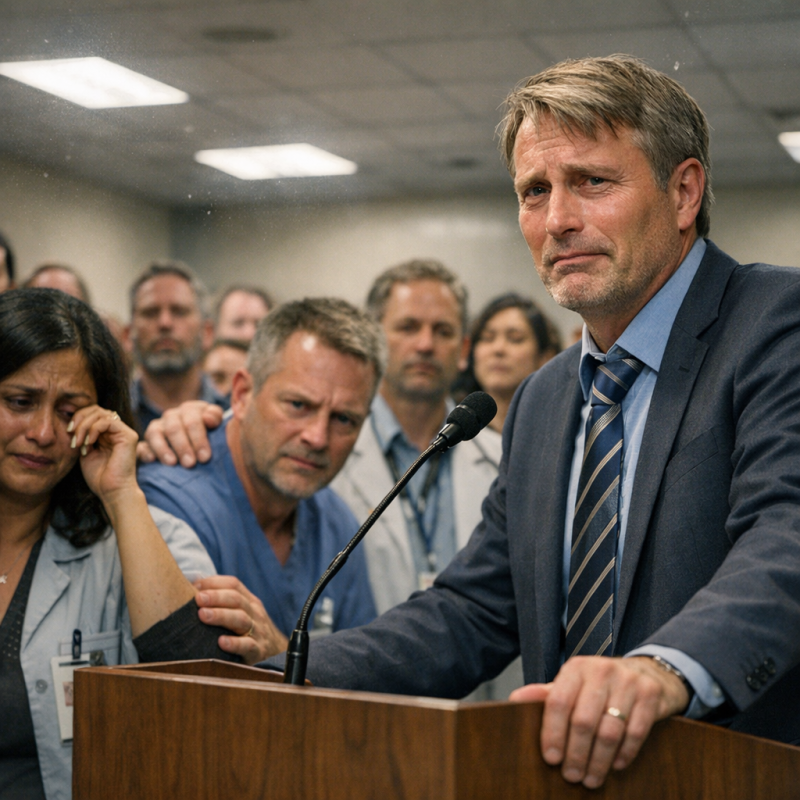 Image by FCT AI
Termination
The official word came down less than a week later, but we all heard through the grapevine first. My supervisor had been terminated. Not resigned. Not mutually separated. Fired. Jenny found me in the break room with the details. 'She's gone,' Jenny said, her voice low. 'Like, completely gone. They terminated her yesterday afternoon.' I asked what she'd heard. 'Security escorted her out,' Jenny continued. 'She had to surrender her badge, her keys, everything right there in HR. They revoked her building access immediately—her card won't even open the parking garage anymore.' I poured my coffee slowly, trying to process it. 'And there's more,' Jenny said. 'There's talk about criminal charges. Fraud, they're saying. The hospital turned everything over to the district attorney's office.' That stopped me cold. Criminal charges meant prosecutors. Courts. Possibly jail time. 'Someone in HR told Marcus that she kept saying it was just a policy, that she was just trying to improve efficiency,' Jenny said. 'But they had emails, reports—everything showed she knew exactly what she was doing.' I thought about that moment in the conference room, watching her face change as she realized what she was facing. She'd thought she was untouchable, protected by her position and her carefully constructed efficiency reports. Now she was facing criminal prosecution, and it had all started because she'd docked me half a day's pay for leaving fifteen minutes early.
 Image by FCT AI
The Media Inquiry
My phone rang two days later from a number I didn't recognize. 'This is Sarah Chen from Channel 7 News,' the woman said. 'I'm calling about the wage theft investigation at the hospital. Would you be willing to speak with me?' My heart hammered. I told her I needed to think about it. 'I understand this is sensitive,' she continued. 'But this is a significant story—a hospital supervisor stealing wages from healthcare workers during a pandemic. The public has a right to know.' I promised to call her back and immediately contacted Linda. We met in her office within an hour. 'Absolutely do not talk to them,' Linda said firmly. 'Not yet. Maybe not ever.' She explained that media involvement could complicate the legal proceedings, could affect my employment, could open me up to retaliation in ways I couldn't predict. 'But is she going to run the story anyway?' I asked. Linda nodded grimly. 'Probably. This is too big to stay quiet. Wage theft, criminal charges, a major hospital—it's got everything they want.' She paused. 'The story's going to break whether you participate or not. The question is whether you want your name and face attached to it.' I thought about my father, about his final paycheck, about all those colleagues who'd been struggling. 'What do you think I should do?' I asked. Linda looked at me seriously and said, 'Right now? Stay quiet. But keep that reporter's number, because eventually, you might want to tell your side of this story when the whole thing goes public.'
 Image by FCT AI
Collective Relief
The back pay checks arrived on a Friday, distributed in sealed envelopes with HR documentation. I watched people open them throughout the day, and the reactions were everything you'd imagine. Some people stared at the amounts in silence. Others cried. A few actually laughed in disbelief. Jenny's check was for nearly three thousand dollars. 'I can fix my car,' she said, tears streaming down her face. 'I've been taking the bus for eight months because I couldn't afford the transmission repair.' An older nurse in pediatrics got over five thousand—years of stolen wages adding up. She sat at her desk with her hand over her mouth, just shaking her head. Marcus found me at lunch. He had his check in his hand. 'Forty-two hundred dollars,' he said. 'Do you know what this means?' I waited. 'I've been putting off a procedure my insurance wouldn't cover. Nothing life-threatening, but painful. I couldn't afford it, so I just lived with it.' He looked at the check again. 'This covers it. All of it.' Then he looked at me directly. 'Thank you,' he said. 'I know everyone's saying it, but thank you for not letting this go. For pushing when most people would have just accepted it.' All day, people approached me with similar stories. Rent payments they'd missed. Medical bills they couldn't pay. Groceries they'd skipped. All because of those stolen wages, those deliberately manipulated rounding policies. What had started as my personal grievance had given dozens of people back money they'd desperately needed months or years ago.
 Image by FCT AI
The Apology
The hospital administrator called me to his office the following Monday. I went with some trepidation, unsure what to expect. He stood when I entered and gestured to a chair. 'I want to personally apologize to you,' he said without preamble. 'What happened to you and your colleagues was unacceptable. It should never have occurred, and it should have been caught much earlier.' I listened quietly. 'The systems we had in place failed you,' he continued. 'The oversight failed you. I failed you by not recognizing what was happening in my own organization.' It was a more genuine apology than I'd expected. 'We're implementing every change I mentioned in the staff meeting,' he said. 'External audits. Direct reporting lines. Complete policy overhauls. I want to assure you personally that nothing like this will happen again.' I appreciated his words, but I'd learned something through all of this. I looked at him directly and said, 'I accept your apology. But the real test isn't going to be the policies you write or the systems you implement.' He waited. 'The real test is going to be whether those new policies actually protect employees when someone tries to work around them,' I continued. 'Whether the reporting lines stay open even when it's inconvenient. Whether the next person who complains about fifteen minutes gets listened to, or gets dismissed.' He nodded slowly, and I could tell he understood. Promises were easy. The real question was whether the hospital would actually follow through when protecting employees cost them something.
 Image by FCT AI
The New Policies
The new policies rolled out within three weeks. I watched them get posted in every break room, discussed in every department meeting. The timekeeping system was completely overhauled—no more hidden rounding rules, no more mysterious 'corrections' that only went one direction. Every adjustment had to be documented with a reason code visible to the employee. Supervisors couldn't touch timecard data without leaving a digital trail that went straight to an external auditor. The policies spelled out exactly how breaks, early departures, and overtime would be handled. Nothing was vague. Nothing was subject to interpretation. They created a new anonymous reporting system that bypassed department managers entirely. The audit committee would review random samples of timecards monthly, looking for patterns. I read through every page of the new employee handbook section on time and attendance. It was specific, protective, transparent. For the first time in years, I felt like the system might actually protect workers instead of exploit them.
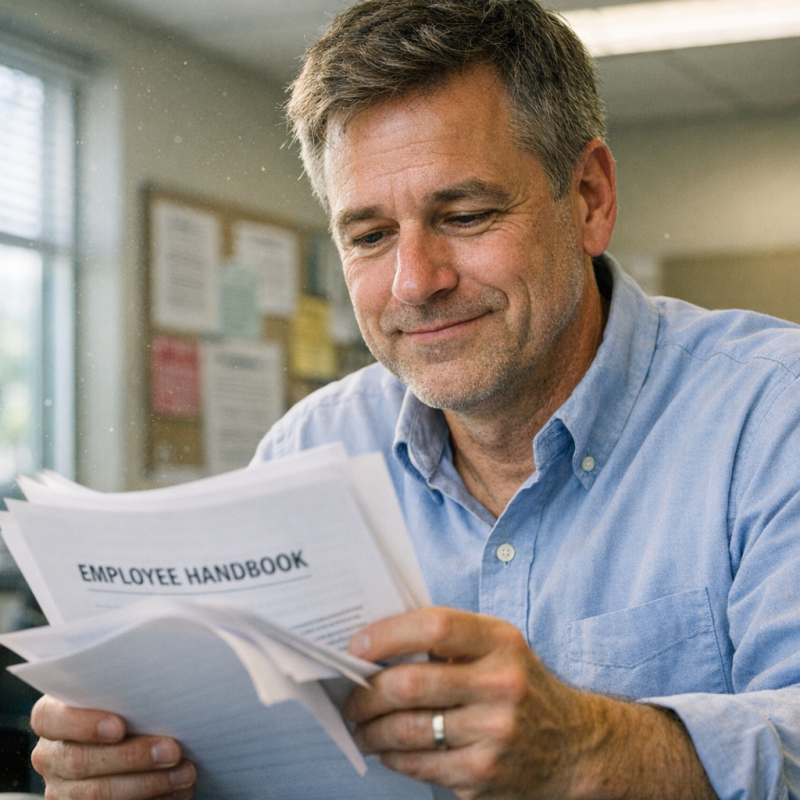 Image by FCT AI
Healing at Home
That night, I came home and my husband was cooking dinner. We'd been moving through our routines like ghosts for so long, just trying to survive each day. But something had shifted. With the workplace injustice finally resolved, we had space to actually grieve Richard properly. We sat at the kitchen table and talked about him—really talked, not just passing mentions or painful silences. We shared memories. We cried together. We laughed about the ridiculous knock-knock jokes Richard used to tell. My husband listened as I explained everything that had happened at work, how it had started with fifteen minutes and spiraled into exposing years of theft. He held my hand across the table. 'Richard would have been proud of you,' he said quietly. I started to say something about winning, about the outcome, but he shook his head. 'Not just of what you did,' he continued. 'Of how you did it.' He said Richard would have been proud not just of what I'd done, but of how I'd done it.
 Image by FCT AI
Mrs. Chen's Gratitude
A few days later, I received a card in the mail at the hospital. It was from Mrs. Chen, the patient I'd been caring for during those early weeks when everything started unraveling. She'd been discharged and was recovering at home with her family. Her handwriting was careful and elegant. She thanked me for being the kind of nurse who fought for what was right, both for patients and for myself. She wrote that she'd noticed the difference in my demeanor during those difficult weeks, though she hadn't known the cause. 'I could tell you were struggling,' she wrote, 'but you never let it affect my care. That is true professionalism.' Then she added something that made me sit down in the break room and just stare at the words for a long time. She wrote that good healthcare requires good people, and good people require good systems.
 Image by FCT AI
Fifteen Minutes
I still think about those fifteen minutes. The ones I left early to say goodbye to Richard. The ones that got docked from my pay and exposed a years-long scheme. I think about how something so small—a quarter of an hour—became the thread that unraveled everything. Sometimes the smallest acts of humanity reveal the biggest truths about the systems we live in. That's what those fifteen minutes did. They showed me that my instinct to prioritize family wasn't wrong. That questioning unfair treatment wasn't unreasonable. That speaking up wasn't selfish. They showed me that systems designed to nickel-and-dime workers will always find ways to exploit, until someone forces them into the light. I learned that doing the right thing isn't always easy, but it's always worth it. I never regretted leaving early that day, and I never will.
 Image by FCT AI