The New Policies
The new policies rolled out within three weeks. I watched them get posted in every break room, discussed in every department meeting. The timekeeping system was completely overhauled—no more hidden rounding rules, no more mysterious 'corrections' that only went one direction. Every adjustment had to be documented with a reason code visible to the employee. Supervisors couldn't touch timecard data without leaving a digital trail that went straight to an external auditor. The policies spelled out exactly how breaks, early departures, and overtime would be handled. Nothing was vague. Nothing was subject to interpretation. They created a new anonymous reporting system that bypassed department managers entirely. The audit committee would review random samples of timecards monthly, looking for patterns. I read through every page of the new employee handbook section on time and attendance. It was specific, protective, transparent. For the first time in years, I felt like the system might actually protect workers instead of exploit them.
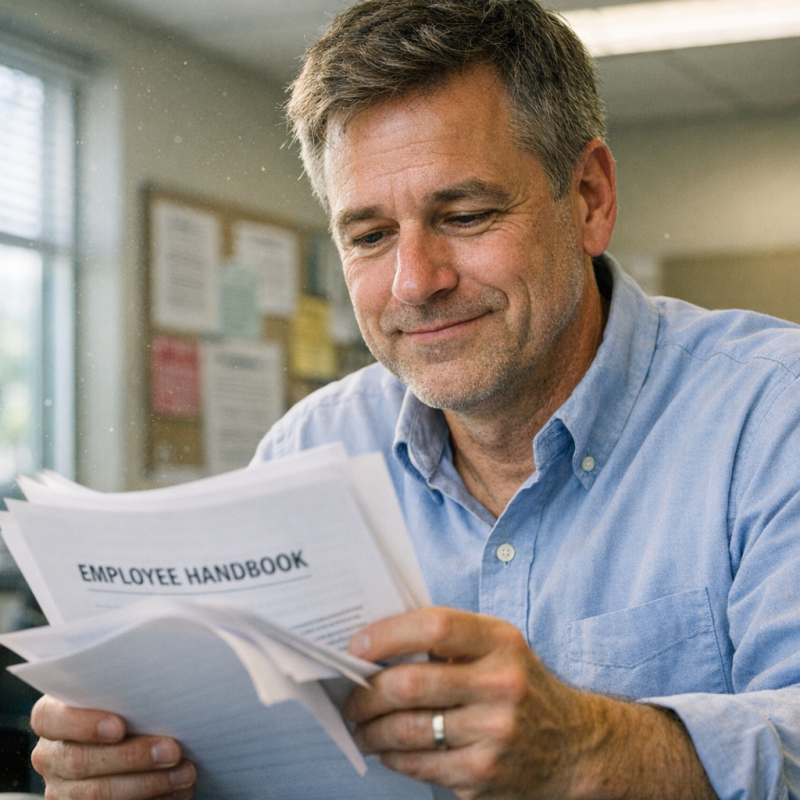 Image by FCT AI
Healing at Home
That night, I came home and my husband was cooking dinner. We'd been moving through our routines like ghosts for so long, just trying to survive each day. But something had shifted. With the workplace injustice finally resolved, we had space to actually grieve Richard properly. We sat at the kitchen table and talked about him—really talked, not just passing mentions or painful silences. We shared memories. We cried together. We laughed about the ridiculous knock-knock jokes Richard used to tell. My husband listened as I explained everything that had happened at work, how it had started with fifteen minutes and spiraled into exposing years of theft. He held my hand across the table. 'Richard would have been proud of you,' he said quietly. I started to say something about winning, about the outcome, but he shook his head. 'Not just of what you did,' he continued. 'Of how you did it.' He said Richard would have been proud not just of what I'd done, but of how I'd done it.
 Image by FCT AI
Mrs. Chen's Gratitude
A few days later, I received a card in the mail at the hospital. It was from Mrs. Chen, the patient I'd been caring for during those early weeks when everything started unraveling. She'd been discharged and was recovering at home with her family. Her handwriting was careful and elegant. She thanked me for being the kind of nurse who fought for what was right, both for patients and for myself. She wrote that she'd noticed the difference in my demeanor during those difficult weeks, though she hadn't known the cause. 'I could tell you were struggling,' she wrote, 'but you never let it affect my care. That is true professionalism.' Then she added something that made me sit down in the break room and just stare at the words for a long time. She wrote that good healthcare requires good people, and good people require good systems.
 Image by FCT AI
Fifteen Minutes
I still think about those fifteen minutes. The ones I left early to say goodbye to Richard. The ones that got docked from my pay and exposed a years-long scheme. I think about how something so small—a quarter of an hour—became the thread that unraveled everything. Sometimes the smallest acts of humanity reveal the biggest truths about the systems we live in. That's what those fifteen minutes did. They showed me that my instinct to prioritize family wasn't wrong. That questioning unfair treatment wasn't unreasonable. That speaking up wasn't selfish. They showed me that systems designed to nickel-and-dime workers will always find ways to exploit, until someone forces them into the light. I learned that doing the right thing isn't always easy, but it's always worth it. I never regretted leaving early that day, and I never will.
 Image by FCT AI