Stabilization
Four hours later, Arthur's vitals finally stabilized. Dr. Chen had managed to remove the fourth object — a small metal cylinder — while simultaneously controlling multiple bleeding sites. Dr. Ramirez closed the abdomen in layers while Jamie and I monitored every fluctuation in Arthur's blood pressure, heart rate, oxygen saturation. The transfusion protocol had worked, barely. Arthur had received twelve units of blood, eight of plasma, and countless clotting factors. The anesthesiologist said it was the closest call she'd seen in fifteen years. We moved Arthur to the ICU, and I remember standing in the hallway afterward, still in my bloody scrubs, absolutely exhausted. Dr. Chen looked like she'd aged a decade. Jamie sat on the floor with his head in his hands. We'd done it. We'd saved his life through sheer stubborn determination and medical skill. We'd beaten the complications he'd engineered, pulled him back from the edge of death he'd carefully constructed for himself. But as we stood there in that hallway, none of us felt victorious. The silence between us was heavy with the same unspoken thought: We saved his life — and I couldn't tell if that made us heroes or fools.
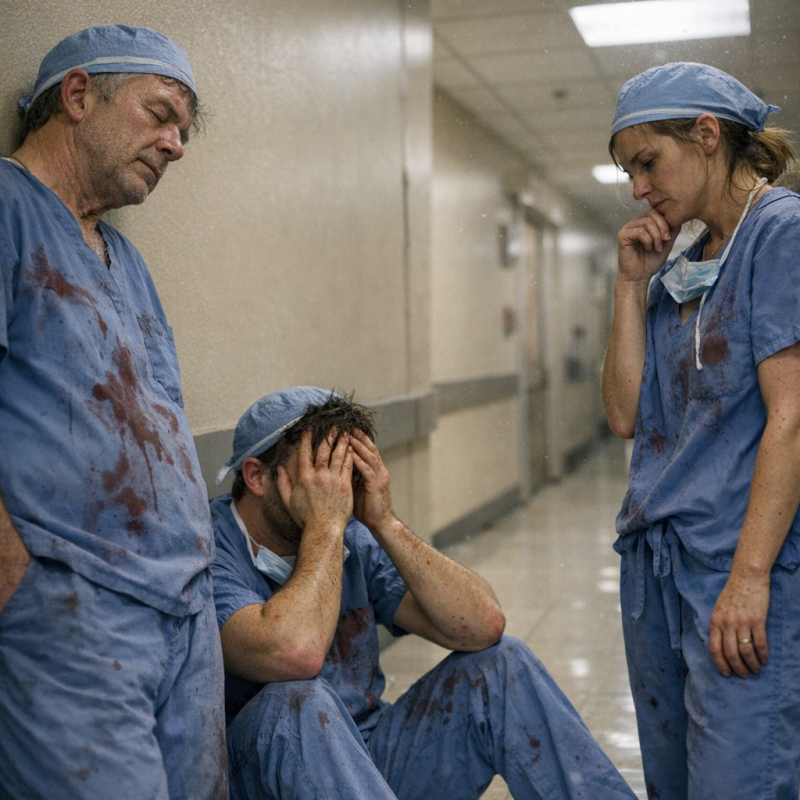 Image by FCT AI
Post-Op Revelation
Arthur woke up six hours post-op. Dr. Chen and I were doing rounds when his eyes opened, still clouded with anesthesia but aware. I expected fear, or relief, or confusion — normal post-surgical responses. Instead, I saw disappointment. 'You saved me,' he said, his voice weak but clear. It wasn't a question. It was an accusation. Dr. Chen checked his vitals professionally, but I could see her jaw tighten. 'Yes,' I said. 'Despite everything, despite what you did, we saved your life.' Arthur turned his head slightly to look at me directly. 'That wasn't what was supposed to happen. I'd planned it perfectly — the anticoagulants, the timing, the complexity of the surgery. Dying on the table would have been the perfect ending to my story. Fifty years of making myself seen, and finally, a finale that would haunt you forever.' My stomach dropped. Even now, even lying in an ICU bed, he was still orchestrating, still manipulating. 'You think saving you was a mistake?' Dr. Chen asked quietly. Arthur smiled, that same slight smile from before. 'No,' he said. 'Because now you'll always wonder. Every day for the rest of your career, you'll ask yourself if you should have tried just a little less hard. If you should have let me go.' And standing there, looking at his satisfied expression, I realized he'd still won, because now I'd always wonder if I should have let him.
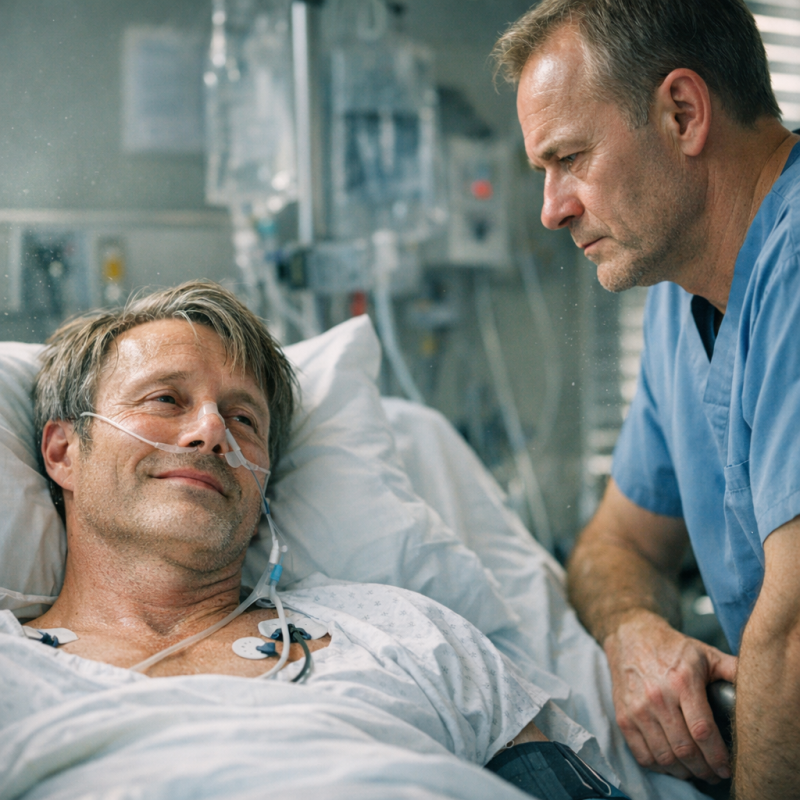 Image by FCT AI
The Final Object
Dr. Kovac called me three days later. I'd been avoiding the pathology lab, not wanting to see the fourth object Arthur had embedded in himself, but Kovac insisted I come down personally. When I got there, he had the metal cylinder laid out on the examination table under bright lights. It was stainless steel, about two inches long, carefully machined. 'I almost sent this through standard processing,' Kovac said, 'but something made me look closer.' He handed me a magnifying glass. The surface of the cylinder was covered in tiny engraved text, the letters so small they were barely visible to the naked eye. Names. Dozens of them. Kovac had already started transcribing them — Dr. Patricia Morrison, St. Luke's Hospital, 1974. Dr. James Chen, Memorial Medical, 1983. Dr. Sarah Williamson, County General, 1995. On and on, the complete record of fifty years of manipulation, all the doctors Arthur had targeted, all the lives he'd invaded, carved into metal and inserted into his own body like a trophy. My hands started shaking as I scanned down the list, because I knew what I was going to find before I found it. There, at the bottom, in fresh engraving that was cleaner and sharper than the rest: 'Dr. [my name], Regional Medical Center, 2024.' My name was already on it — he'd engraved it before he ever came to the hospital.
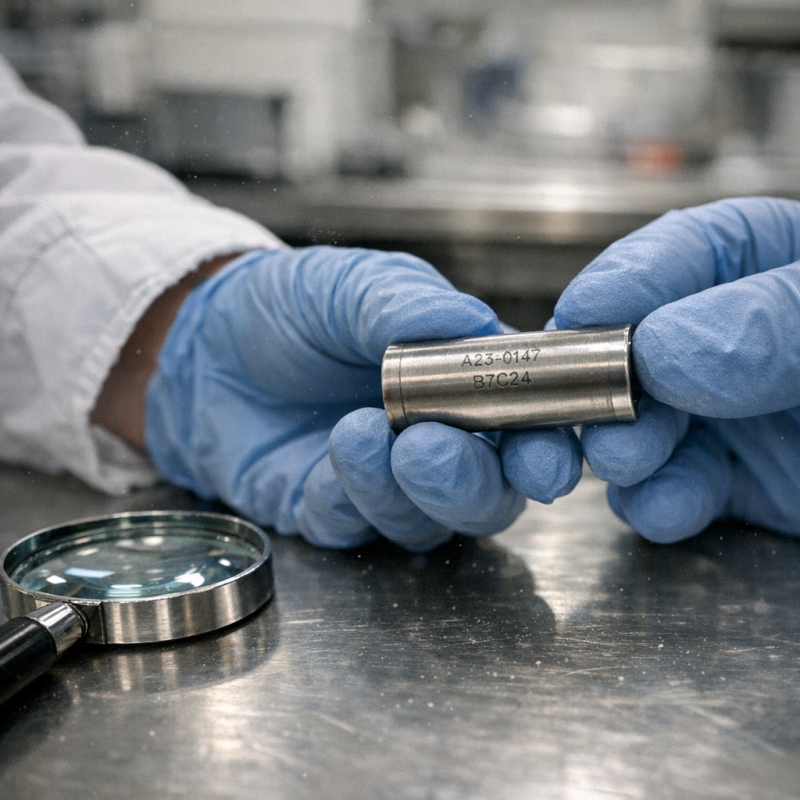 Image by FCT AI
Margaret's Goodbye
Margaret showed up at my office two days after Kovac showed me that cylinder. She looked like she hadn't slept in weeks, and honestly, I couldn't blame her. 'I need to tell you something,' she said, settling into the chair across from my desk. 'I'm done. I'm cutting him off completely — changing my number, blocking all contact. I should have done it years ago.' She twisted her hands in her lap, and I saw tears forming. 'I'm so sorry I didn't warn you sooner. I knew what he was, what he does to people, but I kept hoping... I don't know. That he'd changed, maybe. That he'd gotten too old for this.' She laughed bitterly. 'Stupid, right?' I told her it wasn't stupid, that hope was human. She shook her head. 'He'll find someone new,' she said quietly. 'Another doctor, another hospital. He always does. It's what gives him purpose.' She stood to leave, pausing at the door. 'All we can do is try to warn them before it's too late.'
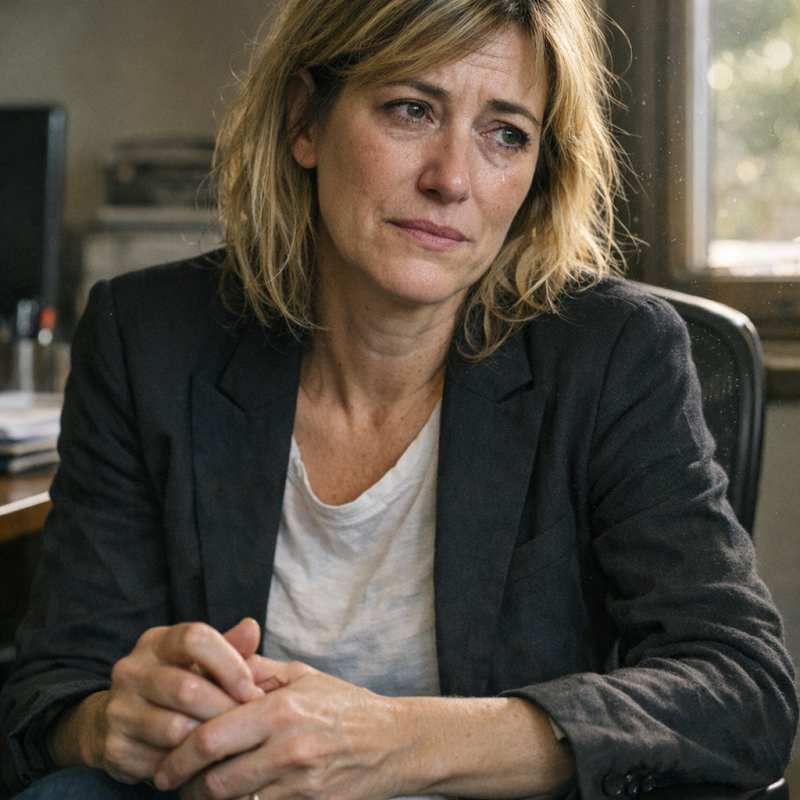 Image by FCT AI
Arthur's Discharge
Arthur was medically cleared for discharge on a Thursday morning. All his wounds had healed, his vitals were stable, and despite everything we knew about what he'd done, there were no legal grounds to keep him. Beth and I handled the discharge paperwork in near silence, both of us moving through the motions like we were sleepwalking. I watched him gather his few belongings, moving slowly but steadily, that same calm expression on his face that I'd seen from the beginning. When the wheelchair came — hospital policy for discharges — he waved it away and walked out on his own. I followed him to the entrance, some compulsion I couldn't name making me see him off. At the automatic doors, he turned back to me, extended his hand for a shake. 'Thank you, Doctor,' he said, his grip surprisingly firm. 'For your care. Your attention. For seeing me.' The doors slid open, and he stepped through into the sunlight. As I watched him walk away, I knew with absolute certainty I'd see his name in the news again someday.
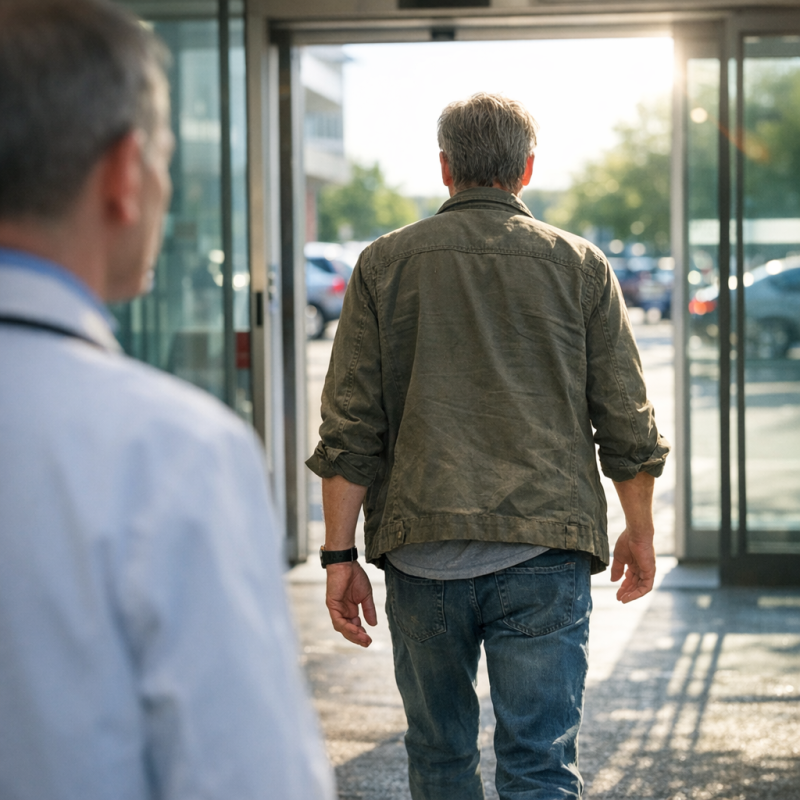 Image by FCT AI
Aftermath
I started therapy three weeks after Arthur left. The hospital insisted on it, actually — mandatory counseling for 'exposure to unusual patient trauma dynamics,' which was corporate speak for 'your patient manipulated you and we're worried about liability.' My therapist was kind, professional, asked all the right questions. We talked about boundaries, about the difference between caring for patients and being consumed by them. About how some people view medical attention as a form of intimacy, a way to feel seen that they can't find anywhere else. It helped, sort of. I went back to work after a month, but everything felt different. Every elderly patient made me hypervigilant. Every skin anomaly felt like a potential trap. I started having dreams about finding things embedded in my own skin, waking up running my hands over my arms looking for lumps that weren't there. During one session, my therapist leaned forward and asked, 'If you could go back to that first day, seeing that blackhead on Arthur's skin, would you do anything differently?' I sat there for a long time, and I honestly didn't know the answer.
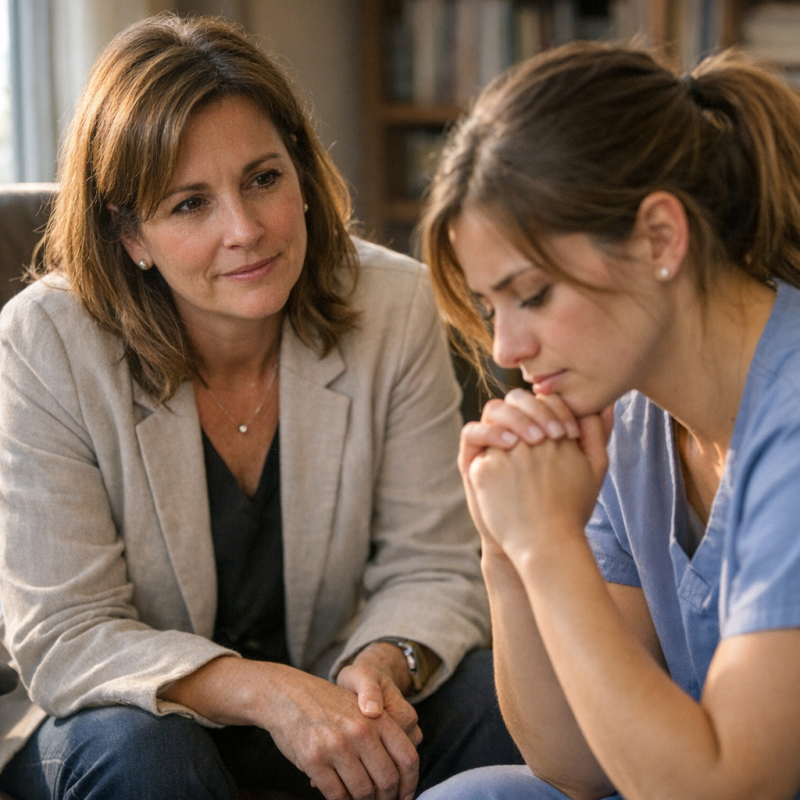 Image by FCT AI
The Next Patient
Four months later, I was back in the clinic full-time. Still jumpy, still hyperaware, but functioning. An intake nurse called me for a consult — elderly male patient, suspicious skin lesion on his shoulder. My stomach dropped, but I went. The man was eighty-two, sweet-faced, chatty about his grandchildren. Nothing like Arthur. But when I examined the spot on his shoulder, something in my gut twisted. It was small, dark, slightly raised. Probably just a sebaceous cyst. Probably benign. The old me would have prepped it immediately, curious and confident. The patient smiled up at me expectantly. 'Is it something you can take care of today, Doctor?' My hands were already gloved, the sterile tray already set up. I looked at that small dark spot, felt the familiar pull of professional obligation mixed with something else — the memory of Arthur's face, Margaret's warning, that cylinder with my name already engraved on it. 'Let me refer you to dermatology,' I said, stripping off my gloves. 'They're better equipped for this.' I stood there afterward, looking at the small dark spot on my new patient's skin — and this time, I walked away.
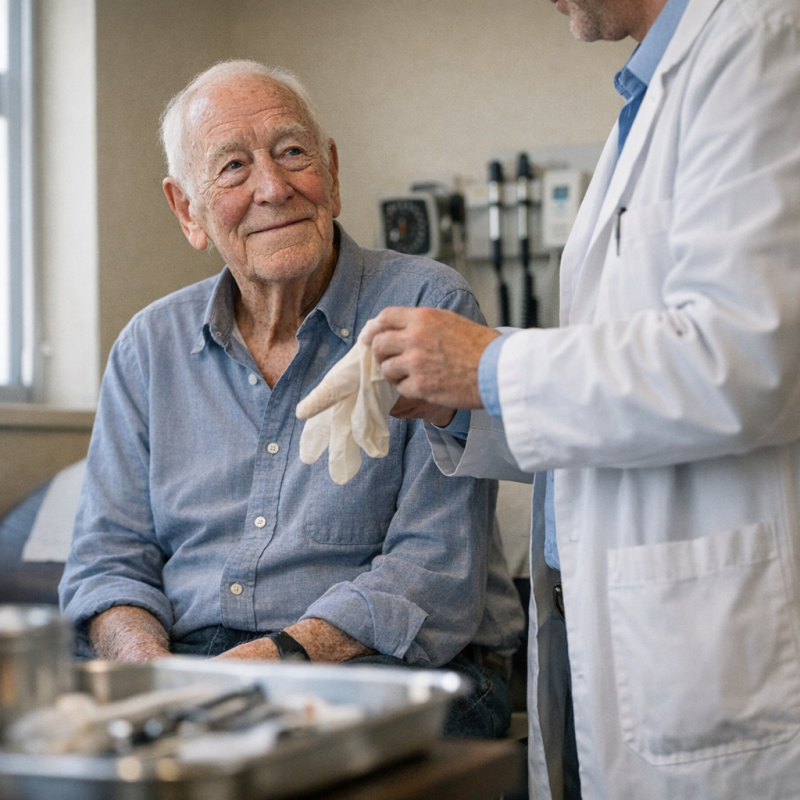 Image by FCT AI