Arthur's Discharge
Arthur was medically cleared for discharge on a Thursday morning. All his wounds had healed, his vitals were stable, and despite everything we knew about what he'd done, there were no legal grounds to keep him. Beth and I handled the discharge paperwork in near silence, both of us moving through the motions like we were sleepwalking. I watched him gather his few belongings, moving slowly but steadily, that same calm expression on his face that I'd seen from the beginning. When the wheelchair came — hospital policy for discharges — he waved it away and walked out on his own. I followed him to the entrance, some compulsion I couldn't name making me see him off. At the automatic doors, he turned back to me, extended his hand for a shake. 'Thank you, Doctor,' he said, his grip surprisingly firm. 'For your care. Your attention. For seeing me.' The doors slid open, and he stepped through into the sunlight. As I watched him walk away, I knew with absolute certainty I'd see his name in the news again someday.
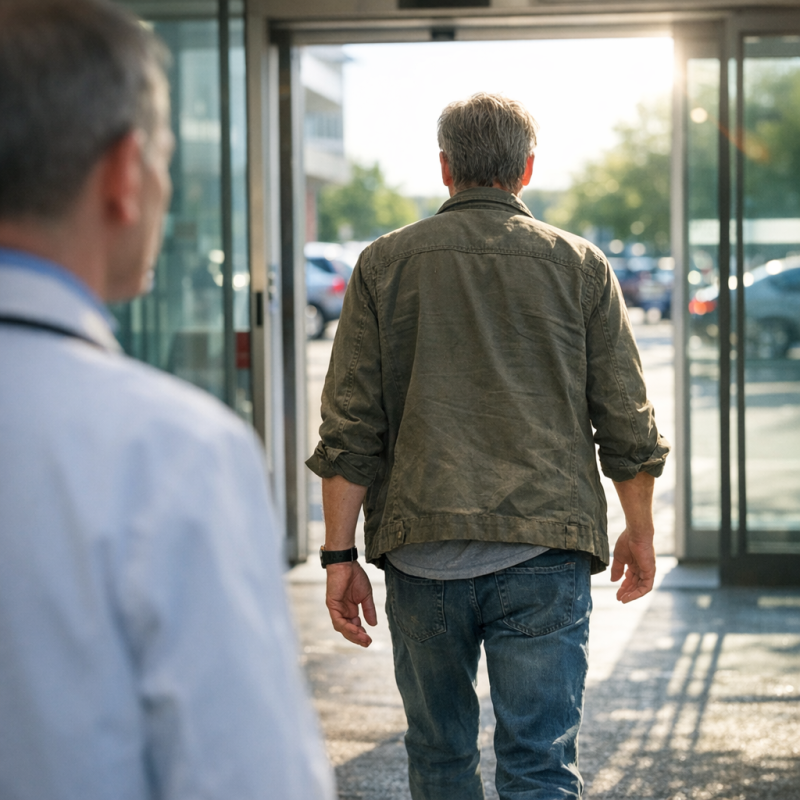 Image by FCT AI
Aftermath
I started therapy three weeks after Arthur left. The hospital insisted on it, actually — mandatory counseling for 'exposure to unusual patient trauma dynamics,' which was corporate speak for 'your patient manipulated you and we're worried about liability.' My therapist was kind, professional, asked all the right questions. We talked about boundaries, about the difference between caring for patients and being consumed by them. About how some people view medical attention as a form of intimacy, a way to feel seen that they can't find anywhere else. It helped, sort of. I went back to work after a month, but everything felt different. Every elderly patient made me hypervigilant. Every skin anomaly felt like a potential trap. I started having dreams about finding things embedded in my own skin, waking up running my hands over my arms looking for lumps that weren't there. During one session, my therapist leaned forward and asked, 'If you could go back to that first day, seeing that blackhead on Arthur's skin, would you do anything differently?' I sat there for a long time, and I honestly didn't know the answer.
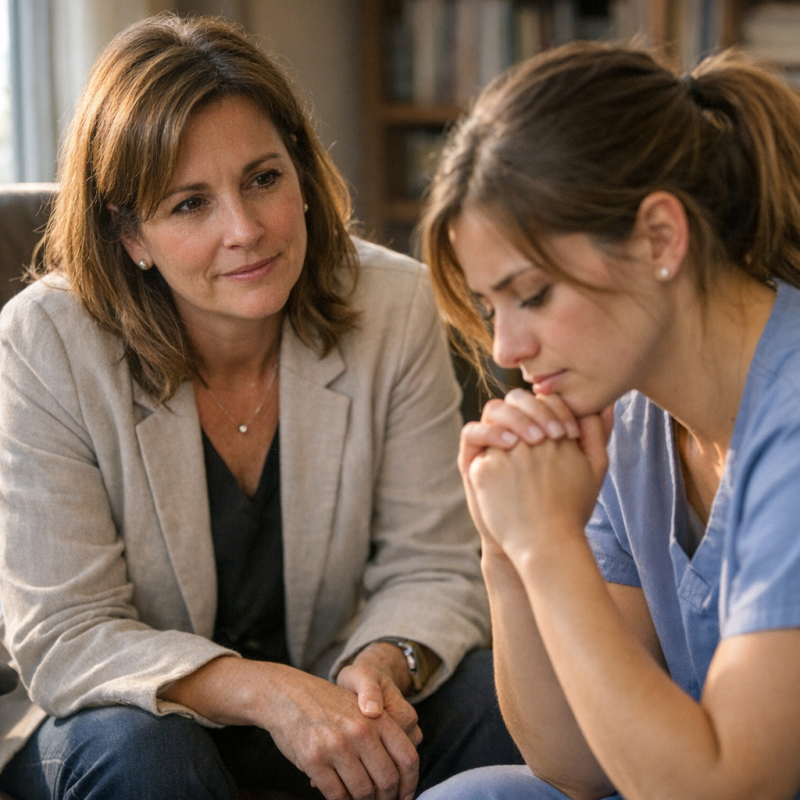 Image by FCT AI
The Next Patient
Four months later, I was back in the clinic full-time. Still jumpy, still hyperaware, but functioning. An intake nurse called me for a consult — elderly male patient, suspicious skin lesion on his shoulder. My stomach dropped, but I went. The man was eighty-two, sweet-faced, chatty about his grandchildren. Nothing like Arthur. But when I examined the spot on his shoulder, something in my gut twisted. It was small, dark, slightly raised. Probably just a sebaceous cyst. Probably benign. The old me would have prepped it immediately, curious and confident. The patient smiled up at me expectantly. 'Is it something you can take care of today, Doctor?' My hands were already gloved, the sterile tray already set up. I looked at that small dark spot, felt the familiar pull of professional obligation mixed with something else — the memory of Arthur's face, Margaret's warning, that cylinder with my name already engraved on it. 'Let me refer you to dermatology,' I said, stripping off my gloves. 'They're better equipped for this.' I stood there afterward, looking at the small dark spot on my new patient's skin — and this time, I walked away.
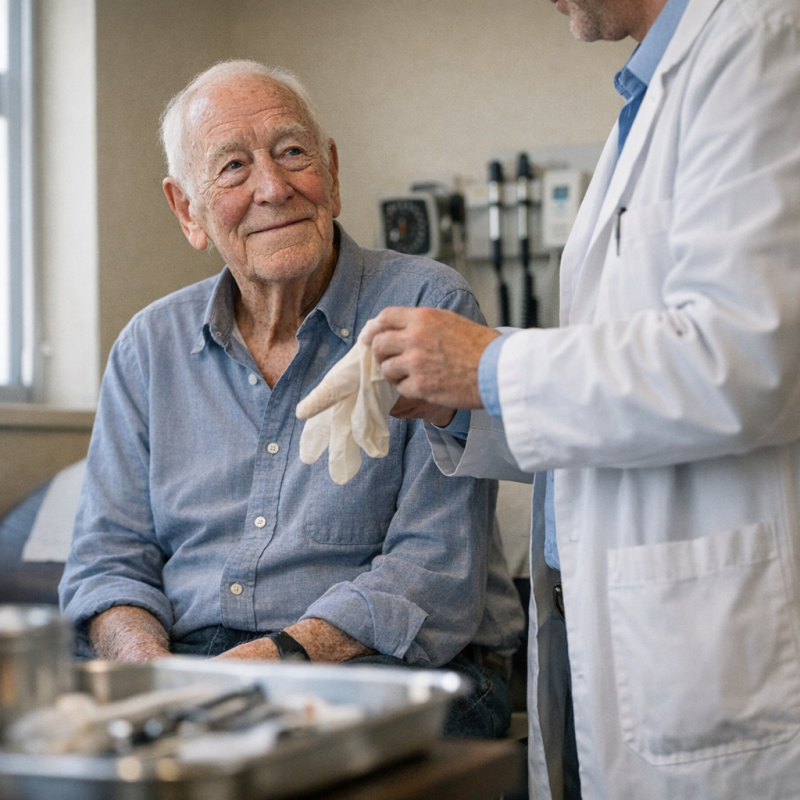 Image by FCT AI