
I've Stopped Paying
I interrupted her mid-sentence. 'I've stopped paying for things.' Five words. That's all it took. The line went so quiet I could hear my own heartbeat in my ears. Megan didn't ask what I meant. She didn't demand an explanation or accuse me of lying. She didn't say 'that's not true' or 'we never expected you to' or 'this isn't about money.' She just went silent. And that silence was the most honest conversation we'd ever had. If I'd said 'I've stopped believing in God' or 'I've stopped eating meat' or 'I've stopped watching football,' she would have had opinions, arguments, feelings. But this? Nothing. Because what could she say? How do you respond when someone names the only thing you've ever valued about them? How do you pretend you care about the person when they've just removed the transaction? You can't. Her silence told me everything—she had no response because she'd never cared about anything else.
 Image by FCT AI
Mom's Call
My mother called last. Her voice carried that particular quality I'd heard my entire life—wounded disappointment wrapped in concern. 'Sweetheart, I don't understand what's happening with you,' she said, like I was having some kind of breakdown rather than setting boundaries. 'Your brother and sisters are so hurt. We're all worried about you.' The 'we' that didn't include me. The concern that was really about their discomfort, not my wellbeing. She talked about family unity, about traditions, about how much I was missed. Missed. Not loved. Not valued. Missed. Like a piece of furniture that used to sit in the corner and now the room looked wrong without it. 'I know you're going through something,' she continued, 'but this seems so extreme. We didn't think it would be a big deal,' she said, and there it was. 'You've always helped before.'
 Image by FCT AI
I've Always Been Invited Before
Something in me snapped clean and sharp. 'I've always been invited before.' The words came out steady, almost calm, but they hung between us like an accusation I could never take back. I heard her breath catch. This was it. The thing we'd both been dancing around, the truth neither of us had spoken aloud. She could have said 'you're always invited' right then. Could have said 'of course you were invited, we just didn't mention it' or 'there must have been a misunderstanding.' She could have lied. But she didn't. The silence stretched on. Five seconds. Ten. Fifteen. I counted them in my head, each one hammering home what I'd always suspected but never wanted to believe. That my place at their table had always been purchased, never freely given. That the moment I stopped paying, I stopped existing to them. My mother's silence lasted so long I wondered if she'd ever speak again.
 Image by FCT AI
I Don't Fill the Silence
This time, I didn't rush to fill the uncomfortable silence or apologize for causing tension. I didn't scramble to smooth things over, didn't backtrack or soften my words with 'I didn't mean it like that' or 'I'm sorry, I'm just upset.' I'd spent my whole life rescuing conversations, making other people comfortable with my own discomfort. Not anymore. I held the phone to my ear and listened to the empty air between us. I heard her shift, heard her breathing change. I could practically feel her scrambling for something to say that wouldn't be an admission but wouldn't be a lie either. Some middle ground where she could keep her dignity and her daughter. But there wasn't one. The truth was too stark, too clear. I'd named it and now it sat between us, undeniable. I just waited, and the quiet stretched until it became unbearable—for her, not me.
 Image by FCT AI
Their Christmas
Christmas arrived and I spent it exactly how I wanted—quietly, without obligation, without performance. I woke up late. Made myself a breakfast I actually enjoyed instead of rushing to prep someone else's feast. I watched movies I'd been meaning to see. Read a book in the afternoon. Took a long bath. Ordered takeout from my favorite Thai place that did Christmas delivery. It was simple. It was mine. And you know what? It didn't feel sad. It didn't feel lonely. It felt like relief. Like I'd been holding my breath for thirty-five years and finally remembered how to exhale. No forced cheerfulness. No walking on eggshells. No calculating whether I'd brought enough, done enough, been enough. No wondering if this would be the year they'd value me for something other than my wallet. I turned off my phone and didn't check it for two days.
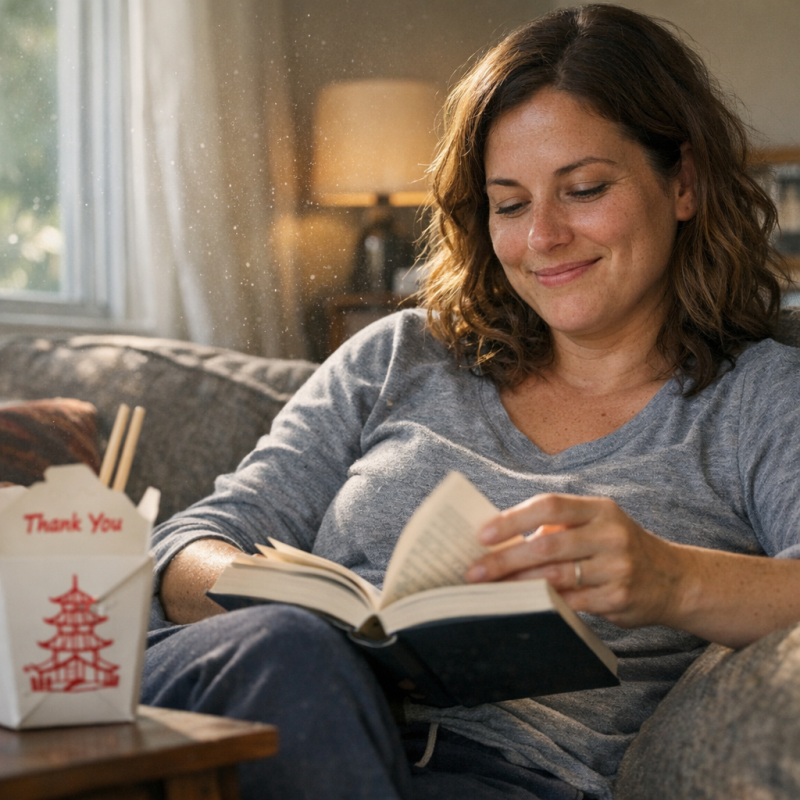 Image by FCT AI
Thirty-Seven Messages
When I finally turned my phone back on, there were thirty-seven messages. Thirty-seven. I sat on my couch with my coffee and scrolled through them slowly. Texts from Megan, from Josh, from Emily, from my mother, from my father. Group texts. Individual texts. Even a voice mail from Aunt Linda, who I'd spoken to maybe five times in my life. I read every single one, looking for something. Anything. A 'hope you're okay' or 'thinking of you' or even just 'Merry Christmas.' You know what I found? Complaints. Accusations. Demands for explanation. 'You really left us in a bind.' 'Do you know how embarrassing this was?' 'We had to explain to everyone where you were.' 'The ham was too small.' 'We didn't have enough chairs.' Not one of them said 'Merry Christmas' or 'We miss you'—they were all about what I'd ruined.
 Image by FCT AI
What They Scrambled Together
From the messages, I pieced together that they'd scrambled to create a last-minute celebration. They'd gone in on a grocery store ham. Someone had made box stuffing. They'd borrowed chairs from a neighbor. Emily had apparently attempted my cranberry recipe and it 'wasn't the same.' They'd run out of drinks by 6 PM. The dessert situation had been 'disappointing.' My mother had been 'so stressed.' Reading between the lines of their complaints, I could see the whole disaster unfold. They'd thought I was bluffing. Right up until Christmas morning, they'd expected me to show up, supplies in hand, ready to make everything perfect like always. And when I didn't, they'd had to face what their holiday actually looked like without me bankrolling it. It hadn't gone well—and somehow, they'd decided that was my fault.
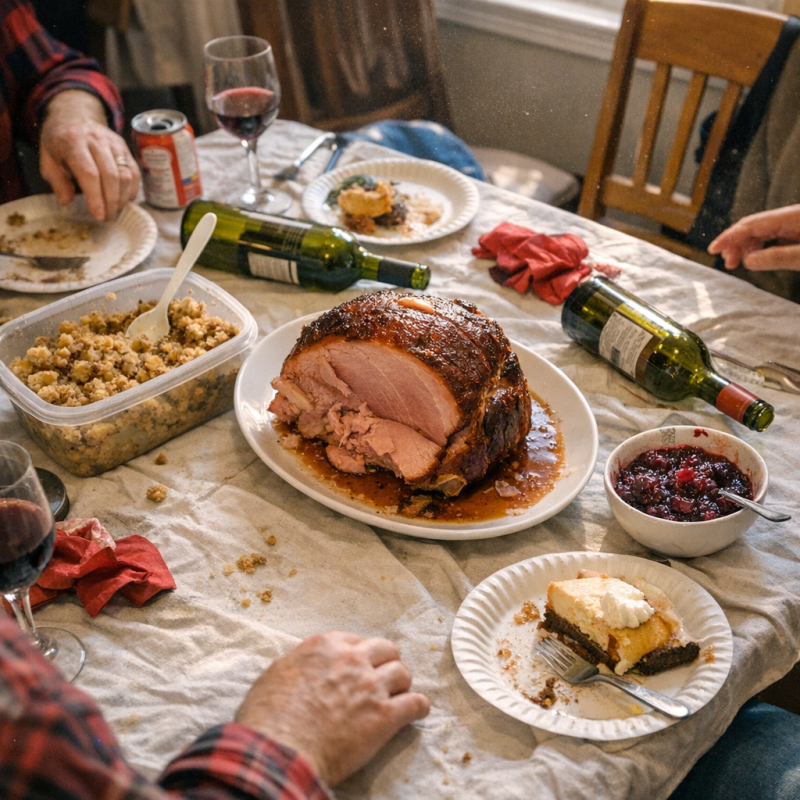 Image by FCT AI
They Wanted an Apology
Several messages made it clear they expected me to apologize for ruining their holiday. 'When you're ready to talk about this like an adult,' Josh had written. 'We deserve an explanation at minimum,' from Megan. My mother's text was the most manipulative: 'I know you're hurting and I forgive you, but I think you owe your siblings an apology. They worked so hard to make Christmas special despite everything.' Despite everything. Despite me. Despite my absence. Despite having to actually contribute to their own celebration. The audacity was almost impressive. They'd excluded me, then blamed me for not rescuing them from the consequences of that exclusion. They wanted me to apologize for not bankrolling a holiday I wasn't invited to. For not solving problems they'd created. For having the nerve to take them at their word when they showed me I wasn't wanted. I deleted every single one without responding.
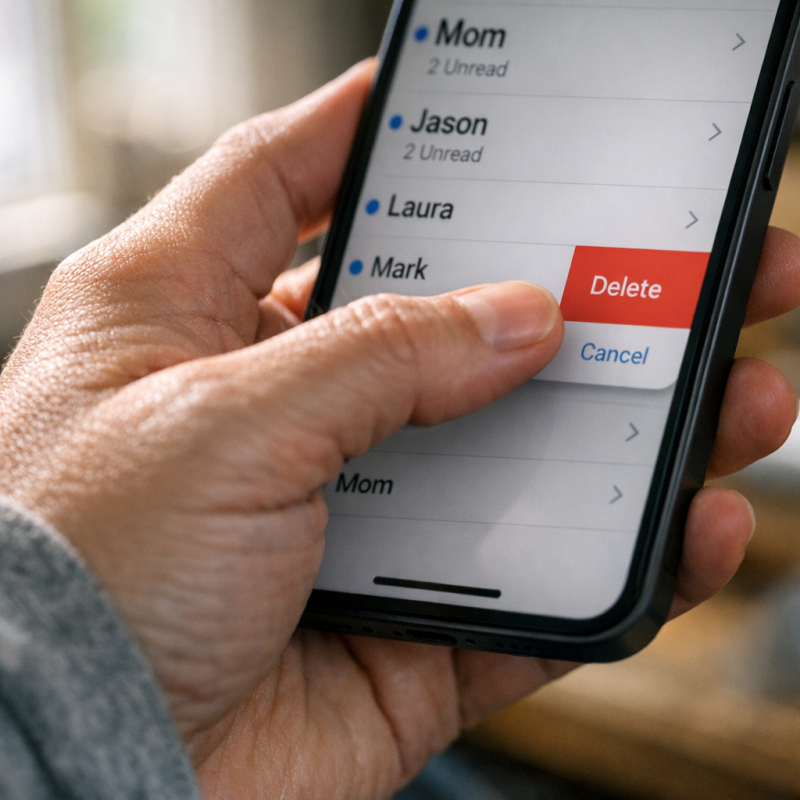 Image by FCT AI
Dad Came By
The knock came on a Tuesday afternoon, three days after I'd deleted the last guilt-trip message. I looked through the peephole and saw my father standing alone in the hallway, no Josh beside him, no mother orchestrating from behind. Just him, in his old jacket, looking smaller than I remembered. My first instinct was to pretend I wasn't home. He'd chosen his side at Christmas when he let Mom exclude me without a word. He'd chosen it again every day since by staying silent while they demanded my apology. I stood there with my hand on the doorknob, debating. But then he shifted his weight, and something about the movement looked uncertain in a way I'd never seen from him. He wasn't standing like someone sent to negotiate. He was standing like someone who'd come because he had to, because something was eating at him. I watched him through that tiny circle of glass for another moment. But something in his face looked different—older, maybe, or ashamed.
 Image by FCT AI
We Got Used to You Carrying Everything
I opened the door. He didn't hug me, didn't launch into explanations. He just asked if he could come in, and I stepped aside. We sat in my living room with coffee neither of us drank, the silence stretching between us like years. Then he cleared his throat and said, quietly, 'We got used to you carrying everything. And we stopped seeing you.' I waited for the 'but.' For the justification or the excuse or the request for understanding. It didn't come. He just sat there, hands wrapped around his mug, looking at me with something I slowly recognized as shame. 'Your mother... she's very good at making things seem necessary. At making everyone feel like they're the victims of circumstance rather than choices. And I let her. I let all of them.' He paused. 'I let them use you because it was easier than dealing with what that said about us.' It wasn't an apology, but it was honest—maybe that was worth more.
 Image by FCT AI
Things Don't Fix Themselves
I told him I appreciated his honesty, that it meant something to hear him say it out loud. But I also told him, as clearly as I could, that things couldn't just go back to how they were. That I wasn't going to return to family dinners where I paid for everyone's meals while they complained about their lives. That I wasn't going to be the solution to problems they refused to solve themselves. 'I can't be the ATM and the scapegoat anymore,' I said. 'I won't.' He didn't argue. Didn't tell me I was being too sensitive or that family was supposed to forgive. He just nodded, slowly, like he'd expected this. Like maybe he'd even practiced what he'd say when I set boundaries. 'I know,' he said. 'And I don't blame you. Your mother's angry, and Josh... well. But I had to come. I had to tell you that I see it now.' He met my eyes. 'But maybe we can build something different.'
 Image by FCT AI
Everyone Reaches for Their Wallet
Months later, I met my father and mother for dinner at a small Italian place neither of them had chosen—I'd picked it, and they'd agreed without complaint. The table sat three, not twelve. There was no discussion about drinks, no appetizer negotiation, no Josh announcing what everyone should order. We ate pasta and talked carefully about safe topics, testing the boundaries of this new arrangement. My mother was quieter than I'd ever seen her, and I couldn't tell if it was resentment or effort. When the bill came, my father reached for it first, then my mother pulled out her card without being asked. I added mine to the small pile. The server looked momentarily confused by the request to split it three ways, but figured it out. No one made a production of it. No one praised themselves for contributing. We just... paid. I drove home that night feeling something unfamiliar—not quite trust, but maybe the beginning of respect. I was welcome again, but this time, it wasn't because I was paying—it was because they'd finally learned what my presence was actually worth.
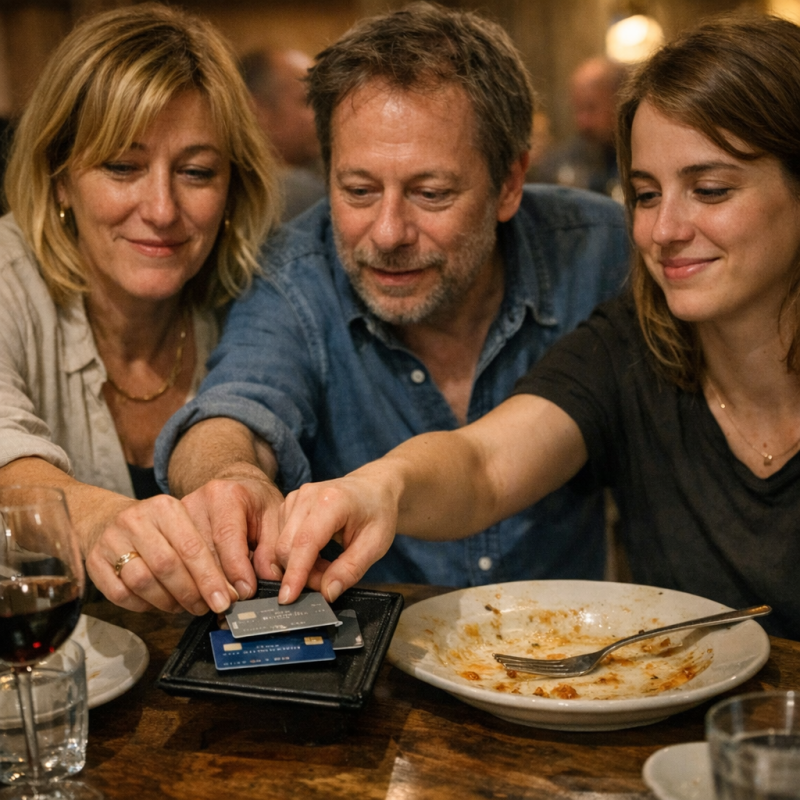 Image by FCT AI