The Investigation Begins
Thursday morning, Sandra herself sent the company-wide announcement. Full system audit, effective immediately—reviewing all documentation, version histories, maintenance records, and authorship claims. IT forensics team brought in from outside. Every employee who'd touched the system would be interviewed. I read it three times, my coffee going cold in my hand. Rachel forwarded it with just: 'Seriously?' This wasn't standard procedure. This was Sandra smelling blood in the water and deciding to find out exactly whose. The announcement specifically mentioned 'discrepancies in historical attribution' and 'questions about technical ownership.' Someone had clearly raised flags. Maybe the IT director, finally asking how Daniel had supposedly built something so sophisticated. Maybe Marcus, whose finance brain would've spotted the timeline issues. The audit would review everything—every email, every commit, every piece of documentation that proved who'd actually built what. I had kept meticulous records, always had. They were going to find the truth, and I didn't need to do anything except wait for it to surface in its own time.
 Image by FCT AI
The Digital Footprints
The audit team worked fast. By Friday, Rachel was sending me updates like dispatches from a war zone. They'd pulled the version control history—every single change to the system, timestamped and attributed. They were reviewing email chains going back eighteen months. They'd requested documentation from Daniel, from IT, from anyone who'd been involved. 'The lead auditor spent two hours in Daniel's office,' Rachel texted. 'Then another hour with the IT director. The IT director looked super confused when he came out.' I sat in a coffee shop, laptop open to nothing in particular, just reading her messages and feeling something tighten in my chest. They were finding it. All of it. The evidence I'd left scattered through the company's systems like breadcrumbs, never imagining I'd need them this badly. My name on the original architecture documents. My emails explaining complex technical decisions. My commits comprising ninety percent of the codebase. It was all there, waiting to be discovered. And as the audit progressed, one thing was becoming impossible to ignore: Daniel's story wasn't holding up, and I felt the first real stirrings of vindication.
 Image by FCT AI
The Email From Marcus
Marcus's email arrived Monday morning, formal and careful. 'Jordan, we need to discuss your historical involvement with the client management system. Would you be available for a meeting this week to provide context on your contributions?' Historical involvement. Contributions. The phrasing was so deliberately neutral it told me everything. They'd found the evidence. They knew. And now they wanted to hear my side before they did whatever came next. I read it five times, parsing every word choice. Not 'minor role' or 'assistance'—involvement. Not 'help' but contributions, plural. They were being careful, probably legal had reviewed it. I replied with equal formality, suggesting Thursday afternoon. His response came back in minutes: 'Thursday at 2 PM. Sandra will join us.' Sandra. The CEO herself. This wasn't a routine clarification meeting. This was something much bigger. But even as I confirmed the time, something nagged at me. The audit had found proof of my work, yes. But I couldn't shake the feeling there was more to uncover, something deeper than just opportunistic credit theft.
 Image by FCT AI
The Document Review
I spent Tuesday reviewing my own documentation, preparing for Thursday's meeting. Everything I'd saved, every email and spec and decision log. And as I read through them chronologically, patterns emerged that I'd been too close to see before. The way Daniel had positioned himself in communications, even in the early days. 'Daniel's team is developing...' in emails he'd forwarded to Sandra. 'Daniel's initiative...' in status updates. But here's what made my hands shake: I found threads where Daniel had specifically requested I send updates 'through him' rather than directly to leadership. 'For consistency,' he'd said. 'So we're presenting a unified front.' At the time, it seemed reasonable. Now it looked like something else entirely. He'd been controlling the narrative from the beginning, filtering my communications, reshaping how my work was presented. Every small redirection, every 'let me handle the executive summary,' every 'I'll present this to Sandra'—they weren't innocent. They were deliberate. This wasn't opportunistic theft when success came. This looked like something he'd been planning all along, and the realization made my blood run cold.
 Image by FCT AI
The Old Emails
I went deeper, pulling archived emails I hadn't looked at in months. And there they were—messages from Daniel that I'd dismissed as normal manager-speak at the time. 'Just want to clarify ownership structure on this project,' he'd written in month two, when the spreadsheet was becoming something bigger. 'For documentation purposes, how should we position the development team?' I'd replied with org chart details, not understanding what he was really asking. Another email, month four: 'Sandra's asking about technical leadership. I think it's cleaner if we streamline credit rather than getting into individual contributors. Thoughts?' I'd agreed, thinking he meant simplifying the presentation. God, I'd been so stupid. Another: 'Let's make sure all technical decisions route through me before going to executives. Helps me stay informed and prevents mixed messages.' Each one looked innocent in isolation. Standard manager guidance. But lined up together, they formed something else. A pattern of establishing himself as the source, the authority, the creator. Pieces of a puzzle I hadn't known I was solving. And I started to wonder what else I had missed.
 Image by FCT AI
The Timeline Reconstruction
Wednesday, I built a timeline. Every instance of credit theft, every deflection, every moment Daniel had positioned himself as the system's creator. I mapped it all out in a spreadsheet—because of course I did, I'm the person who builds systems. Date, incident, communication, outcome. The pattern was undeniable. Month one: Daniel forwards my technical spec to Sandra as 'the team's approach.' Month three: Daniel presents my architecture diagram in a leadership meeting without attribution. Month five: Daniel starts referring to 'his system' in emails. Month seven: First time someone congratulates Daniel on 'building' something I created. Every deflection I'd excused, every omitted credit I'd rationalized—they fit into a progression. Not random. Not opportunistic. Methodical. And the timeline revealed something else: the intensity increased as the system proved more valuable. The more successful it became, the more systematically he erased me from its origin story. This wasn't theft of opportunity when success arrived. This was a deliberate campaign, executed in stages. And I needed to know exactly when it started and why.
 Image by FCT AI
The HR File
Thursday at 2 PM, I sat across from Marcus and Sandra in a conference room that felt too small. 'We need to show you something,' Sandra said, sliding a folder across the table. Internal communications. Daniel's emails to HR, to Sandra, to the board. And as I read them, my hands started shaking. Month one—the month I'd created the initial spreadsheet—Daniel had sent HR a project documentation form listing himself as 'Technical Lead and Primary Developer.' Month two, he'd submitted a patent disclosure form with his name alone. Month four, he'd sent Sandra a 'project retrospective' describing his development process, his technical decisions, his innovation. Every document was dated, filed, official. He'd been building a paper trail that erased me from the very beginning, establishing ownership while I was still just excited someone cared about my work. 'He planned this,' I said, my voice barely working. Sandra nodded grimly. 'From day one. The moment your spreadsheet showed promise.' This wasn't about taking credit for a finished product—he'd planned my elimination from the moment the spreadsheet showed promise, and everything that followed was just execution of that plan.
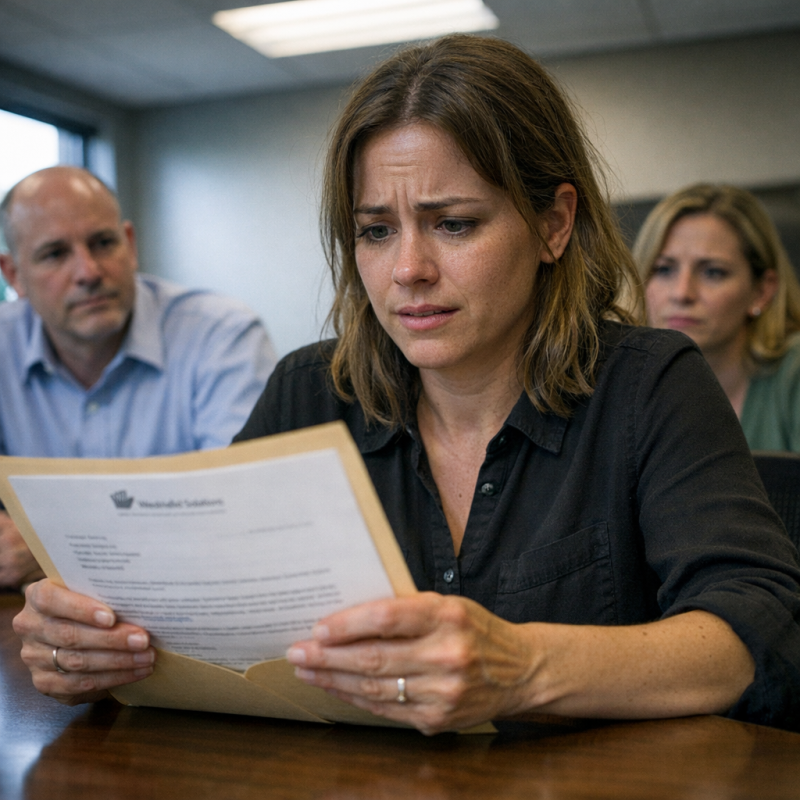 Image by FCT AI
The Reframing
I went home that night but I couldn't sleep. I just sat there replaying every conversation I'd ever had with Daniel, and suddenly they all looked different. That first meeting when he'd seemed so interested—that wasn't curiosity, that was assessment. The way he'd avoid eye contact when praising my work—guilt he was already planning to erase. Those tight smiles when I'd suggest improvements—calculation about how much longer he needed me around. Every deflection when I'd asked about presentations wasn't nervousness, it was rehearsal. The way he'd kept me away from the executives wasn't protecting me from office politics—it was isolating me from witnesses. That final meeting when he fired me, the way he'd seemed so prepared, so scripted—because he had been. He'd probably written that speech weeks earlier, maybe months, just waiting for the right moment to deliver it. I'd thought I was dealing with someone who got a little too ambitious, someone who made a bad choice when opportunity knocked. But Daniel hadn't waited for opportunity—he'd created it, cultivated it, executed it with cold precision. I wasn't dealing with an opportunist at all, and understanding the full scope of what he'd done meant I needed to know everything he'd built on my erasure.
 Image by FCT AI
The Documentation Trail
Friday morning, Sandra showed me everything. Not just the emails I'd already seen, but the complete archive of Daniel's deception. He'd written emails to himself describing 'his development process' and filed them in official project folders. He'd created documentation with backdated timestamps. He'd submitted quarterly reports describing technical decisions as his own, using language lifted directly from my notes. There was a patent disclosure form, a performance review where he rated himself exceptional for 'innovative system design,' even a proposal he'd sent to the board for expanding 'his' analytics framework. Every document systematically erased me, replaced my authorship with his name, rewrote history while I sat ten feet away, oblivious. I felt physically sick looking at it—the scope, the detail, the sheer calculation required to build something this comprehensive. 'He covered every angle,' Sandra said quietly. 'Almost.' Because what Daniel hadn't accounted for was that digital systems keep their own records. Version control showed my username on every original file. Metadata timestamps couldn't be altered. Server logs proved who'd actually built what. The truth was written in code he couldn't change, and that evidence didn't just contradict his story—it demolished it completely.
 Image by FCT AI
The Confrontation
Sandra scheduled a meeting with Daniel for Monday afternoon. I sat in the same conference room where he'd fired me four weeks earlier, only this time I wasn't alone and I wasn't blindsided. Daniel walked in looking confident, probably thinking this was about the system failures, maybe expecting to request my help as a contractor. Then he saw me. The confidence flickered. Sandra didn't waste time with pleasantries. She laid out the evidence—the version control records, the metadata, the original files with my username, the timeline that proved every document he'd filed was fiction. I watched his face as she spoke, watched him try to maintain his composure, watched the careful mask start to crack. He opened his mouth several times but no sound came out. His hands gripped the table edge. That polished, professional demeanor he'd always worn so easily just dissolved, and underneath was something desperate and small. He finally managed, 'There's been a misunderstanding—' but Sandra cut him off with another document, another timestamp, another piece of irrefutable proof. I just sat there, silent, watching his carefully constructed fiction collapse in real time. Every word he tried to speak only dug him deeper, and for the first time since I'd met him, I saw Daniel for exactly what he truly was—desperate, exposed, and completely out of moves.
 Image by FCT AI
The Admission
Sandra didn't let up. She walked him through every falsified document, every backdated email, every systematic lie. And finally, Daniel stopped trying to deny it. 'Look,' he said, his voice strained, 'this got out of hand. It started as a misunderstanding about project ownership and it snowballed. I should have corrected it earlier, but the longer it went, the harder it became.' A misunderstanding. That's what he was calling eighteen months of calculated deception. Sandra's expression didn't change. 'A misunderstanding,' she repeated flatly. 'That you documented extensively, submitted for patent consideration, and presented to the board as your sole achievement.' Daniel's jaw tightened. He had no answer for that. And I'd been silent through this whole meeting, just watching, but something in that word—misunderstanding—broke through my restraint. 'When did you decide to fire me?' I asked. My voice came out steady and cold. 'Was it after the system succeeded? After the board meeting? Or was it always the plan, from the moment you saw my spreadsheet had potential?' Daniel looked at me, then away. The silence stretched out. He didn't answer, and we all knew why. Because the answer was the last one, and even now, caught and exposed, he couldn't quite bring himself to admit that level of premeditation.
 Image by FCT AI
The Full Collapse
Sandra let the silence hang there for another moment, then shifted gears. 'The system is still failing,' she said. 'Critical operations are running on backup processes. Revenue tracking is manual. We've lost four weeks of automated analytics.' Daniel nodded quickly, probably relieved to move to practical problems he could deflect from. 'I've been working on it,' he said. 'It's a complex issue, but I'm making progress.' Sandra slid another document across the table—a technical summary from IT showing the specific errors, the cascade failures, the core logic problems. 'Our infrastructure team says the issue is in the foundational architecture. They can't fix it without understanding the original design logic.' She looked at Daniel directly. 'Can you repair the system without Jordan's help?' And that's when I watched it happen—the final collapse. Daniel looked at the error logs, at the technical specifications, at the code samples IT had pulled. You could see him trying to find an angle, a way to say yes, a path to maintain even a shred of credibility. But the evidence was right there, the system was broken, and he'd built his entire fiction on expertise he'd never actually possessed. His mouth opened, closed. 'I... it would take time to...' He couldn't even finish the sentence. The answer was no, and we all knew it.
 Image by FCT AI
The Termination
Sandra didn't hesitate. 'Then we're done here. Daniel, your employment is terminated effective immediately. HR will contact you about the exit process. You'll surrender your access credentials and company property before you leave the building today.' Just like that. The same abrupt, clinical dismissal he'd given me, only without the fake regret or the pretense of 'this is hard for me too.' Daniel sat there, stunned. 'Sandra, we can discuss—' 'There's nothing to discuss,' she cut him off. 'You fabricated documentation, committed fraud in patent filings, and misrepresented your qualifications to the board. You're lucky we're handling this internally.' Security was already at the door. They'd been waiting outside, I realized. Sandra had planned this whole thing. Daniel stood slowly, his face drained of color. He gathered his phone with shaking hands. As he walked to the door, he looked back at me—really looked at me for the first time in this entire meeting. There was hatred in that look, pure and undisguised, mixed with something like disbelief that this was actually happening to him. And I felt nothing but a quiet, cold satisfaction watching him experience exactly what he'd put me through, only with far less dignity and a fraction of the severance.
 Image by FCT AI
The Offer
After Daniel left, Sandra turned to me. The room felt different now—lighter somehow, despite everything. 'Jordan,' she said, 'I want you to consider returning. Not to your old position. I'm thinking senior analytics director, reporting directly to Marcus. Proper title, proper compensation, and your name on everything you create.' She named a salary figure that was double what I'd been making. 'You'd have a team, resources, decision-making authority. And I want to be clear—this is about more than fixing the current crisis. We need your expertise long-term.' I should have felt triumphant. This was validation, recognition, everything I'd wanted when I first built that spreadsheet. But sitting in that conference room, I mostly felt tired. 'I appreciate the offer,' I said carefully. 'But I need time to think about it.' Sandra nodded like she'd expected that. 'Take all the time you need. I understand trust isn't something we can rebuild with a job offer alone.' And that was exactly it. They'd let Daniel operate for eighteen months. They'd believed his lies, promoted him, celebrated him while I sat invisible. Yes, they'd investigated when the system failed, yes, they'd made it right when they discovered the truth. But could I really come back and pretend that betrayal hadn't happened, that I could trust these systems again?
 Image by FCT AI
The System Repair
But there was one thing I could do. 'The system,' I said. 'Let me fix it. Not as an employee, just as... professional pride, I guess. It's my creation, and I want it working the way it's supposed to.' Sandra agreed immediately, probably relieved I was willing to help at all. So I came in that Tuesday and sat down at a computer with admin access to my own code for the first time in a month. The damage was worse than I'd thought—Daniel had tried to 'optimize' things he didn't understand, had introduced contradictions in the core logic, had broken dependencies he didn't know existed. But I knew every line, every function, every calculation. I worked through Tuesday, Wednesday, Thursday, systematically undoing Daniel's changes and rebuilding what he'd destroyed. By Thursday evening, I ran the full test suite and watched every indicator turn green. The system hummed to life exactly as I'd designed it—efficient, accurate, elegant. Revenue tracking updated in real-time. Analytics processed instantly. Forecasting models ran without errors. I sat back and just watched it work, watched my creation do what it was built to do, under my hands, under my control. And that feeling—watching it run perfectly after everything that had happened—felt like reclaiming something that had been stolen and making it mine again, completely and undeniably.
 Image by FCT AI
The Company-Wide Announcement
The email landed in everyone's inbox at 9 AM on Monday. Sandra sent it company-wide—no BCC, no selective distribution, everyone from the C-suite to the interns got the same message. 'I need to address a serious error in attribution,' it began, and my hands actually shook as I read it on my phone. She laid it out clearly: I had designed and built the entire revenue tracking system. Daniel had contributed nothing to its creation. The misattribution had been a failure of leadership and oversight. She apologized formally, publicly, for allowing my work to be credited to someone else. Then she announced my new role and made it crystal clear who had created what. I sat there staring at my screen, reading it three times to make sure it was real. Within ten minutes, my inbox started filling up. Messages from colleagues I hadn't heard from in weeks—some apologetic, some congratulatory, some just acknowledging the truth with a simple 'I'm glad this got corrected.' Tom from sales wrote 'Always knew it was you.' Lisa from marketing sent 'About time.' Even people who'd barely spoken to me during Daniel's reign were reaching out, and every single message acknowledged a truth that should never have been in question.
 Image by FCT AI
The Decision
I took a week to think about it. Sandra's offer was generous—better title, better pay, equity, autonomy over my projects. But I'd learned something during those weeks of unemployment: I couldn't go back to being the person who just accepted whatever terms were offered. So when I sat down with Sandra the following Monday, I came with a list. I wanted my authorship documented in every system file, every piece of documentation, every presentation. I wanted final approval over anyone who worked on my code. I wanted a formal IP agreement that protected my work. And I wanted a reporting structure that kept me out of anyone's chain of command who might feel threatened by what I created. Sandra listened to every condition, nodded, and said 'Yes' to all of it. We shook hands, signed the paperwork, and just like that I was back. But I walked into that office the next day as someone completely different from the person who'd left. I knew exactly what I was worth now, exactly what I wouldn't tolerate, and I wasn't going to settle for anything less than what I deserved.
 Image by FCT AI
The New Normal
In my new role, I didn't just maintain the system—I rebuilt the entire culture around how we developed and credited technical work. I created documentation standards that required attribution at every level. I implemented code review processes that tracked individual contributions. I set up protocols that made it impossible for someone to claim credit for work they hadn't done. It wasn't about paranoia; it was about building protections that should have existed all along. I trained the team on these new standards, and honestly, most people welcomed them. Developers liked having clear records of their work. Managers appreciated the transparency. The whole engineering culture shifted toward something more honest, more fair. Rachel caught me in the break room one afternoon, about three months in. 'You know what's different?' she said. 'People actually talk about who built what now. It's like everyone's more careful about the truth.' I thought about that—about how one person refusing to accept injustice had rippled outward into something bigger. Sometimes the most powerful change comes from refusing to let injustice stand unchallenged.
 Image by FCT AI
The Final Click
Six months later, I sat at my desk working on the next evolution of the system—new features, better analytics, smarter automation. My name was in the header comments of every file. My architecture decisions were documented and attributed. My work was mine, unquestionably and permanently. I leaned back in my chair and thought about everything that had happened, about the moment this all started. People always ask about the dramatic part—the system collapse, the evidence, the confrontation. But honestly, the click that changed everything wasn't the one that triggered the demonstration. It was quieter than that. It was the moment I decided I wouldn't stay silent, wouldn't accept the narrative someone else was writing about my work, wouldn't let injustice become normal just because fighting it was uncomfortable. That decision—that single choice to speak up instead of disappearing—that's what led to everything else. Some battles are won with code, some with evidence, some with lawyers and leverage. But the most important ones? Those are won by refusing to let someone else write your story.
 Image by FCT AI