The System Repair
But there was one thing I could do. 'The system,' I said. 'Let me fix it. Not as an employee, just as... professional pride, I guess. It's my creation, and I want it working the way it's supposed to.' Sandra agreed immediately, probably relieved I was willing to help at all. So I came in that Tuesday and sat down at a computer with admin access to my own code for the first time in a month. The damage was worse than I'd thought—Daniel had tried to 'optimize' things he didn't understand, had introduced contradictions in the core logic, had broken dependencies he didn't know existed. But I knew every line, every function, every calculation. I worked through Tuesday, Wednesday, Thursday, systematically undoing Daniel's changes and rebuilding what he'd destroyed. By Thursday evening, I ran the full test suite and watched every indicator turn green. The system hummed to life exactly as I'd designed it—efficient, accurate, elegant. Revenue tracking updated in real-time. Analytics processed instantly. Forecasting models ran without errors. I sat back and just watched it work, watched my creation do what it was built to do, under my hands, under my control. And that feeling—watching it run perfectly after everything that had happened—felt like reclaiming something that had been stolen and making it mine again, completely and undeniably.
 Image by FCT AI
The Company-Wide Announcement
The email landed in everyone's inbox at 9 AM on Monday. Sandra sent it company-wide—no BCC, no selective distribution, everyone from the C-suite to the interns got the same message. 'I need to address a serious error in attribution,' it began, and my hands actually shook as I read it on my phone. She laid it out clearly: I had designed and built the entire revenue tracking system. Daniel had contributed nothing to its creation. The misattribution had been a failure of leadership and oversight. She apologized formally, publicly, for allowing my work to be credited to someone else. Then she announced my new role and made it crystal clear who had created what. I sat there staring at my screen, reading it three times to make sure it was real. Within ten minutes, my inbox started filling up. Messages from colleagues I hadn't heard from in weeks—some apologetic, some congratulatory, some just acknowledging the truth with a simple 'I'm glad this got corrected.' Tom from sales wrote 'Always knew it was you.' Lisa from marketing sent 'About time.' Even people who'd barely spoken to me during Daniel's reign were reaching out, and every single message acknowledged a truth that should never have been in question.
 Image by FCT AI
The Decision
I took a week to think about it. Sandra's offer was generous—better title, better pay, equity, autonomy over my projects. But I'd learned something during those weeks of unemployment: I couldn't go back to being the person who just accepted whatever terms were offered. So when I sat down with Sandra the following Monday, I came with a list. I wanted my authorship documented in every system file, every piece of documentation, every presentation. I wanted final approval over anyone who worked on my code. I wanted a formal IP agreement that protected my work. And I wanted a reporting structure that kept me out of anyone's chain of command who might feel threatened by what I created. Sandra listened to every condition, nodded, and said 'Yes' to all of it. We shook hands, signed the paperwork, and just like that I was back. But I walked into that office the next day as someone completely different from the person who'd left. I knew exactly what I was worth now, exactly what I wouldn't tolerate, and I wasn't going to settle for anything less than what I deserved.
 Image by FCT AI
The New Normal
In my new role, I didn't just maintain the system—I rebuilt the entire culture around how we developed and credited technical work. I created documentation standards that required attribution at every level. I implemented code review processes that tracked individual contributions. I set up protocols that made it impossible for someone to claim credit for work they hadn't done. It wasn't about paranoia; it was about building protections that should have existed all along. I trained the team on these new standards, and honestly, most people welcomed them. Developers liked having clear records of their work. Managers appreciated the transparency. The whole engineering culture shifted toward something more honest, more fair. Rachel caught me in the break room one afternoon, about three months in. 'You know what's different?' she said. 'People actually talk about who built what now. It's like everyone's more careful about the truth.' I thought about that—about how one person refusing to accept injustice had rippled outward into something bigger. Sometimes the most powerful change comes from refusing to let injustice stand unchallenged.
 Image by FCT AI
The Final Click
Six months later, I sat at my desk working on the next evolution of the system—new features, better analytics, smarter automation. My name was in the header comments of every file. My architecture decisions were documented and attributed. My work was mine, unquestionably and permanently. I leaned back in my chair and thought about everything that had happened, about the moment this all started. People always ask about the dramatic part—the system collapse, the evidence, the confrontation. But honestly, the click that changed everything wasn't the one that triggered the demonstration. It was quieter than that. It was the moment I decided I wouldn't stay silent, wouldn't accept the narrative someone else was writing about my work, wouldn't let injustice become normal just because fighting it was uncomfortable. That decision—that single choice to speak up instead of disappearing—that's what led to everything else. Some battles are won with code, some with evidence, some with lawyers and leverage. But the most important ones? Those are won by refusing to let someone else write your story.
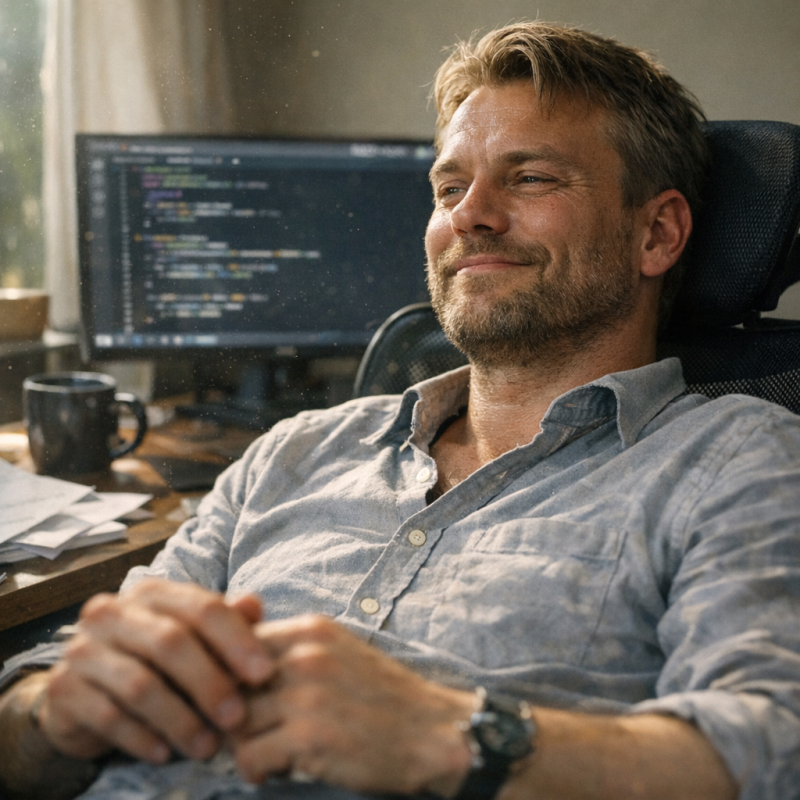 Image by FCT AI