
The School Email
The email arrived on a Wednesday afternoon. It was from Mrs. Henderson, Lily's third-grade teacher, with a subject line that made my stomach drop: 'Upcoming Parent-Teacher Conference.' I opened it expecting the usual routine check-in, but the first line threw me. 'Thank you for being willing to meet next week to discuss some coordination concerns that were recently brought to my attention.' I read it twice. Coordination concerns? Brought to whose attention, and by whom? The email was professionally vague, mentioning nothing specific but suggesting we meet 'to ensure Lily has consistent support across both households.' I hadn't requested this meeting. I scrolled down and saw the conference had been scheduled at Vanessa's request. My jaw tightened. What exactly had she told them? I drafted three different responses before settling on something neutral and cooperative, agreeing to the meeting time. But my hands were shaking slightly as I clicked send. The teacher's message mentioned 'concerns about consistency between households.'
 Image by FCT AI
Calling the School
I couldn't wait until the conference. I called the school the next morning and asked to speak with Mrs. Henderson directly. When she picked up, her voice was kind but measured. 'I appreciate you calling,' she said. 'I know these conversations can feel uncomfortable.' 'Can you tell me what concerns were raised?' I asked, trying to keep my tone even. 'I want to make sure I understand before we meet.' There was a pause. 'Well, it was mentioned that there might be some inconsistency with homework routines and bedtime schedules between your house and your ex-husband's. Nothing alarming, just things that could help Lily feel more stable.' My chest tightened. 'Who mentioned this?' 'Vanessa reached out last week,' Mrs. Henderson said carefully. 'She seemed very concerned about making sure Lily had a unified structure.' I thanked her and hung up, my mind racing. Vanessa had gone to Lily's school and painted me as inconsistent. The secretary's tone was sympathetic but careful—as if she'd already been briefed on 'the situation.'
 Image by FCT AI
The Parent-Teacher Conference
The conference was scheduled for Friday afternoon in a small room off the main office. Mrs. Henderson was there, along with Jennifer, the school counselor, which immediately put me on edge. 'Thanks for coming in,' Mrs. Henderson said warmly. 'We just want to make sure we're all supporting Lily in the same way.' I nodded, keeping my expression neutral. Jennifer opened a notebook. 'We understand co-parenting can be challenging,' she said. 'We're not here to judge anyone's household. We just want to make sure there's consistency for Lily's sake.' I explained my routines—homework right after snack time, dinner at six-thirty, bedtime at eight. Everything structured, predictable. They nodded, seeming satisfied. 'That all sounds great,' Mrs. Henderson said. 'I think maybe there was just some miscommunication.' But then Jennifer leaned forward slightly. 'Is everything okay between you and Lily's father? And his partner?' I hesitated. 'We're managing,' I said carefully. Jennifer assured me everything was fine—but asked if there was 'tension' in the co-parenting relationship.
 Image by FCT AI
Vanessa's Follow-Up
That evening, my phone buzzed with a text from Vanessa. 'Hey! Heard the conference went well. So glad we're all on the same page now. Maybe we should check in regularly to make sure we're coordinating schedules and homework? Would hate for Lily to feel caught in the middle of any miscommunication.' I stared at the screen. The message was polite, cooperative even. But something about it felt off. Why would Vanessa suddenly care about coordinating with me after going directly to the school first? I drafted a response three times before settling on something brief and noncommittal. 'Sure, we can check in as needed.' Her reply came almost immediately. 'Perfect! I'll send you a quick update every Sunday after drop-off, and you can do the same. Just to keep things consistent for Lily.' I set the phone down, feeling uneasy. There was nothing objectionable in what she was saying. But the timing, the sudden enthusiasm for coordination—it felt deliberate. The message was polite—but it felt like she was documenting my response.
 Image by FCT AI
Documenting Again
I pulled out the old notebook that night. The one I'd used during the custody battle, filled with dates and times and carefully recorded conversations. I'd stopped using it after the settlement, hoping we were past all that. But now I flipped to a fresh page and started writing again. Every text from Vanessa. Every email from the school. Every Sunday exchange in the parking lot. I noted the date, the time, who said what. It felt exhausting and paranoid, but Rachel's warning echoed in my head. 'People like that don't just stop.' I didn't know what Vanessa was planning, or if she was planning anything at all. Maybe I was overreacting. Maybe she really had just decided to be more cooperative. But my instincts told me otherwise. So I documented. I backed up texts. I saved emails. I kept a running log of every interaction, no matter how small or insignificant it seemed. I just didn't know what I was protecting myself from yet.
 Image by FCT AI
The Medical Form
The envelope arrived from Lily's pediatrician's office the following Tuesday. Inside was a standard medical consent form, the kind I'd filled out a dozen times before. But attached was a yellow sticky note: 'Please complete and return. Updated custody documentation requested.' I frowned. Updated custody documentation? We'd provided all that years ago. I called the office, and the receptionist pulled up Lily's file. 'Oh, yes,' she said brightly. 'Your ex-husband and his partner came in last week and mentioned there had been some changes to the custody arrangement. We just need to make sure our records are current.' My grip tightened on the phone. 'There haven't been any changes,' I said carefully. 'The custody agreement is the same as it's been for two years.' The receptionist paused. 'Oh. Well, they seemed to think there might be some updates coming soon. But no worries, we can just keep the current documentation on file.' I called the office, and they told me it was 'standard procedure for split custody cases'—except we'd never needed it before.
 Image by FCT AI
Marcus Notices
Marcus found me in the break room Thursday afternoon, staring at my phone without really seeing it. 'You okay?' he asked, pouring himself coffee. I looked up and tried to smile. 'Yeah, just tired.' He sat down across from me. 'You've seemed pretty stressed lately. Anything going on?' I hesitated. Marcus had been a good colleague, and we'd gotten to know each other well over the past few months. But explaining this whole situation felt impossible. 'Just some co-parenting stuff,' I said finally. 'My ex's partner has been... I don't know. She's acting really friendly all of a sudden, but she's also been contacting my daughter's school and doctor, and I can't shake the feeling that something's off.' Marcus nodded slowly. 'That does sound strange. What do you think she's trying to do?' I opened my mouth to answer, then stopped. What was I going to say? That I thought Vanessa was building some kind of case against me? Based on what—friendly texts and a parent-teacher conference? I started to explain—and realized how paranoid I sounded.
 Image by FCT AI
The Playground Encounter
I was picking Lily up from after-school care when I spotted Vanessa on the playground, chatting with another parent. She saw me and waved, walking over with that same bright smile. 'Hey! I was just talking to Sarah—her daughter is in Lily's class. Small world, right?' I nodded, keeping my expression neutral. We made small talk about the upcoming school fundraiser, about the weather, about nothing. But the whole time, I felt like we were speaking in code. Every word she said felt calculated, like she was performing for an invisible audience. She mentioned how important it was for Lily to have consistency 'between both homes,' how lucky Lily was to have 'so many people looking out for her.' I agreed with everything, my voice pleasant, my smile plastered on. What else could I do? Object to statements that sounded perfectly reasonable on the surface? The other parents were watching. Everything she said was designed to sound caring and collaborative—but underneath, I could feel the sharp edge of it. As she walked away, she called back, 'It's so nice when we can all be adults about this.'
 Image by FCT AI
Lily's Question
That evening, Lily was quieter than usual at dinner. She pushed her pasta around her plate, not really eating. 'Everything okay, sweetie?' I asked. She looked up at me with those serious eyes—the expression that meant she was working something out in her head. 'Mom, why does Vanessa ask me so many questions?' My fork stopped halfway to my mouth. 'What do you mean?' I tried to keep my tone light, casual. Lily shrugged. 'I don't know. She just... she asks me stuff about what we do here. About our house and stuff.' My heart was pounding, but I kept my face calm. This was exactly what I'd feared—but hearing it confirmed by my nine-year-old daughter was different than suspecting it. I needed to know more without scaring her or making her feel like she was in the middle of something. I set down my fork carefully. I kept my voice calm when I asked, 'What kind of questions?'
Questions About Bedtime
Lily picked at her napkin, not meeting my eyes. 'Like, what time do I go to bed here. And what we have for dinner. If I do my homework right away or later. And...' She hesitated. 'And if you follow the rules.' My chest tightened. 'What rules, honey?' 'I don't know. She just asks if you follow them. Like the schedule from the divorce.' The clinical precision of it made me feel sick. Vanessa wasn't just being intrusive—she was systematically gathering information through my child. How many times had this happened? How long had Lily been carrying this confusion, not understanding why Dad's girlfriend was interrogating her? I thought about all those cheerful texts, all those friendly interactions. This was what had been happening underneath. Vanessa had been using a nine-year-old as her information source. I wanted to scream. Instead, I reached across the table and squeezed Lily's hand. 'You didn't do anything wrong, sweetie. You can always answer honestly. You're not in trouble.' I reassured Lily everything was fine—but my hands were shaking.
 Image by FCT AI
Calling Rebecca
I called Rebecca from my car the next morning, sitting in the work parking lot before I went inside. My voice was steady, but I gripped the steering wheel hard enough to hurt. 'Rebecca, I need to tell you something. Vanessa has been questioning Lily—about bedtimes, meals, whether I'm following the custody schedule. Lily told me last night.' There was a pause on the other end. 'How long has this been going on?' 'I don't know. Lily just mentioned it now, but from the way she described it, it sounds like it's been happening regularly.' I could hear Rebecca typing. 'And what exactly is she asking?' I went through everything Lily had told me, trying to remember the exact words. When I finished, Rebecca was quiet for a long moment. I stared at the dashboard, waiting. Finally, she spoke. 'I want you to document this conversation with Lily—write down exactly what she said, as close to her words as possible. And don't discuss it with Daniel or Vanessa yet.' Her tone had shifted. It wasn't reassuring anymore. Rebecca was quiet for a moment, then said, 'I think we need to talk in person.'
 Image by FCT AI
Rebecca's Office
Rebecca's office felt different this time—less like a routine check-in and more like a command center. She had my documentation spread across her desk: screenshots of Vanessa's texts, notes from my conversations with the school and doctor, and my write-up of what Lily had told me. 'Okay,' Rebecca said, looking up at me. 'I've been thinking about this since your call. The pattern here is very specific. Vanessa isn't just being nosy or overstepping. She's gathering evidence.' I stared at her. 'Evidence of what?' 'Of inconsistency. Of rule violations. Of anything that could be used to argue that the current custody arrangement isn't working.' The words landed like stones. 'You think they're trying to change custody?' Rebecca's expression was serious. 'I think they might be building toward a modification petition. The questions to Lily, the contact with the school, the involvement in medical decisions—these are all things that could be framed as 'concerns about the child's welfare' in the other household.' My mouth went dry. I felt the blood drain from my face as she continued, 'They might be trying to argue you're an unfit parent.'
 Image by FCT AI
The Unthinkable
I drove home on autopilot, Rebecca's words echoing in my head. They might be trying to reduce your custody time. All those friendly texts from Vanessa, all those cooperative conversations—they'd been reconnaissance. And Daniel. My ex-husband, who I'd trusted to co-parent fairly, who I'd bent over backward to accommodate—he'd been part of this. Or at least, he'd allowed it. I pulled into my driveway and sat there, engine off, staring at nothing. The invoice suddenly made more sense. Vanessa documenting every expense, every perceived slight—she wasn't just being petty. She was building a case. A narrative where I was difficult, unreasonable, problematic. Where Lily would be better off spending less time with me. My hands were shaking again. I thought about Lily's confused face when she'd asked about Vanessa's questions. My daughter had been caught in this without understanding what was happening. How long had they been planning this? Since when did my ex-husband decide I wasn't fit to have equal time with my own child? Everything suddenly made sense—and nothing did.
 Image by FCT AI
The Emotional Toll
The next morning, I made Lily's favorite pancakes and packed her lunch with extra care—the good cookies, a note in her lunchbox. She chattered about her upcoming field trip, and I nodded and smiled and responded at all the right moments. Inside, I was screaming. How could I act normal when I might be fighting for time with my own daughter? When every parenting decision I made might be getting reported back and twisted into evidence against me? I walked her to the bus stop and waved as she climbed on, her backpack bouncing. She grinned at me through the window. I waved until the bus turned the corner. Then I walked back inside, closed the door, and leaned against it. I'd been holding it together for days—staying calm for Lily, staying professional at work, staying rational in conversations with Rebecca. But the weight of it was crushing. The possibility that I could lose time with my daughter because Vanessa had decided I was inconvenient. That night, after Lily went to bed, I sat in the dark and let myself fall apart.
 Image by FCT AI
Rachel's Kitchen
I showed up at Rachel's door Friday night without calling first. She took one look at my face and pulled me inside. 'What happened?' I told her everything—Rebecca's theory, the custody challenge, the systematic way Vanessa had been gathering information. Rachel listened, her expression growing darker. When I finished, I was crying again. 'I don't know how to fight this. How do I prove I'm a good mother? How do I defend myself against... against documentation of normal life?' Rachel handed me a tissue and sat down next to me. 'Okay. First, you stop spiraling. Second, you remember that you ARE a good mother. Lily is happy, healthy, and loved. That's what matters.' She squeezed my hand. 'But you need to be smart about this. Document everything, yes. But don't let them see you panic. Don't give them leverage.' I nodded, wiping my eyes. 'Rebecca said the same thing.' Rachel's expression hardened. 'They're counting on you falling apart,' Rachel said. 'Don't give them that.'
 Image by FCT AI
Building the Defense
I spent the next week following Rebecca's instructions like they were a lifeline. Every interaction with Lily, I documented. Every meal, every bedtime story, every homework session. I kept receipts for groceries, screenshots of school emails, photos of us together. It felt ridiculous—having to prove I loved my daughter, that I took care of her—but I did it anyway. Rebecca had given me a checklist: consistent routines, engaged parenting, stable environment. I ticked every box. When I brought the folder to her office the following Monday, it was two inches thick. She flipped through it methodically, her expression unreadable. 'Medical appointments up to date. School involvement documented. Healthy meals, appropriate boundaries, emotional support.' She looked up at me. 'This is good. Really good.' I felt something unknot in my chest. 'So we can fight this?' Rebecca closed the folder slowly. Her expression shifted, became more guarded. 'We can defend against accusations of unfitness, yes. But we're still operating without complete information.' She tapped the folder. 'This is good. But we need to know what they're really planning.'
 Image by FCT AI
The Discovery
Rebecca filed for discovery three days later. 'If they're building a custody case,' she explained, 'they have to disclose any evidence they plan to use.' The legal language was dense and formal, but the core request was simple: show us what you've got. I signed the papers with shaking hands. It felt like calling their bluff, except I wasn't sure it was a bluff. Rebecca submitted everything electronically, then walked me to the elevator. 'This part takes time,' she warned. 'They have thirty days to respond, but they'll probably use all of it.' I nodded, trying to absorb the timeline. A month of waiting. A month of not knowing what they'd documented, what they'd twist, what normal moment of parenting they'd turn into evidence against me. I went home and tried to keep living normally—taking Lily to school, making dinner, pretending my stomach wasn't in knots. Every time my phone buzzed, I jumped. Every email notification made my heart race. The waiting was awful. When their response arrived two weeks later, I wasn't prepared for what I'd see.
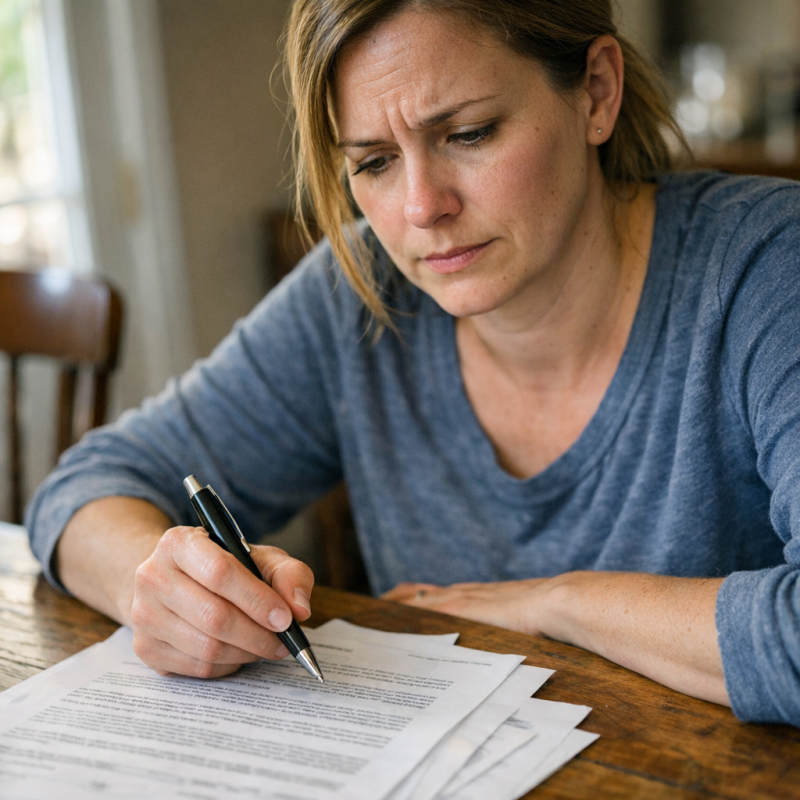 Image by FCT AI
The Binder
Rebecca called me to her office to review the submission together. 'I wanted you to see this in person,' she said, which should have been my first clue. She slid a massive three-ring binder across her desk. It had to be three inches thick, maybe more. The cover was labeled 'Parenting Concerns: Documentation.' I opened it with trembling hands. The first page was a table of contents. Seventeen sections. Each one listed dates, times, categories. 'Nutritional deficiencies.' 'Inconsistent discipline.' 'Inappropriate supervision.' I flipped to the first section. Page after page of printed notes, each one dated and timestamped. 'March 14: Lily arrived with unbrushed hair.' 'April 3: Lily reported eating cereal for dinner.' 'May 22: Lily arrived in stained clothing.' My hands were shaking so badly I could barely turn the pages. Every minor, insignificant, human moment of parenting—catalogued like evidence in an investigation. Rebecca sat quietly while I looked through it, her expression grim. I couldn't speak. Couldn't process what I was seeing. It was color-coded, cross-referenced, and terrifyingly thorough.
 Image by FCT AI
Dates and Timestamps
That night, I couldn't sleep. I'd brought the binder home—Rebecca had made copies for me—and I kept going back to it, like pressing on a bruise. I was looking for something, though I couldn't say what. Some explanation. Some moment where this had all gone wrong. And then I noticed the dates. The very first entry was from eighteen months ago. March 2nd. I pulled out my phone and scrolled back through old texts with Daniel. Found the message where he'd told me he was seeing someone new. February 23rd. Nine days. Vanessa had started documenting my parenting nine days after meeting Daniel. Before the first awkward custody handoff. Before any conflict between us. Before I'd even done anything that could be construed as problematic. I sat there in my dark living room, staring at that date, feeling something cold settle in my chest. This wasn't reactive. This wasn't Vanessa responding to concerns about Lily's wellbeing. This wasn't even about protecting a child she'd come to care about. She'd been building a case against me from the very beginning.
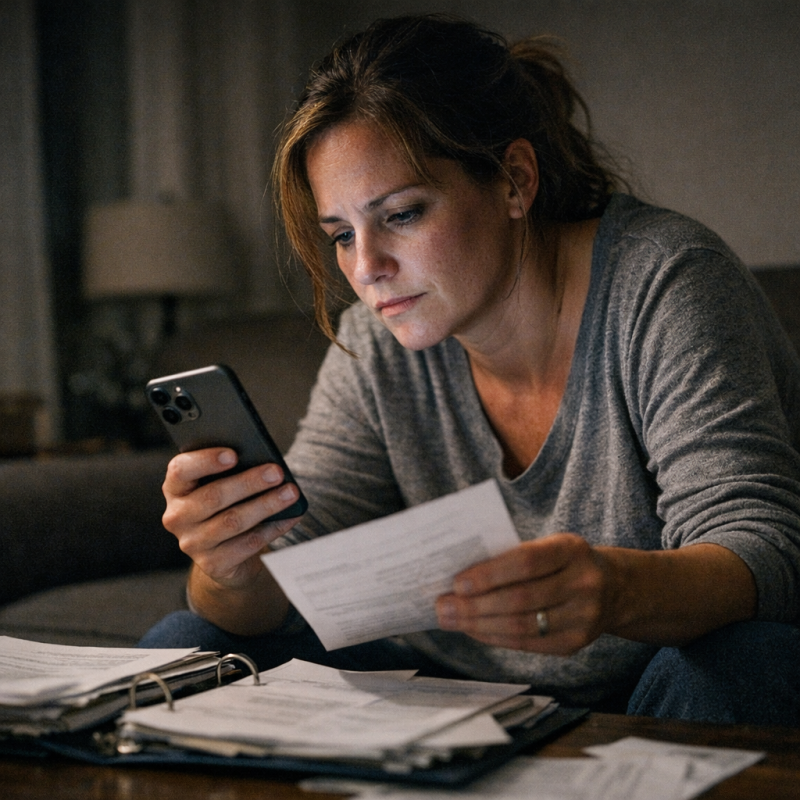 Image by FCT AI
The Schedule Changes
I went back through the binder with fresh eyes, looking at the timeline differently now. And that's when I saw it—a whole section dedicated to 'scheduling conflicts and maternal inflexibility.' I remembered these. The times Vanessa had texted asking to swap weekends, to adjust pickup times, to change the custody schedule. Sometimes I could accommodate. Sometimes I couldn't—I had work, or plans, or Lily had something scheduled. Normal co-parenting negotiation. Except every time I'd said no, it was documented. 'Mother refused to accommodate family emergency (sister visiting from out of state).' 'Mother unwilling to adjust schedule despite child's expressed desire to attend father's work event.' They'd made every reasonable boundary sound like selfishness. Every time I'd protected our routine or honored prior commitments, it became evidence of my rigidity. I pulled out my old texts and compared them to the documentation. The 'family emergency' was Vanessa's sister coming to town—not exactly an emergency. The 'work event' was a company party. I started laughing, though nothing was funny. The conflicts weren't mistakes—they were manufactured.
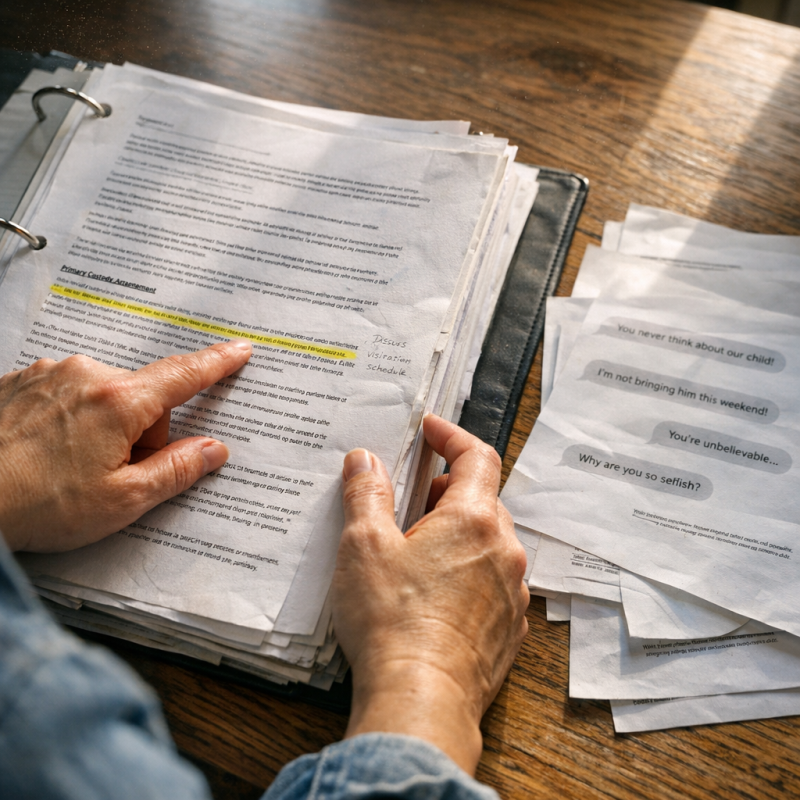 Image by FCT AI
The Photographs
The worst section was near the back. Photographs. Dozens of them, printed in color on glossy paper. Lily at various ages, in various states of casual home life. There was nothing shocking—no bruises, no obvious neglect. Just a kid being a kid. Lily in pajamas that were slightly too small. Lily with tangled hair. Lily wearing mismatched socks. Each photo had a caption. 'Inappropriate attire for 7:30 AM handoff.' 'Evidence of inadequate grooming.' 'Child's expressed embarrassment about clothing condition.' I stared at one photo in particular. Lily in her favorite pajamas—the ones with the cats that she'd insisted on wearing to breakfast one Saturday morning. She was smiling, holding a waffle, completely happy. The timestamp said 7:28 AM. A Friday. A custody exchange day. I felt something click into place. I'd been inside getting her backpack. Lily had been in the doorway, excited to see Daniel. And Vanessa had been taking photographs. Not of mistreatment. Not of neglect. Just of a seven-year-old in pajamas at breakfast. I stared at a picture of Lily in pajamas at 7:30 AM and realized—Vanessa had been taking photos during custody handoffs.
 Image by FCT AI
Rebecca's Analysis
I brought the binder back to Rebecca's office the next morning. I hadn't slept. My eyes felt like sandpaper. Rebecca took one look at my face and poured me coffee without asking. 'I know it's overwhelming,' she said gently. 'But try to stay focused.' I watched her go through the binder again, more slowly this time. She was making notes, cross-referencing sections. Her expression grew more thoughtful as she worked. Finally, she sat back. 'I want to show you something.' She pulled out a highlighter and started marking entries. 'Look at this. Every documented "issue" has a cost associated with it. Schedule changes they claim cost them work hours. Clothing they say they had to replace. Food they say they had to supplement. Medical appointments they imply you mishandled.' She looked up at me. 'They're not building a custody case.' I stared at her, not understanding. My brain felt like it was moving through mud. 'Then what—' Rebecca's expression was grave, almost pitying. 'This isn't about custody,' Rebecca said slowly. 'This is about money.'
 Image by FCT AI
The Real Invoice
Rebecca spread the documentation across her desk like evidence at trial. 'They're building a case to modify child support,' she explained. 'Look at the pattern. Every "parenting deficiency" they've documented creates a financial burden for their household. Your "inflexibility" means Daniel loses work hours. Your "inadequate provisioning" means they have to buy extra clothes, better food. Your "medical negligence" means they're paying for additional appointments.' She pulled out the original invoice—the one Vanessa had sent eighteen months ago. 'This wasn't random. This was a test run. They wanted to see if you'd pay, if you'd accept financial responsibility for normal parenting expenses.' My mouth was dry. 'But child support is set by the court. They can't just—' 'They can if they prove the current arrangement creates excessive, unreasonable costs,' Rebecca interrupted. 'If they can show that your parenting is deficient enough that they're constantly compensating—buying things, covering expenses, losing income—they can argue for a reduction or even a reversal.' She met my eyes. The original invoice wasn't a tantrum—it was a trial run for an argument they'd been planning for over a year.
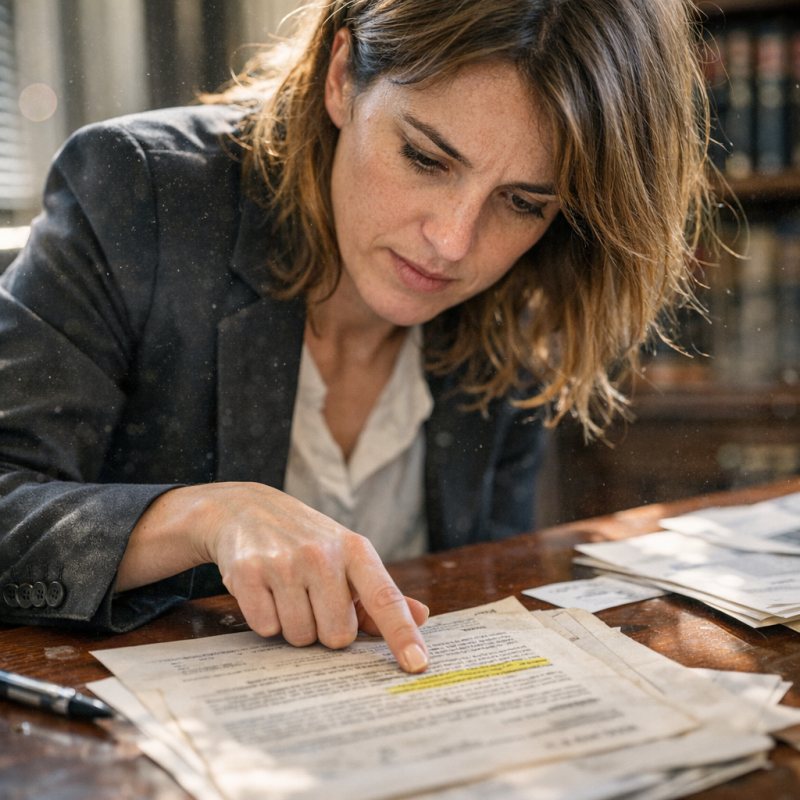 Image by FCT AI
Reframing Everything
I drove home on autopilot, my mind replaying the past eighteen months like a film I'd completely misunderstood the first time. The 'helpful' texts from Vanessa about Lily needing better winter boots—that wasn't concern. That was documentation. The time she'd insisted on meeting to discuss Lily's diet, taking notes on her phone while I spoke—evidence gathering. The schedule conflicts that always seemed to happen right before Daniel had important work commitments—manufactured leverage. Every single interaction had been calculated. I pulled into my driveway and sat in the dark car, scrolling back through old messages. There it was: Vanessa suggesting Lily needed therapy, me saying I'd think about it, then her following up with 'Just want to document that Mom is hesitant about mental health support.' I'd thought she was being passive-aggressive. She was building a case file. The birthday party incident, the medical appointment conflicts, the constant 'just checking in' messages about what I'd packed in Lily's bag—all of it. Every smile, every 'helpful' suggestion, every manufactured conflict—all of it was calculated.
 Image by FCT AI
Daniel's Complicity
But it was Daniel's role that made my hands shake against the steering wheel. I'd spent eighteen months thinking he was just going along with Vanessa's drama, too passive to stand up to her, too conflict-averse to tell her to back off. That wasn't it at all. He was the one who'd texted me about needing to adjust pickup times 'because of work'—creating documentation of my inflexibility. He was the one who'd mentioned, casually, that they'd had to buy Lily new clothes 'since she didn't have enough at our place'—establishing a pattern of my inadequacy. He'd been in every meeting, every tense exchange, quietly taking notes on his phone while Vanessa played the emotional heavy. I'd given him the benefit of the doubt, assumed he was trapped between his new wife and his ex. What a joke. He'd chosen this strategy. He'd participated in every step. He'd used our daughter and eighteen months of ordinary parenting interactions to build a financial case against me. The man I'd once loved had spent eighteen months trying to financially destroy me.
 Image by FCT AI
The Counteroffensive Begins
Rebecca's office became command central over the next two weeks. We spread everything out—my documentation, their documentation, bank records, custody schedules, every text message and email. 'We're not just defending against their claims,' Rebecca said, highlighting sections of their evidence with ruthless precision. 'We're going to expose the entire operation. Show the court exactly what they've been doing.' We built a timeline proving Vanessa had started her documentation before any conflicts existed. We compiled evidence of manufactured scheduling conflicts, complete with metadata showing she'd sent 'urgent' requests at times she knew I couldn't respond. We had financial records showing their household income had actually increased over the eighteen months they claimed to be burdened by excessive costs. Rebecca drafted motions, prepared exhibits, contacted witnesses. My sister agreed to testify about the original invoice and my calm response. Lily's teacher provided a statement about Lily being well-cared-for and appropriately provided for. We weren't leaving anything to chance. If they wanted a financial showdown, I'd give them one they couldn't afford to finish.
 Image by FCT AI
Exposing the Timeline
The first court hearing felt like stepping into a different dimension where truth actually mattered. Rebecca presented our timeline first—a comprehensive exhibit showing that Vanessa had begun her documentation campaign within two weeks of meeting Daniel, months before any custody disagreements had occurred. 'Your Honor,' Rebecca said, laying out the evidence with surgical precision, 'the respondents claim they were forced to document due to ongoing parenting concerns. But as you can see from the metadata on these files, Mrs. Harrison began creating her records before there was any custody dispute to document.' She projected messages on the screen: Vanessa's notes about Lily's clothes, her food, her behavior—all dated from a time when our co-parenting relationship had been, by everyone's account, perfectly civil. The judge leaned forward, studying the dates with a frown. She flipped through the printed exhibits, comparing timelines. Her expression shifted from neutral interest to something sharper. The judge's expression changed when she saw the dates—Vanessa had started her file the week she met Daniel.
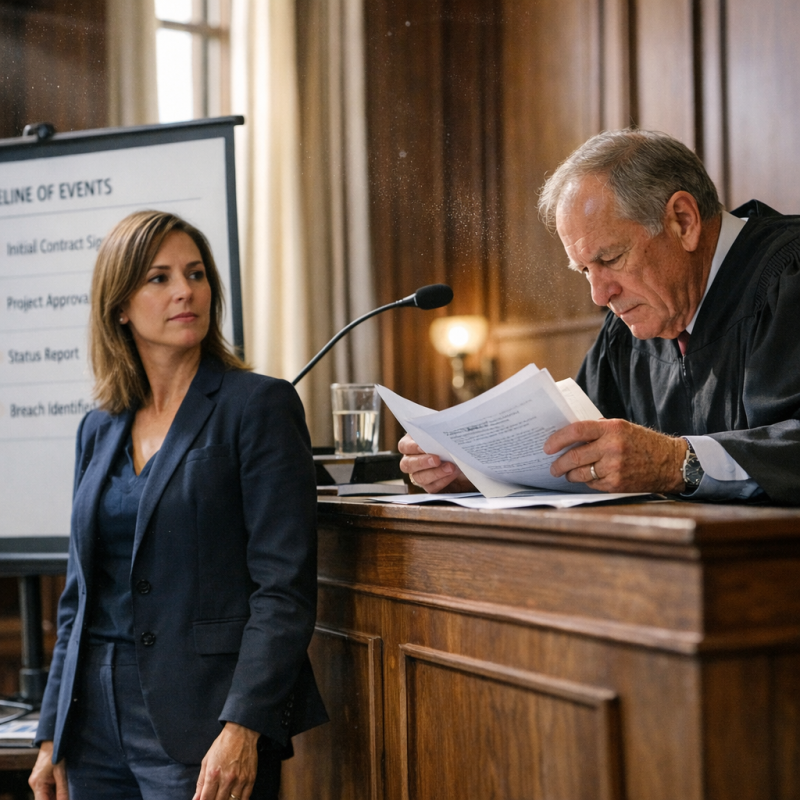 Image by FCT AI
The Manufactured Conflicts
Rebecca moved methodically through each 'conflict' they'd documented, showing the court exactly how they'd been manufactured. She pulled up text exchanges where Vanessa had requested schedule changes with impossible timing—asking me to swap a weekend with only two days' notice, then documenting my 'inflexibility' when I couldn't accommodate. 'Notice here,' Rebecca pointed to the screen, 'that Mrs. Harrison sent this request at 9 PM on a Thursday, asking for a swap that weekend, knowing from previous exchanges that my client works weekends and can't make last-minute changes. And here'—she advanced the slide—'is her follow-up message to Mr. Harrison, documenting the "rigidity" and "lack of cooperation."' We went through instance after instance: requests sent when I was at work, demands for items she knew I didn't have, questions timed to create maximum inconvenience. Each one documented as evidence of my inadequacy. I watched Vanessa's face from across the courtroom. Her lawyer whispered to her, but she didn't respond. Vanessa sat perfectly still as her own messages were read aloud, showing she'd requested impossible accommodations on purpose.
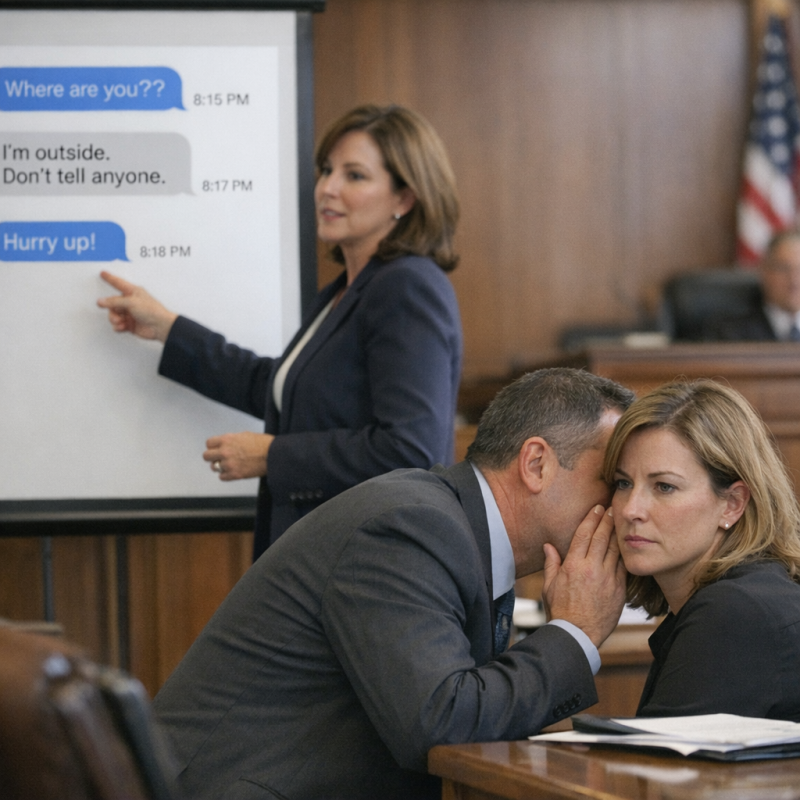 Image by FCT AI
The Child Interrogation
Then Rebecca presented the evidence I'd found most disturbing: transcripts of conversations Vanessa had initiated with Lily, systematically questioning her about life at my house. We had them because Daniel had accidentally included them in a shared document folder—questions about what I fed her, what time she went to bed, whether I'd taken her to the doctor, what I'd said about Vanessa. 'Your Honor,' Rebecca said quietly, 'these interrogations happened regularly, often right after transitions between households. A nine-year-old child was being used as an intelligence source to build a case against her mother.' The judge's expression hardened. She read through the transcripts slowly, her jaw tightening. Daniel and Vanessa's attorney objected, argued that they were simply checking on Lily's well-being, that any parent would ask these questions. Rebecca countered with expert testimony about the psychological impact of using children as informants. The judge set down the papers and looked at all of us—me, Daniel, Vanessa, the attorneys. The judge asked to speak to Lily privately, and my heart stopped.
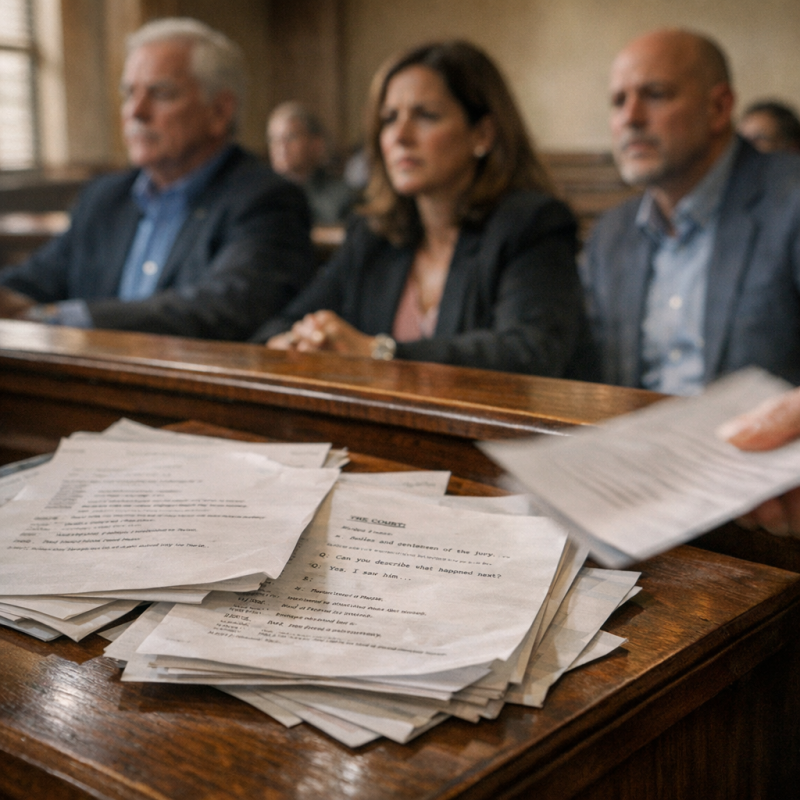 Image by FCT AI
Lily's Voice
The wait while Lily met with the judge in chambers felt endless. Rebecca sat beside me, outwardly calm, but I could see her fingers tapping against her notepad. Daniel and Vanessa whispered with their attorney across the aisle. I tried not to think about what Lily might be saying, whether she'd feel pressured, whether this whole process was harming her in ways I couldn't protect her from. After forty minutes, the judge returned alone. Lily had already been taken to the waiting area by the court liaison. The judge's face was unreadable as she took her seat, but something in her posture had shifted. 'I've spoken with Lily,' she began, her voice measured and precise. 'She's a bright, articulate child who clearly loves both her parents.' My stomach clenched. But then the judge's gaze moved to Vanessa. 'However, she expressed considerable discomfort with what she described as feeling 'quizzed' and 'tested' during her time at her father's home. She reported feeling responsible for reporting back on her mother's household.' The courtroom went very still. The judge looked directly at Vanessa and said, 'Using a child to build a case is unacceptable.'
 Image by FCT AI
The Financial Revelation
Rebecca saved the financial evidence for last, and it was devastating. She presented bank records showing that Daniel and Vanessa's household income had actually increased by 18% over the period they claimed to be financially burdened by my 'inadequate parenting.' She showed their discretionary spending—vacations, home renovations, a new car—while they simultaneously claimed they were struggling to cover 'basic necessities' for Lily. 'Your Honor,' Rebecca said, organizing the exhibits with practiced efficiency, 'the respondents aren't seeking a custody modification because of genuine concerns about the child's welfare. They're seeking to reduce their financial obligation through child support modification.' She pulled out their own documentation, showing how every claimed 'expense' corresponded to standard parenting costs already covered by the existing support arrangement. The judge studied the financial records, her expression growing increasingly stern. She made notes, asked pointed questions about their income sources and expense claims. Then she set down her pen and looked directly at Daniel and Vanessa. The judge ordered a full financial audit of their household expenses—including the 'costs' they'd claimed I caused.
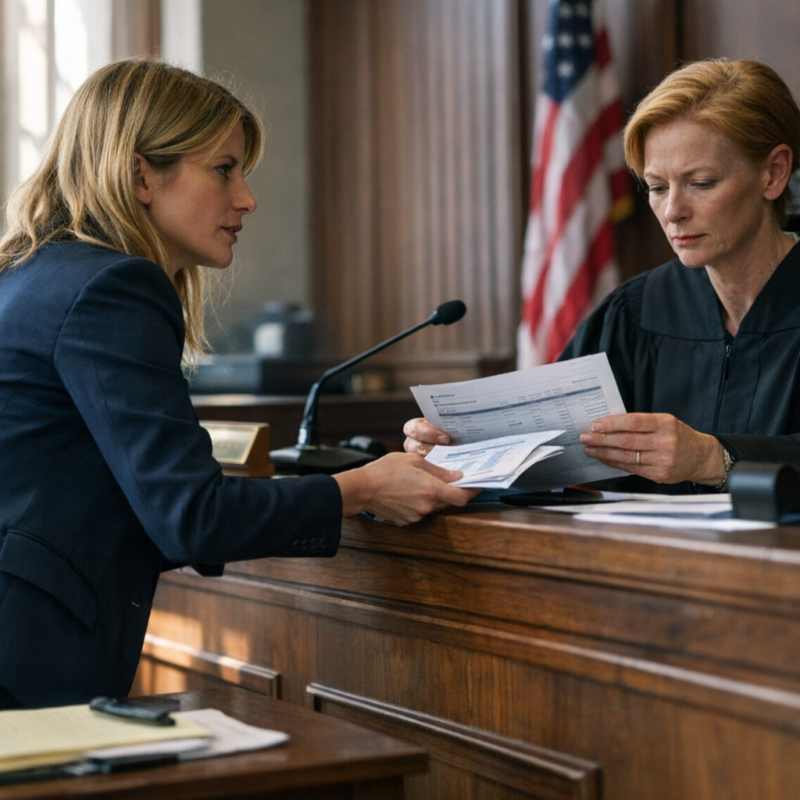 Image by FCT AI
The Ruling
The judge didn't hesitate. She looked up from her notes and delivered her ruling with the kind of clarity that left no room for appeals or misunderstandings. The custody arrangement would remain exactly as it was—no modifications, no adjustments, no compromises. Lily would continue her current schedule with me as primary custodian. Then came the part that made Rebecca's mouth twitch into the smallest smile: Daniel and Vanessa were ordered to pay my lawyer fees in full within thirty days. The judge cited their 'frivolous and financially motivated petition' as the reason. She noted that dragging a child through unnecessary court proceedings based on fabricated expenses constituted an misuse of the family court system. I watched Daniel's face go pale. Vanessa sat rigid beside him, her jaw clenched so tight I could see the muscle jumping. Rebecca gathered her files with professional composure, but I caught the satisfied gleam in her eye. We'd documented everything, proven everything, and now they'd pay for every billable hour they'd forced me to incur. As we left the courtroom, Vanessa wouldn't meet my eyes—but Daniel looked devastated.
 Image by FCT AI
The First Handoff After
The first custody exchange happened three days later in the usual parking lot. I arrived early, watching Daniel's car pull in with the kind of careful distance I'd perfected over months of managing these handoffs. Neither of them got out right away. When Daniel finally opened his door, he moved like someone twice his age. Vanessa stayed in the passenger seat, staring straight ahead. Lily climbed out of the back with her backpack, and Daniel handed me her overnight bag without a word. No pleasantries. No forced conversation about her week. Just silence that felt heavier than any argument we'd ever had. I wanted to feel triumphant, but mostly I felt tired. Lily looked between us, reading the tension the way kids do, then took my hand. 'Ready?' I asked her. She nodded quickly, relief visible in her shoulders as they dropped. We walked to my car together, her fingers tight around mine. I buckled her in, started the engine, pulled out of the parking space with the practiced ease of routine. As I drove away with Lily, she said quietly, 'I'm glad it's over.'
Healing Forward
We built new routines over the following weeks—simple, predictable things that gave Lily the stability she'd been missing. Breakfast together before school. Homework at the kitchen table while I prepped dinner. Friday movie nights where she picked whatever she wanted, even if it meant watching the same animated film for the fourth time. I started asking her more questions about how she was feeling, not just about her day. She talked about being worried during the court stuff, about not understanding why Vanessa seemed so angry all the time. We worked through it slowly, carefully, with honesty appropriate for a nine-year-old. I also started seeing Marcus again—coffee at first, then dinner when Lily was at Daniel's. He'd waited patiently through the entire nightmare, never pushing, just checking in occasionally to make sure I was okay. Now we were taking things slow, rebuilding what we'd paused when everything got complicated. One evening after Lily was asleep, we sat on my back porch with a bottle of red, talking about nothing important. Marcus asked if I was ready to try again, and for the first time in months, I thought I might be.
 Image by FCT AI
The Final Invoice
The check arrived exactly twenty-nine days after the ruling—one day before the court deadline. It came via certified mail, requiring my signature, as though they wanted proof they'd complied. I held it for a long moment, this piece of paper representing every hour Rebecca had spent demolishing their case, every document we'd meticulously organized, every expense they'd tried to fabricate. Then I did something that probably seems petty, but felt absolutely necessary: I went to the office supply store and bought two matching frames. I framed Vanessa's original itemized invoice on the left—the one demanding $5,000 for expenses I'd supposedly caused. On the right, I framed the court-ordered payment receipt for my lawyer fees, which came to significantly more. I hung them side by side in my home office, where I see them every time I sit down to work. They remind me of what I learned through this whole mess—that some people will use anything, even spreadsheets, when they want to hurt you. But they also remind me that calm documentation beats emotional reaction every single time. Every time I look at them hanging side by side in my office, I remember: some battles are won not with anger, but with documentation.
 Image by FCT AI