The Morning Examination
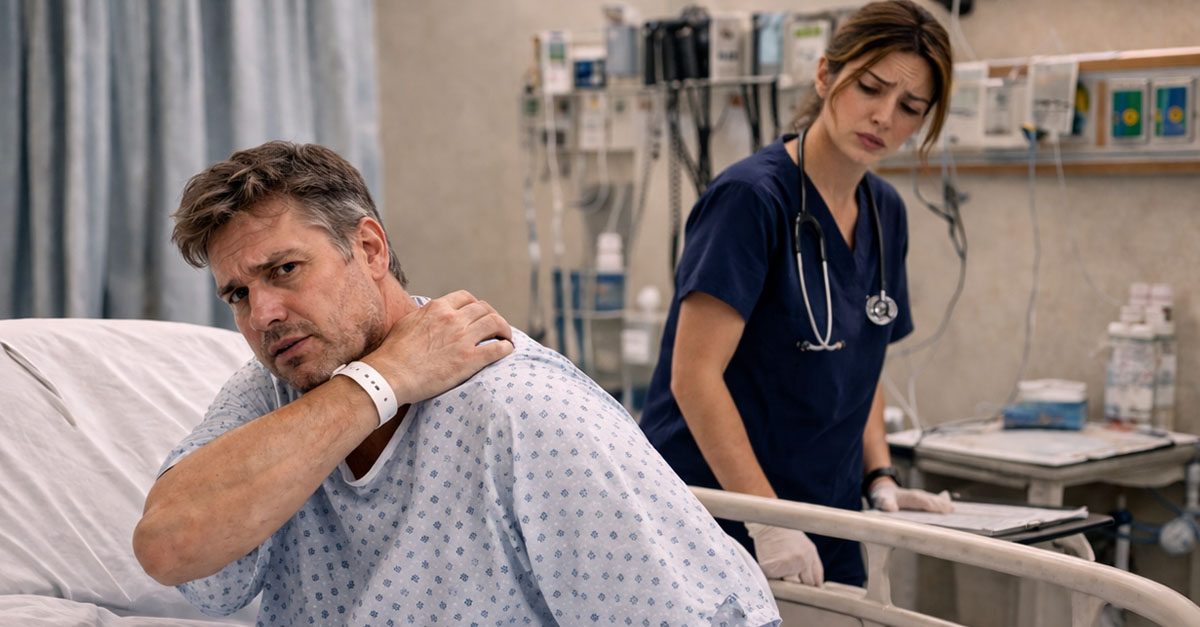
They came at 10 AM sharp—like they'd been waiting outside the door. Dr. Keller entered first, followed by Nurse Linda and Nurse Amy wheeling a cart loaded with equipment I didn't recognize. Dr. Chen appeared a moment later with what looked like an ultrasound machine. They moved with this practiced efficiency that felt rehearsed, like they'd planned exactly how this would go. 'Alright, Carl,' Dr. Keller said, snapping on latex gloves. 'Let's take a comprehensive look.' They had Carl lie on his side facing away from me. Nurse Linda positioned a privacy screen, but not before I saw her exchange a glance with Dr. Keller—just a split-second of eye contact that communicated something I couldn't read. Nurse Amy laid out surgical instruments on a sterile tray. More equipment than you'd need for a simple examination. Dr. Chen positioned the ultrasound machine but didn't turn it on yet. They worked in near silence, this choreographed medical ballet around Carl's bed. Three nurses and two doctors surrounded his bed, and I realized with cold certainty—they already knew what they were going to find.
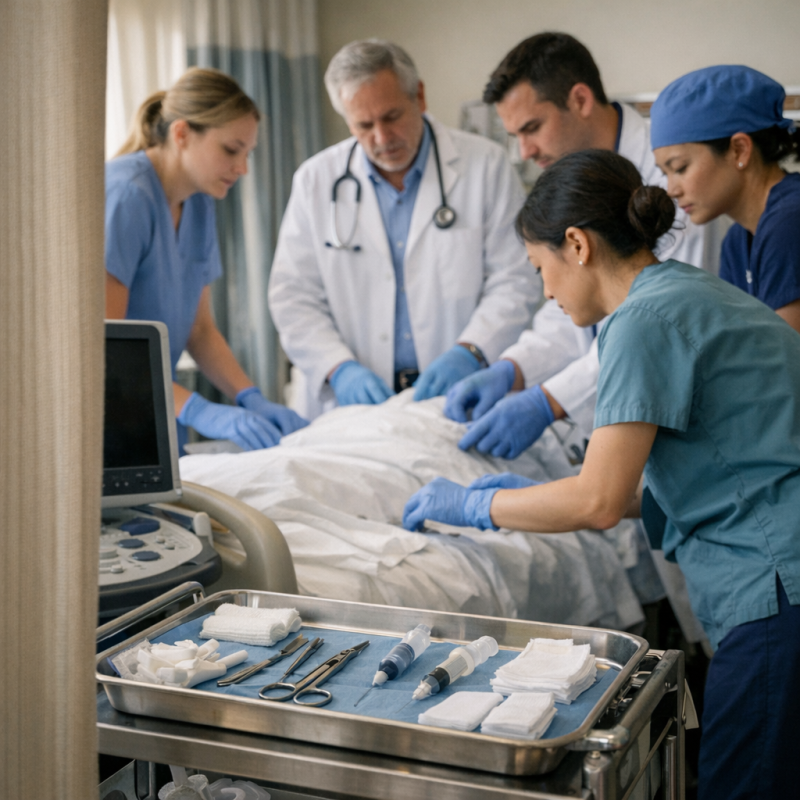 Image by FCT AI
The Reveal
They didn't speak. That's what I remember most—the absolute silence as they carefully peeled away the bandages from Carl's back. I watched from my bed, trying to look casual, trying not to seem like I was holding my breath. The first layer came off clean. Then the second. Carl made a small sound, something between a whimper and a sigh. Dr. Keller's hands paused for just a moment. Then he removed the final layer, and I saw Nurse Amy's face go slack. She took a step back. Just one step, but it told me everything. Dr. Chen leaned in closer, then straightened up fast, his jaw tight. 'Jesus Christ,' someone whispered. I couldn't see what they were seeing from my angle—the privacy screen still blocked most of my view—but I could see their faces. I could see Nurse Linda's eyes go wide, her skin draining of color. She stumbled backward, her hand flying to her mouth like she was about to be sick, and Dr. Keller's voice cut through the silence: 'Get isolation protocols in place. Now.'
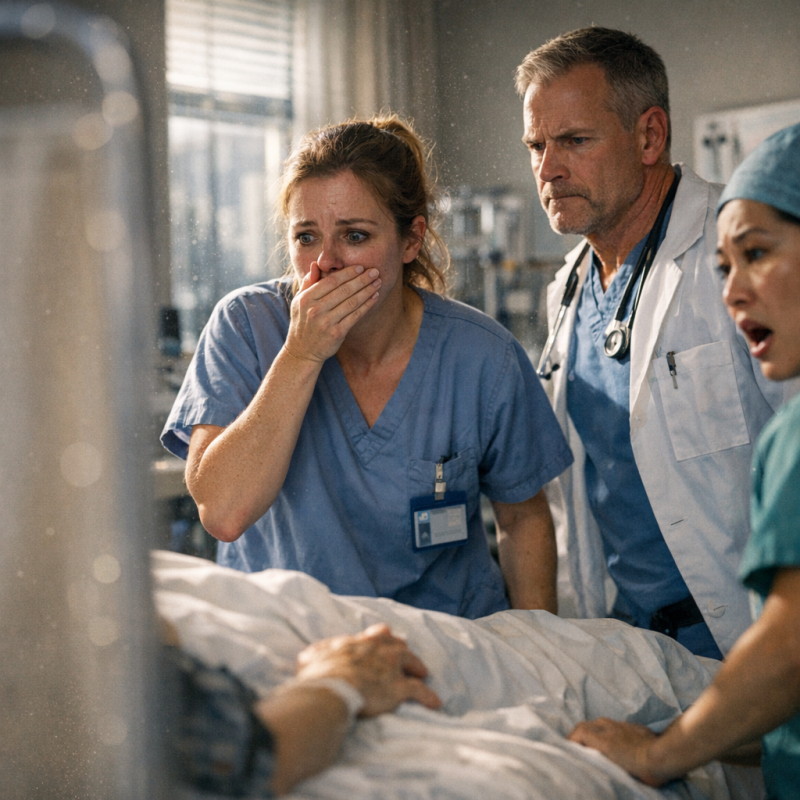 Image by FCT AI
Under His Skin
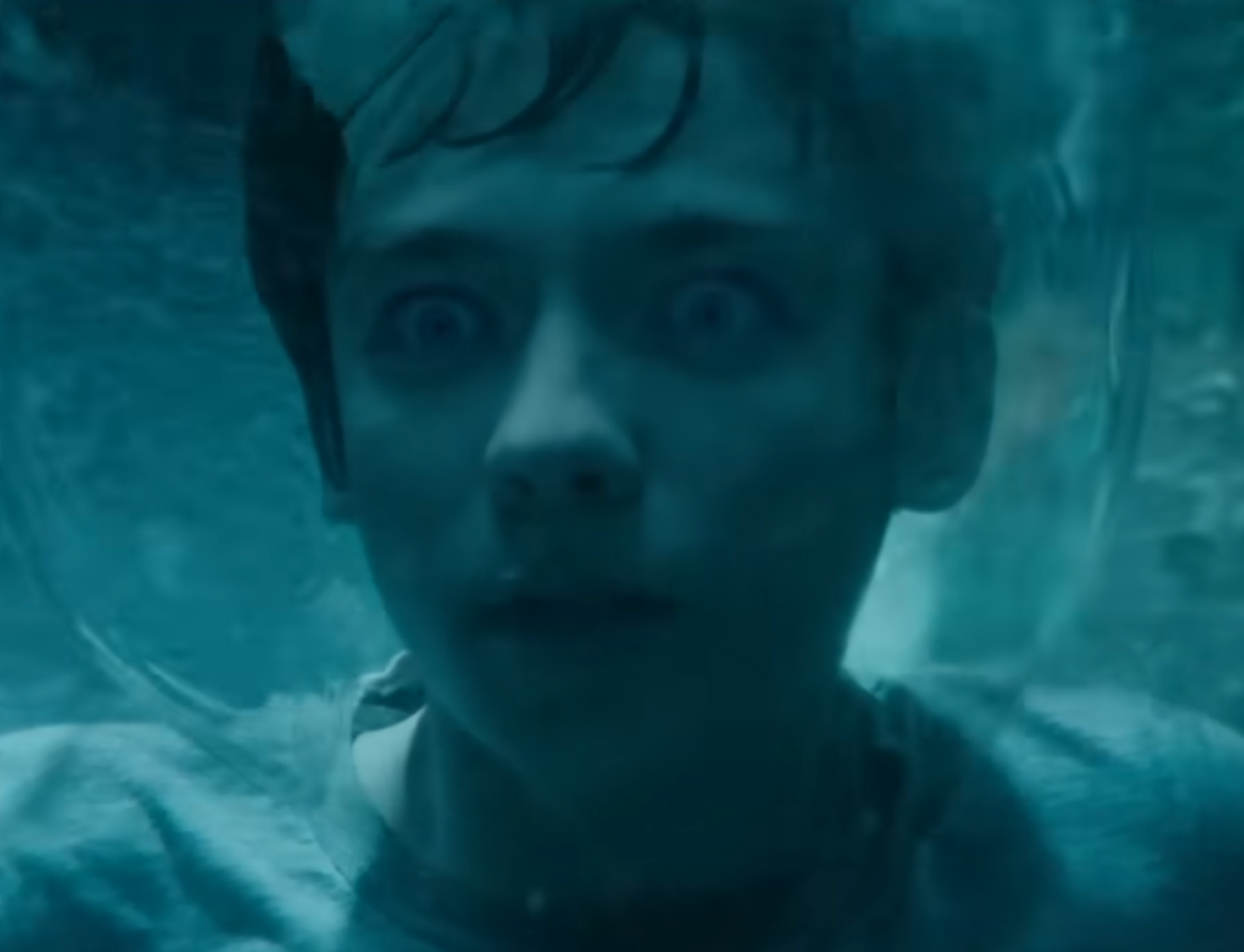
The privacy screen shifted when Nurse Linda stumbled, and for maybe three seconds, I had a clear view of Carl's exposed back. I wish I hadn't looked. I really, genuinely wish I hadn't looked. His skin was wrong—not just injured or infected, but wrong in a way that violated something fundamental about how bodies are supposed to work. There were patterns moving beneath the surface, wave-like ripples that traveled from his shoulder blades down toward his spine. Not veins. Not muscle spasms. Something else, something that moved with intention, with purpose. I watched one of these waves crest near his left shoulder blade and the skin there bulged upward, distended, before settling back down. Dr. Keller was barking orders I couldn't process. Paramedic Jeff appeared with a gurney. Carl's breathing had gone ragged and fast. I was frozen in my bed, sheets clutched in my fists, unable to look away from those rhythmic movements under his skin. I couldn't look away, couldn't process what I was seeing—and then Carl screamed, a sound I'll hear for the rest of my life.
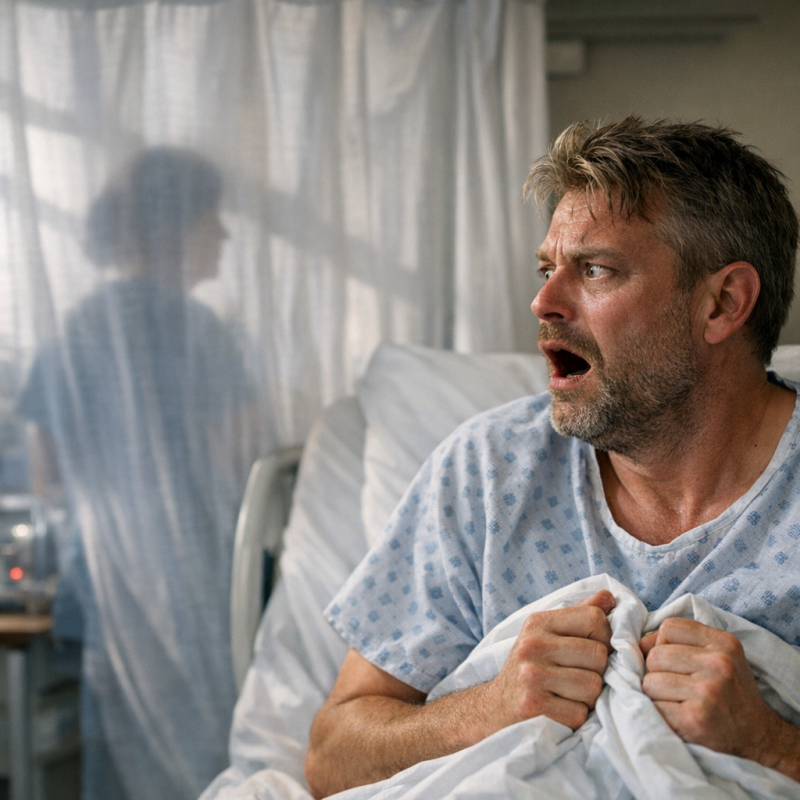 Image by FCT AI
The Evacuation
They moved so fast. One moment Carl was on the bed, that awful scream still echoing off the walls, and the next they had him on the gurney, straps already across his chest and legs. Dr. Keller and Paramedic Jeff wore what looked like hazmat gloves now—thick, reinforced ones that went up past their elbows. When did they put those on? Nurse Linda had backed into the hallway, and I heard her voice, sharp and urgent: 'Room seven needs to be sealed. Full containment.' An oxygen mask went over Carl's face. His eyes were rolling, unfocused, his whole body trembling. They covered his back with what looked like a specialized medical blanket, something plastic and sealed at the edges. The wheels of the gurney squeaked as they rushed him toward the door. I sat there useeless, my appendectomy stitches pulling as I tried to sit up straighter, tried to see what was happening. As they wheeled him away, I saw Carl reach out toward me, mouthing words I couldn't hear through his oxygen mask.
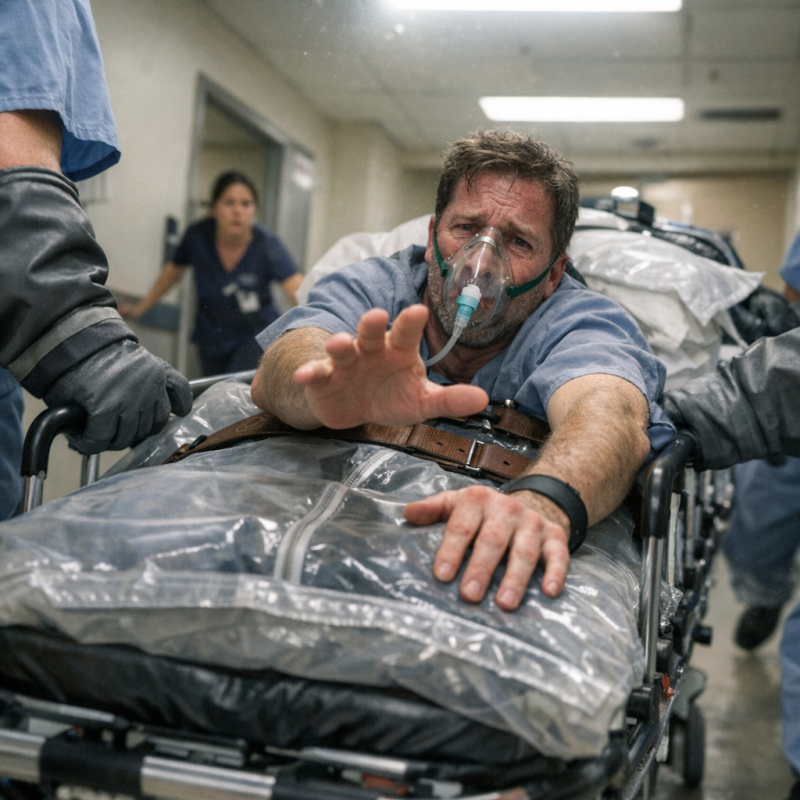 Image by FCT AI
Quarantine
Nurse Amy came back alone, maybe ten minutes later. Security Guard Marco stood behind her in the doorway, arms crossed. 'You're going to need to stay in this room,' she said, not quite meeting my eyes. 'For how long?' I asked. She didn't answer. Marco stepped inside, and I noticed he was holding something—a different kind of door handle, the kind with a keyhole on both sides. 'This is just a precaution,' Nurse Amy said, her voice too measured, too practiced. 'We need to monitor anyone who had extended contact with the patient.' 'Monitor me for what?' I asked. Still no answer. Marco was already installing the new lock. I could hear the drill, watch him work, and nobody was explaining anything. 'My phone,' I said. 'I should call someone.' 'We'll bring you everything you need,' Nurse Amy said, backing toward the door. Marco tested the lock from both sides. They both stepped into the hallway. The lock clicked with a finality that made my chest tight—and I realized I wasn't being protected. I was being contained.
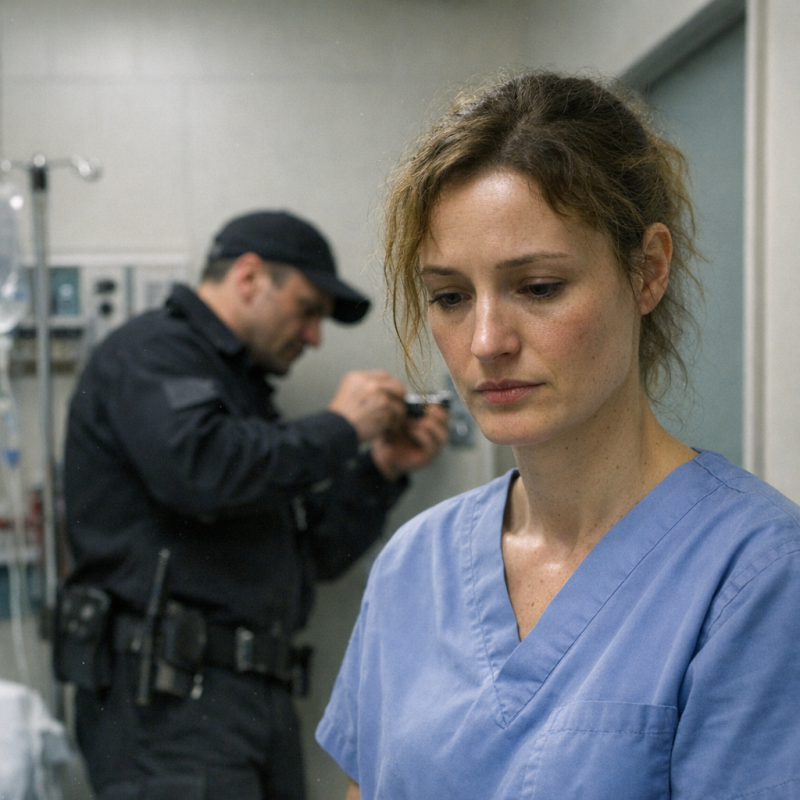 Image by FCT AI
Ms. Torres
Ms. Torres arrived an hour later—or maybe it was two hours, time had started doing strange things. She introduced herself through the door's small window before Marco unlocked it. She was older, well-dressed, with this crisp professional demeanor that felt imported from some corporate boardroom. 'I'm Hospital Administrator Torres,' she said, stepping just inside the threshold. Marco stayed right behind her. 'I want to assure you that we're taking every precaution for your safety.' 'My safety from what?' I asked. 'You were in close proximity to a patient with a serious condition,' she said smoothly. 'As a precautionary measure, we're monitoring your health status.' 'So I can leave when?' 'We'll evaluate that as we go.' Her answers were too polished, too rehearsed. Every word seemed chosen by a legal team. 'What's wrong with Carl? What did I see on his back?' She smiled then, this practiced administrator smile that probably worked great at board meetings. I asked what I'd been exposed to, and Ms. Torres smiled—a smile that didn't reach her eyes—and said: 'We're still determining that.'
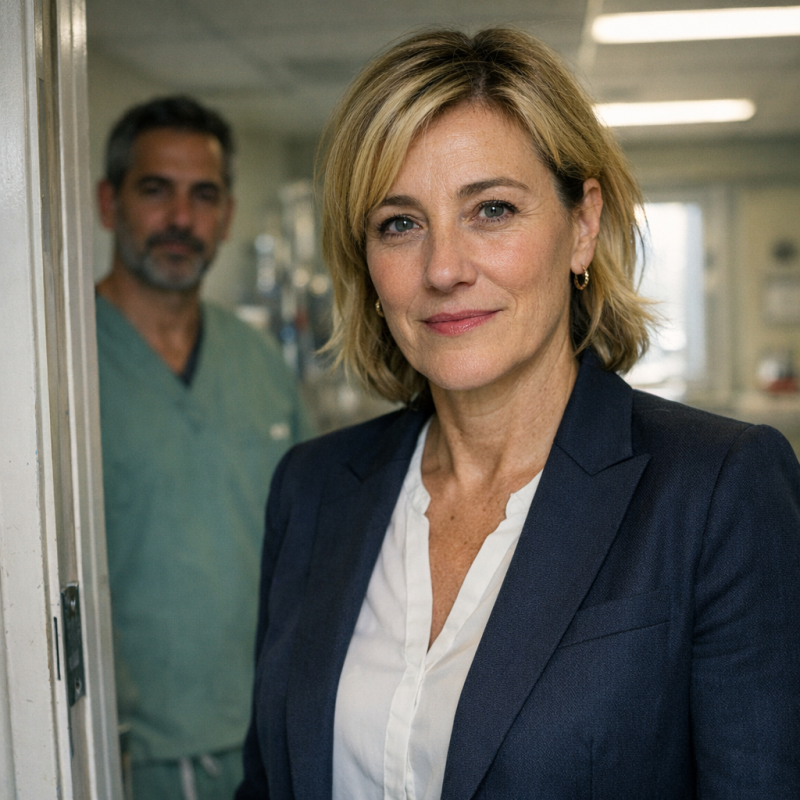 Image by FCT AI
The Questions
Dr. Chen came next, clipboard in hand, Ms. Torres hovering near the door like a supervisor making sure he stuck to the script. The questions started simple enough. 'How long were you roommates with Carl?' 'Did he ever touch you or come into physical contact?' 'Have you experienced any unusual symptoms?' I answered everything honestly. Then twenty minutes later, Dr. Chen asked the same questions again, just phrased differently. 'Can you describe your interactions with the patient?' 'Any physical contact between you two?' 'Noticed any changes in how you're feeling?' I gave the same answers. Ms. Torres took notes. Then, another fifteen minutes after that, they circled back again. 'Walk me through your typical day sharing the room.' 'Did Carl ever brush against you, shake your hand, anything like that?' 'Any itching, discomfort, unusual sensations?' I felt like a suspect, not a patient. They were testing me, watching how I responded, looking for inconsistencies. They asked the same questions three times, in slightly different ways—like they were testing whether my story would change.
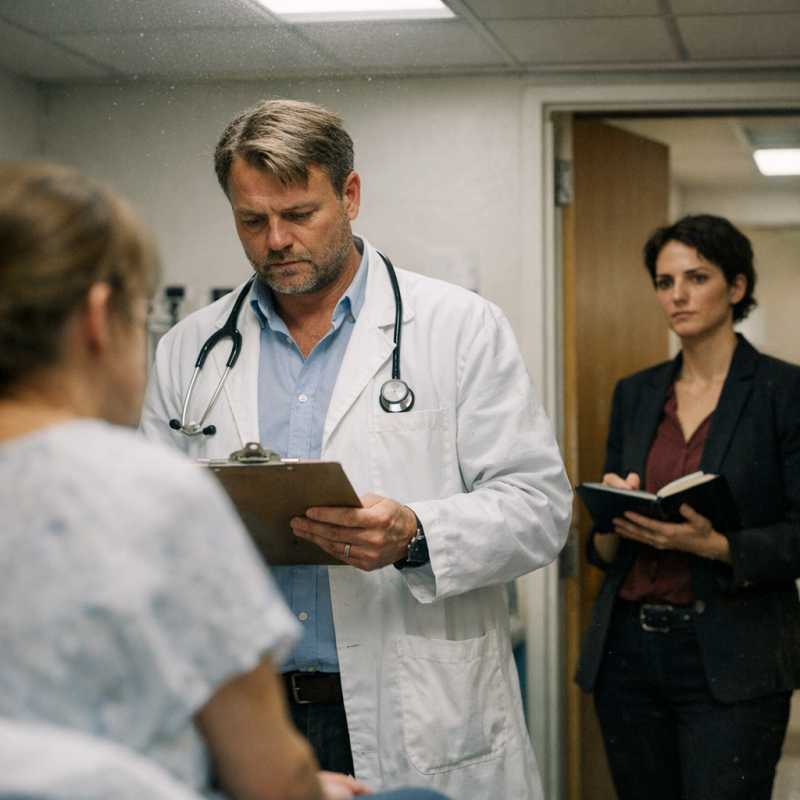 Image by FCT AI
The Window View
I couldn't sleep. Around 2 AM, I gave up trying and went to the window. My room faced the staff parking lot and the service entrance, not the most interesting view, but at least it was something other than these four walls. That's when I saw them. Three unmarked white vans parked in a restricted zone near the loading dock. Not ambulances—these were different, windowless, with some kind of ventilation units on the roofs. People in full protective suits were unloading equipment. Not the normal hospital PPE either. These were serious hazmat suits, the kind you see in movies about outbreaks. Sealed helmets. Independent air supplies. They moved in teams, coordinated, professional. Military? Government? I couldn't tell. A temporary structure was going up near the service entrance, looked like a decontamination tent. More people in suits. More equipment I didn't recognize. I pressed my face closer to the glass, trying to see more. One of them looked up at my window, and even from that distance, I could feel the weight of their stare—like I was a specimen, not a patient.
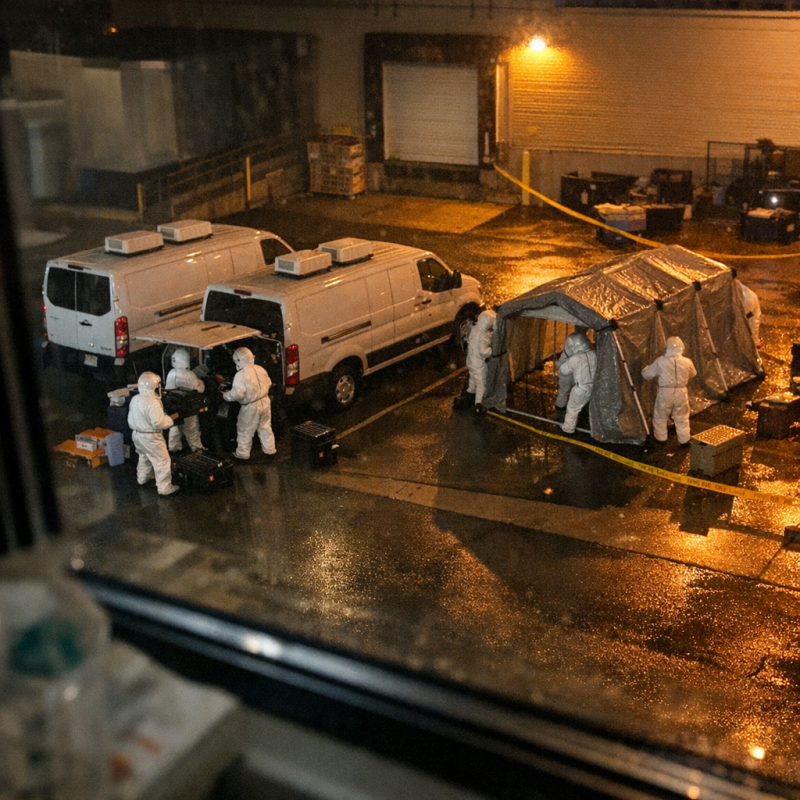 Image by FCT AI
No Information
I tried asking every nurse who came to check my vitals. 'How's Carl doing?' 'What ward did they move him to?' 'Can someone tell me what's happening?' Nurse Amy would just shake her head. 'I'm not authorized to discuss other patients.' A different nurse, someone I didn't recognize, said the same thing almost word for word. Another one claimed she didn't know anything about Carl. 'Never heard that name,' she said, which was obviously a lie. I buzzed for Nurse Rebecca, one of the nicer ones from earlier in my stay. When she came to the door—they wouldn't let anyone inside without full protective gear now—I asked her straight out. 'What happened to my roommate? Is he alive?' She glanced down the hallway, then back at me. Her expression softened slightly. 'Please,' I said. 'I just need to know.' She leaned closer to the small window in the door, her voice dropping to barely above a whisper. Finally, a nurse I'd never seen before leaned close to the door and whispered: 'Stop asking about him. It's better if you don't know.'
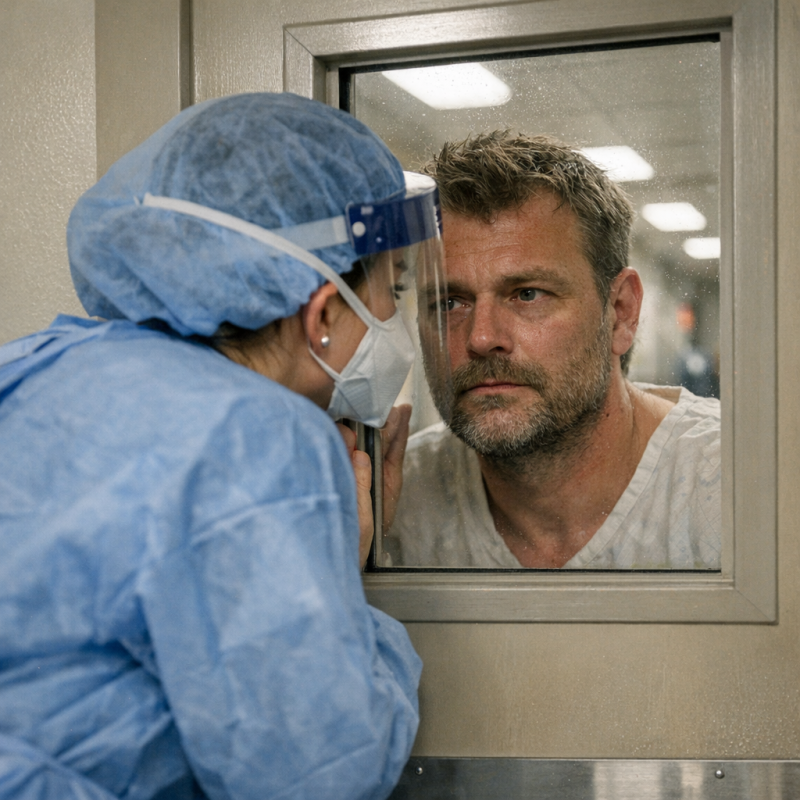 Image by FCT AI
The Blood Test
They came for blood the next morning. Not a single vial—I'm talking six, maybe seven tubes lined up on the tray. Nurse Linda was back, which felt almost comforting until I saw her expression. Completely blank. Professional. She tied the tourniquet around my arm without making eye contact, and when I asked what they were testing for, she just said, 'Standard protocols.' Which was obviously bullshit because nothing about my stay had been standard for days. Lab Technician Monica stood behind her, scanning each vial with a handheld device before placing it in a biohazard bag. I watched the labels as they worked. No names. Just alphanumeric codes: C7-04, C7-05, C7-06. 'What's C7 mean?' I asked. Neither of them answered. Monica's hand hesitated for just a second over the last vial, her eyes meeting mine briefly before looking away. They packed everything up efficiently, mechanically, like I was livestock being processed. I watched them label the vials with codes instead of my name, and I understood—I wasn't a person anymore. I was a case number.
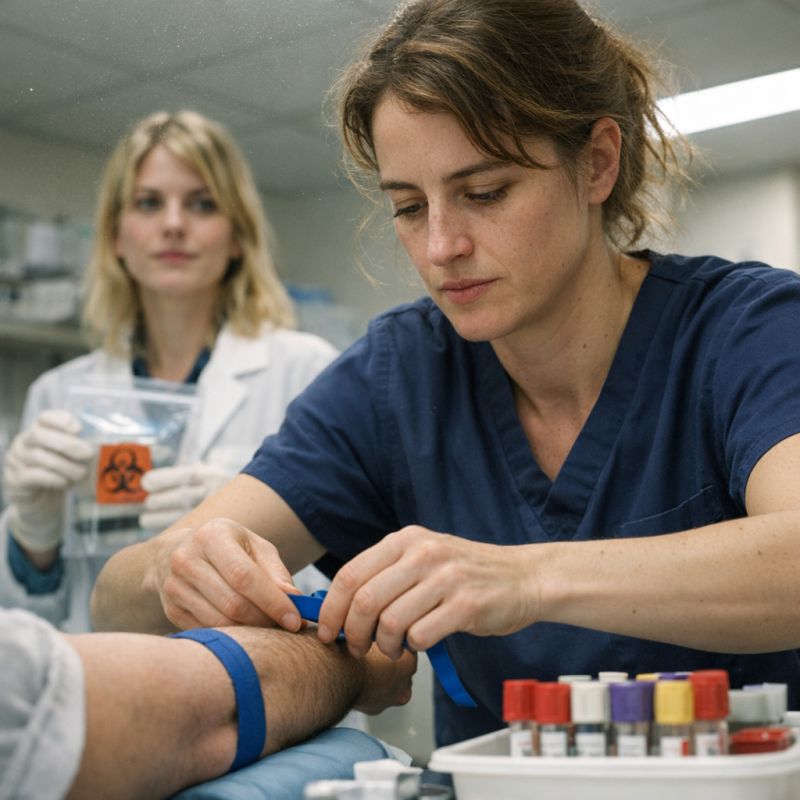 Image by FCT AI
Dr. Larsen
Dr. Larsen arrived that afternoon without warning. I'd never seen him before—tall, early forties maybe, with wire-rimmed glasses and the kind of calm that felt rehearsed. 'I'm with infectious disease,' he said, pulling up a chair outside my door. He didn't come in, but he studied me through the glass like I was a specimen. His questions started normally enough. How was I feeling? Any fever, nausea, skin irritation? Then they got weird. 'Tell me about the accident. Exactly where were you positioned in your vehicle?' 'What do you remember about the other truck?' 'Did you notice any unusual smells? Any powder or liquid?' I answered as best I could, confused why this mattered to an infectious disease specialist. When I finally asked him directly—'Why do you care about a traffic accident?'—he paused. Too long. His jaw tightened, and he scribbled something in his notes before looking up. 'Just being thorough,' he said. But his voice had changed, and I knew Carl's condition wasn't natural.
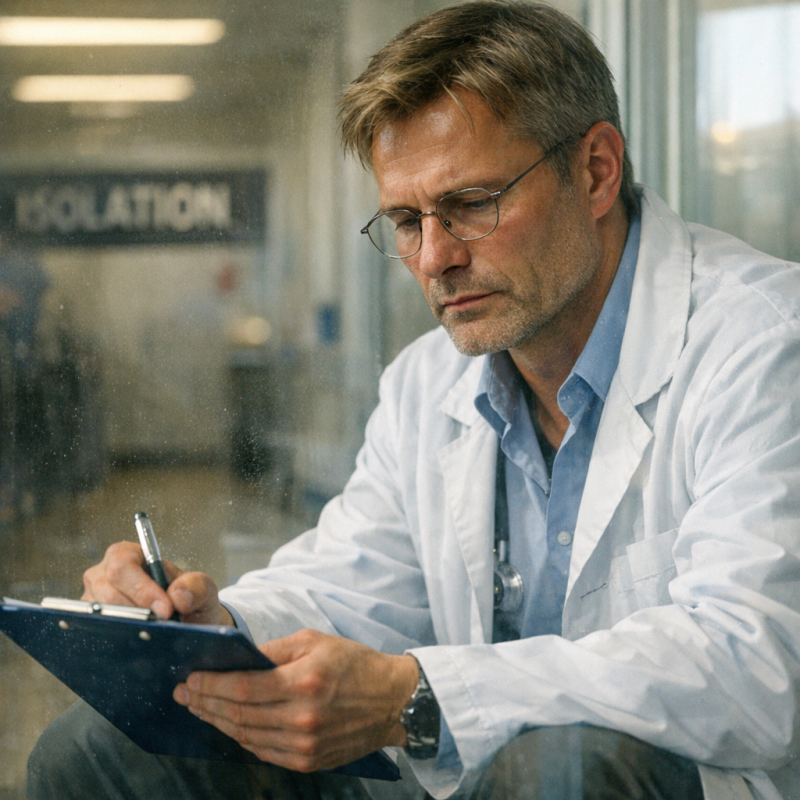 Image by FCT AI
The Accident Report
I demanded to see the accident report. Nurse Rebecca tried to put me off, but I wouldn't let it go. 'It's my accident. I have a right to know what happened.' She disappeared for twenty minutes, came back with two photocopied pages, half of which were redacted with thick black bars. But what I could read made my stomach drop. The other vehicle was listed as a 'military transport truck, Fort Detrick registry.' Carl's truck had T-boned it at the intersection after his brakes failed. My sedan hit them both from behind. There were witness statements, descriptions of debris scattered across the highway, emergency response times. And then, near the bottom, one line that hadn't been fully blacked out: 'Secondary vehicle cargo: [REDACTED] classified materials, Category A infectious substances.' I read it three times. Rebecca stood there watching me, saying nothing. The report listed the other vehicle as carrying 'classified materials,' and suddenly everything made terrible sense.
The Search
I spent the next hour searching on my phone. I tried every combination of keywords: truck accident, military transport, local highway, the date, Fort Detrick. Nothing. Not a single news article. No traffic reports. No posts on the local Facebook groups that usually jumped on every fender bender. I checked Twitter, Instagram, even Reddit. Zero. Someone had posted about a stray dog in the area that same day, but nothing about a three-vehicle collision involving a military truck and classified materials. I found the local news station's website and scrolled back through their stories. They'd covered a bake sale that week. A high school basketball game. Nothing about the accident. I tried searching for Carl's name plus 'truck driver.' Also nothing. It should have been somewhere. Accidents like that make the news. People take photos. Bystanders post about traffic delays. But there was only silence, a perfect informational void. It was like the accident never happened—or more accurately, like someone had made sure no one would know it had.
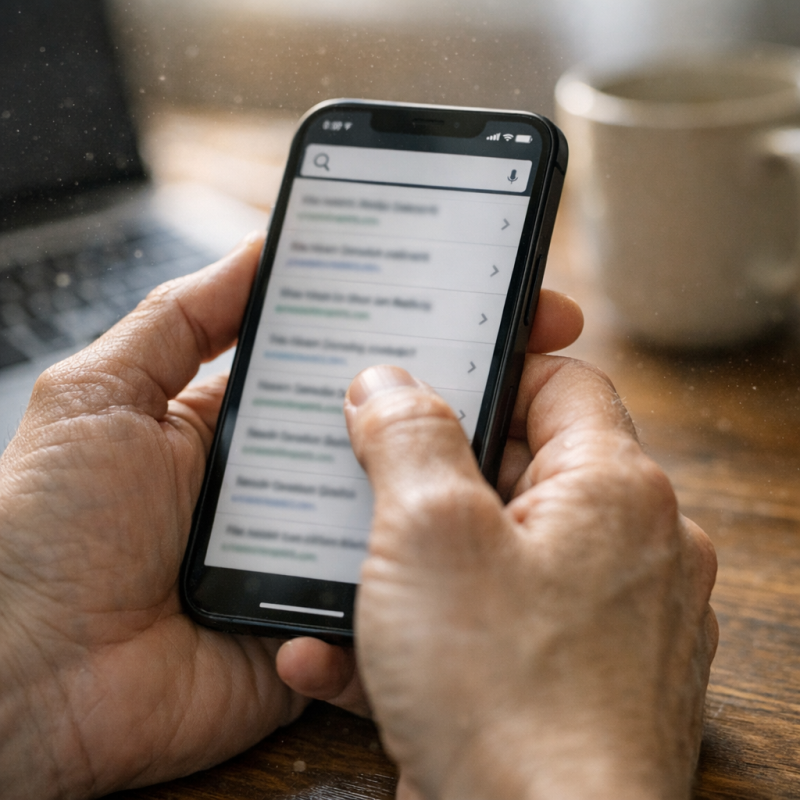 Image by FCT AI
The Theory
The theory formed slowly, piece by piece, until I couldn't ignore it anymore. Carl had been infected with something from that military truck. Something they were transporting from Fort Detrick—which, if you know anything about that place, is where the government keeps its most dangerous biological research. The collision had released it somehow, exposed him directly. Maybe exposed me too, which is why they were keeping me isolated, why they were taking all that blood. The hospital had to know. They had to be covering it up, working with whoever ran that transport to contain the situation. That's why no one would talk about Carl, why the news was silent, why I was suddenly case number C7 instead of a person with a name. It sounded insane even in my own head. Bioweapons. Military cover-ups. But the alternative was believing Carl spontaneously developed a parasitic infection that made things crawl under his skin, and that was even less likely.
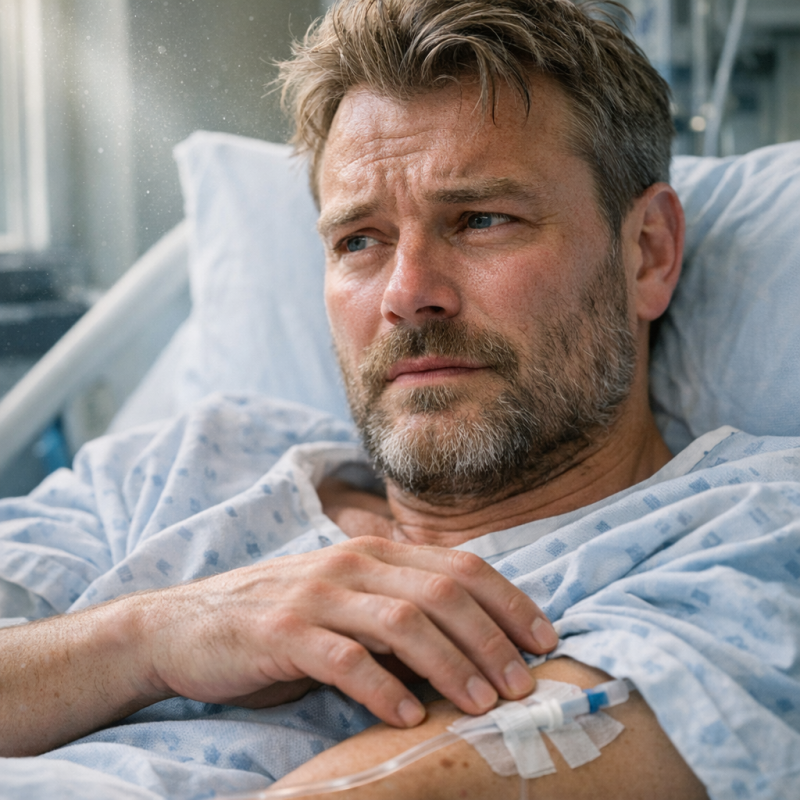 Image by FCT AI
Monica's Warning
Monica came back alone the next morning to take more samples. She worked quickly, checking over her shoulder twice while she labeled the tubes. As she was packing up, she dropped something on my bed—a folded piece of paper, so quick I almost didn't see it. She put one finger to her lips, then walked out. I waited until she was gone before unfolding it. The handwriting was cramped, hurried: 'Trust no one in administration. They know everything. Document everything you can remember—symptoms, timeline, who says what. Hide it. This is bigger than you know.' I read it three times, my hands shaking. It was confirmation from someone on the inside, someone who worked here and saw what was happening. When I looked up to thank her, Monica was already gone—and I noticed the security camera in the corner had been repositioned to aim directly at my bed.
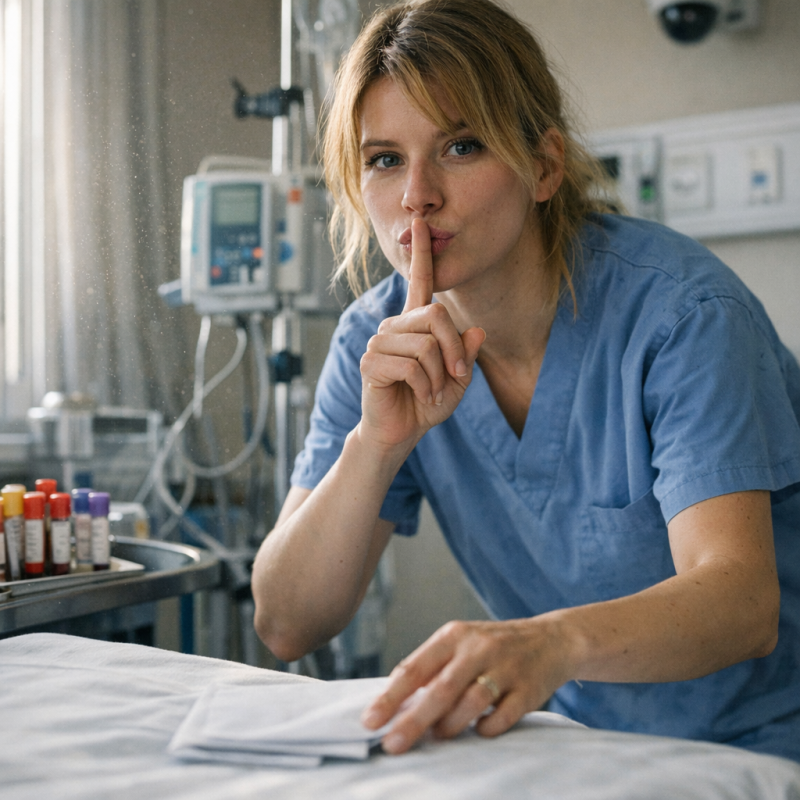 Image by FCT AI
The Documentation
I started writing everything down on the back of my discharge papers—the only paper I had. Carl's symptoms, day by day. The scratching. The welts. The things moving under his skin. The hazmat suits. The military truck detail from the accident report. Dr. Larsen's questions. The blood tests with coded labels. Every conversation I could remember, every weird detail. My hand cramped as I wrote, trying to get it all down before I forgot, before they took it away. I wrote about the nurse who told me to stop asking questions, about the informational blackout online, about Monica's warning. It took an hour, maybe more. My handwriting got messier as I went, but I kept going until I'd documented everything. When I finished, I folded the papers as small as I could and tucked them inside my pillowcase, pushing them deep into the corner where the fabric was doubled. I hid my notes inside the pillowcase, but as I did, I felt the first sensation I'd been dreading—a faint itch between my shoulder blades.
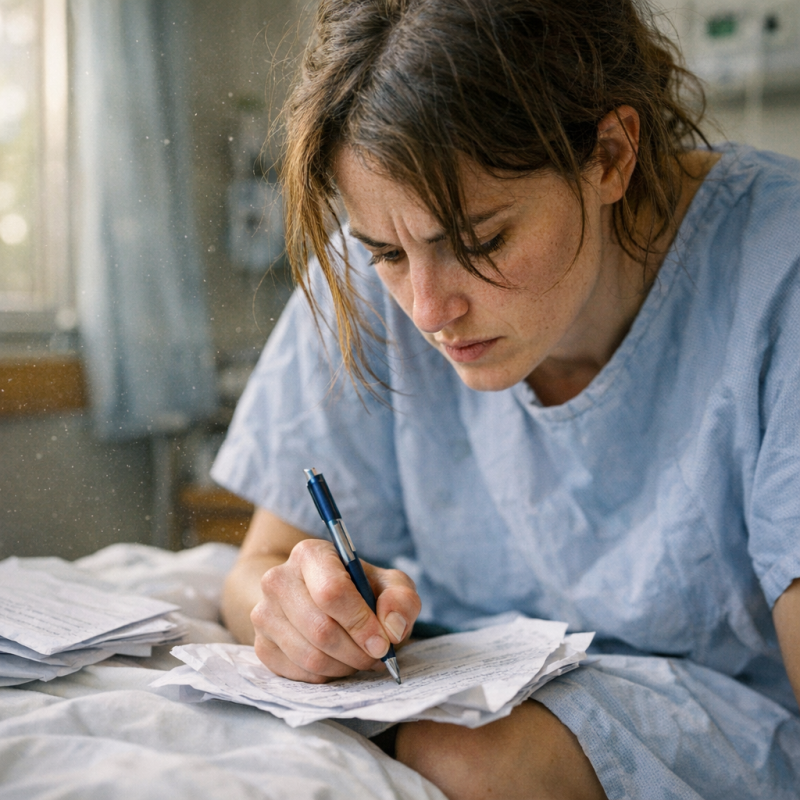 Image by FCT AI
The Itch
Psychosomatic. That's what I told myself. Just anxiety manifesting physically. I'd been obsessing about Carl's symptoms for days—of course my brain would play tricks on me. I reached back and scratched through my hospital gown, and for a moment the sensation faded. But then it came back. A little stronger. A little more insistent. Not quite painful, but impossible to ignore. I scratched again. Then again a few minutes later. My rational mind kept insisting it was nothing, just stress and fear creating phantom sensations. But the itch didn't care what my rational mind thought. It persisted, a constant prickle that seemed to move slightly each time I scratched, like it was avoiding my fingers. I sat there for maybe twenty minutes, debating. My hand hovered over the call button. They should know. The doctors needed to examine me, run tests, catch whatever this was early. But then I remembered Carl. The hazmat suits. How they'd taken him away and wouldn't tell me where. I pressed the call button for the nurse, then stopped—because if I told them, I'd end up wherever Carl was. And I wasn't sure anyone came back from there.
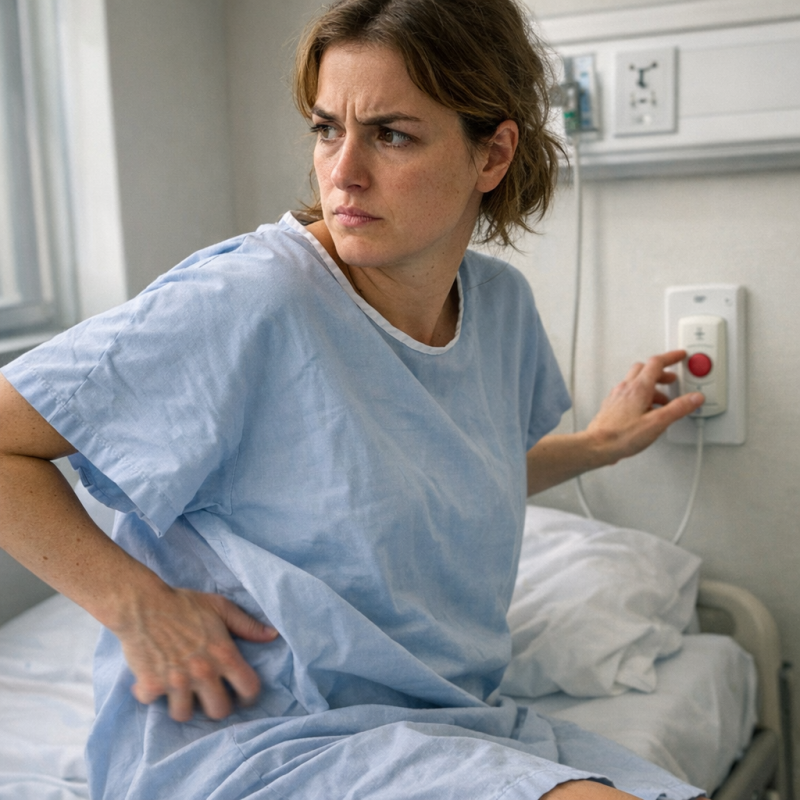 Image by FCT AI
Mrs. Chen
They moved a new patient into my room the next morning. Mrs. Chen, the nurse said—an elderly woman recovering from hip surgery. She seemed pleasant enough at first, smiling politely as they settled her into Carl's old bed. I tried not to stare at that spot, tried not to remember what I'd seen. But Mrs. Chen noticed me watching. 'You had a roommate before?' she asked casually, her accent slight but clear. I nodded, not meeting her eyes. 'What happened to him?' The question felt too direct, too deliberate. 'He got transferred,' I said. 'Different floor, I think.' Mrs. Chen tilted her head, studying me with eyes that suddenly seemed far too alert for someone who'd just come out of surgery. 'Which floor?' she pressed. I shrugged, scratching absently at my back. 'They didn't say.' 'But you must have asked.' There was something off about her tone now, like she already knew the answers and was just testing me. I told her I didn't know, but Mrs. Chen just smiled knowingly and said: 'Liar. We're all liars here, aren't we?'
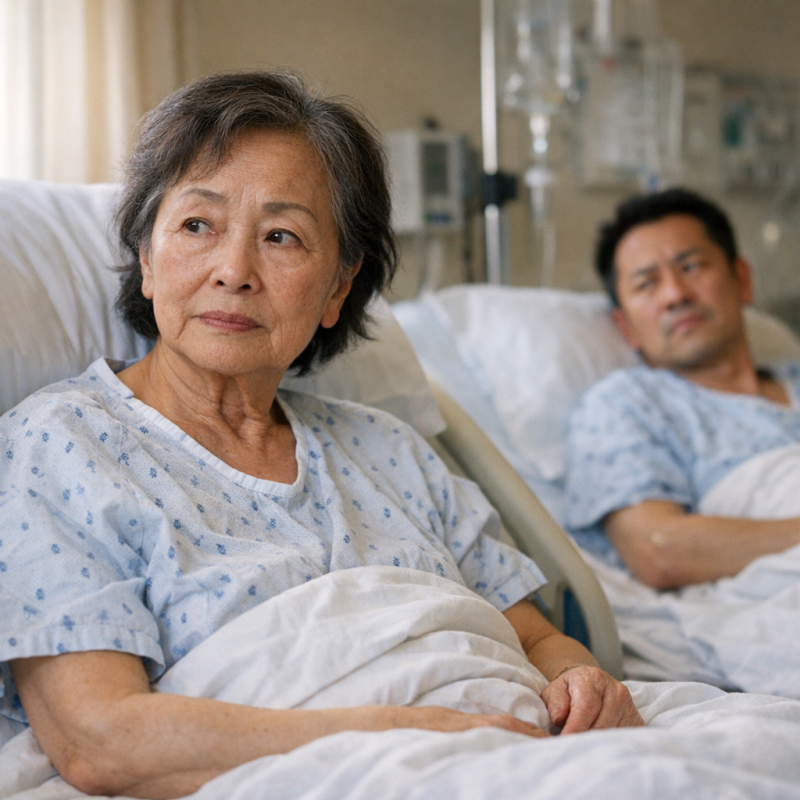 Image by FCT AI
The Plant
It clicked for me about an hour later. Mrs. Chen asked too many questions. Too many specific questions. She wanted to know when Carl had been transferred, what his symptoms were, whether anyone had examined me since he left. She positioned it all as friendly concern, fellow patient to fellow patient, but I'd been in enough awkward work situations to recognize an interrogation disguised as conversation. They'd planted her here. Someone—hospital administration, whoever was running this show—had put her in my room deliberately to watch me, to see if I showed symptoms, to monitor what I knew. I started giving vague answers, pretending to be more interested in my phone than in talking. Mrs. Chen backed off, but I caught her watching me when she thought I wasn't looking. Studying me. Taking mental notes. That night, I pretended to sleep and watched Mrs. Chen write notes by the dim glow of the bathroom light—notes she never intended me to see.
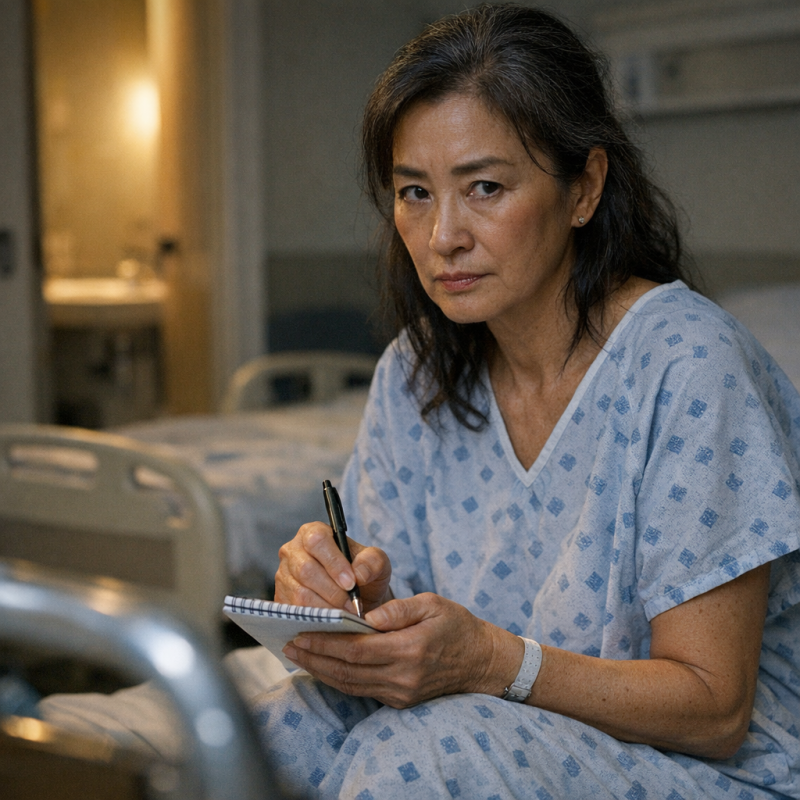 Image by FCT AI
The Bathroom
I waited until Mrs. Chen was snoring—or pretending to snore, I couldn't be sure anymore—before slipping into the bathroom. I needed to see my back. The itch had become constant now, a persistent crawling sensation that moved whenever I tried to scratch it. I locked the door quietly and turned my back to the mirror, craning my neck to look over my shoulder. Nothing. Just normal skin, maybe a little red from scratching, but otherwise completely unremarkable. I felt a moment of relief, like maybe I really was just paranoid. But then I reached back and pressed my palm flat against the spot that itched most. That's when I felt it. Movement. Something shifted beneath my skin, subtle but unmistakable, like pressing on a water balloon sealed under a thin layer of plastic. I pressed again, and the sensation moved, sliding away from my hand. The skin looked fine, perfectly normal—but when I pressed against it, I felt something shift underneath, like water moving in a sealed bag.
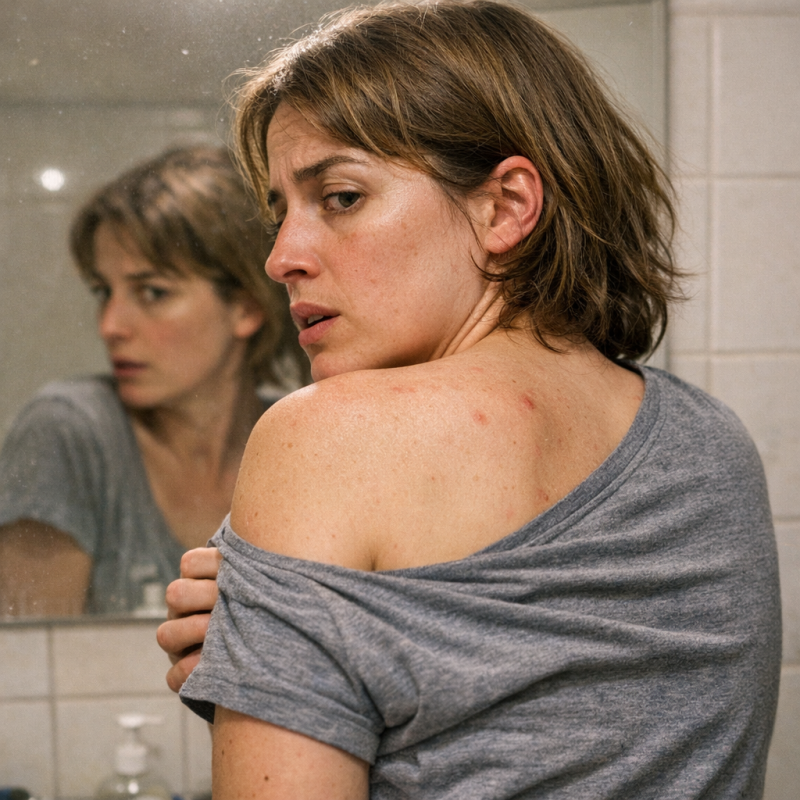 Image by FCT AI
The Decision
I stared at my reflection in that bathroom mirror and made a decision. Whatever was happening to me, whatever had happened to Carl—I wasn't going to just sit in that room waiting for them to cart me away in a hazmat suit. Mrs. Chen was reporting on me. The doctors were hiding something. And Carl had vanished without a trace, taken somewhere they wouldn't name. If I had any chance of understanding what was growing inside me, of maybe stopping it before it was too late, I needed to find Carl. I needed to know what they'd done to him, what happened to patients who got to his stage. The information wouldn't come to me. I'd have to go find it myself. I spent the rest of the evening planning, watching the patterns. Nurses came by every two hours. Security cameras in the hallway, but none in the rooms. Mrs. Chen took sleeping pills at 10 PM. I waited until Mrs. Chen was asleep, then slipped out of bed—and into a hospital that had become a prison.
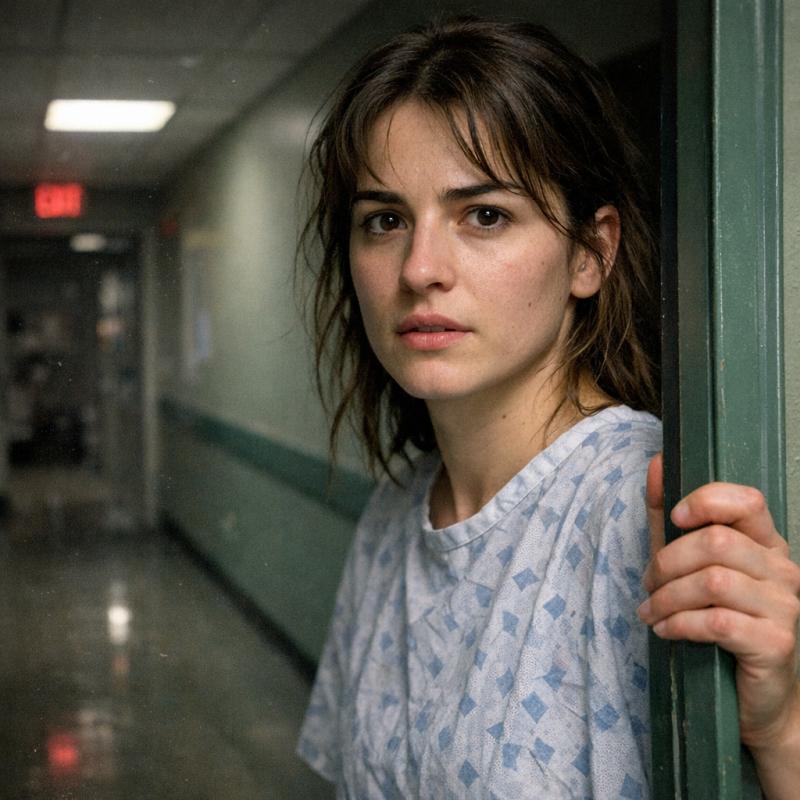 Image by FCT AI
The Corridor
The corridors were eerily empty at 2 AM. I'd expected some activity—hospitals never really sleep—but this wing felt abandoned. My bare feet made soft sounds on the linoleum as I moved past darkened patient rooms and empty nursing stations. Every shadow made my heart race. Every distant sound made me freeze. I kept to the walls, avoiding the obvious sightlines of the few security cameras I spotted. Most were pointed at doors and intersections, leaving blind spots if you knew where to look. I was heading toward the elevator banks, thinking maybe I could find the floor where they'd taken Carl, when I heard it. Footsteps. Heavy, deliberate. I ducked into a doorway and held my breath. The footsteps continued, steady and unhurried, coming from somewhere ahead. I peered around the corner carefully. I turned a corner and froze—because at the end of the hallway stood someone in a full hazmat suit, just standing there, watching me.
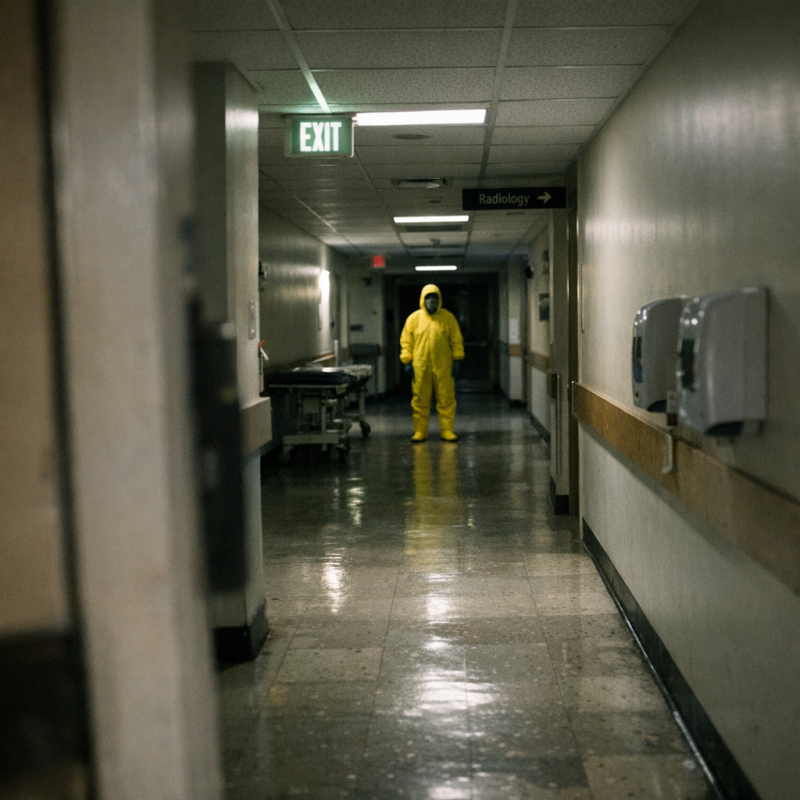 Image by FCT AI
The Chase
The figure didn't call out. Didn't announce themselves or ask what I was doing out of my room. They just started walking toward me, methodical and purposeful, like they'd been expecting this. I ran. I turned and sprinted back the way I'd come, my hospital gown flapping, my bare feet slapping against the floor. Behind me, I heard the figure break into a run too, their heavy suit making synthetic rustling sounds. I took a random turn, then another, trying to lose them in the maze of corridors. My lungs burned. My back itched furiously, like whatever was under my skin could sense my panic. I spotted a door marked 'Supply Closet' and yanked it open, throwing myself inside and easing it shut as quietly as I could manage with my hands shaking. Darkness. The smell of disinfectant and cardboard. I pressed myself against the back wall, trying to control my breathing. I held my breath as footsteps stopped right outside the closet door, and through the crack, I saw the gloved hand reach for the handle.
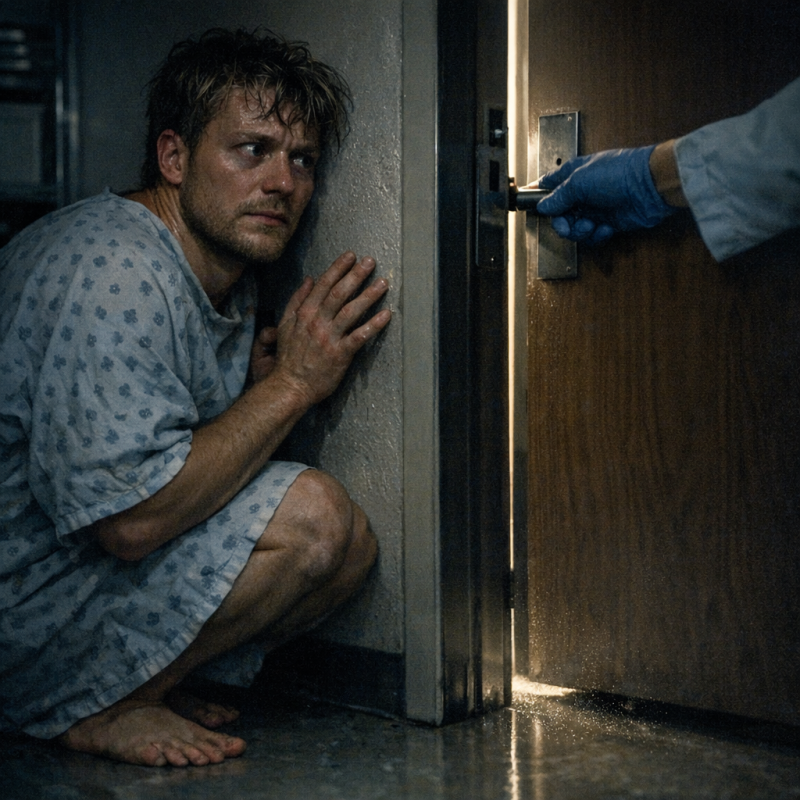 Image by FCT AI
The Basement
The handle turned. I pressed myself further back, my hand finding a shelf behind me. But then—voices. Someone calling from down the hallway. The gloved hand paused, then withdrew. The footsteps moved away. I waited in that closet for what felt like an eternity, my heart hammering so hard I thought it might give me away. When I finally cracked the door open, the corridor was empty. I slipped out and moved in the opposite direction, desperate to put distance between myself and whoever had been chasing me. That's when I found them—stairs leading down, tucked behind a door marked 'Authorized Personnel Only.' The stairwell was concrete and institutional, much older than the polished hallways above. I descended, my hand trailing along the cold wall for balance. One flight. Two. The door at the bottom had no floor number, no signage at all. The air down there smelled wrong—antiseptic mixed with something organic and decaying—and I heard voices arguing behind a locked door.
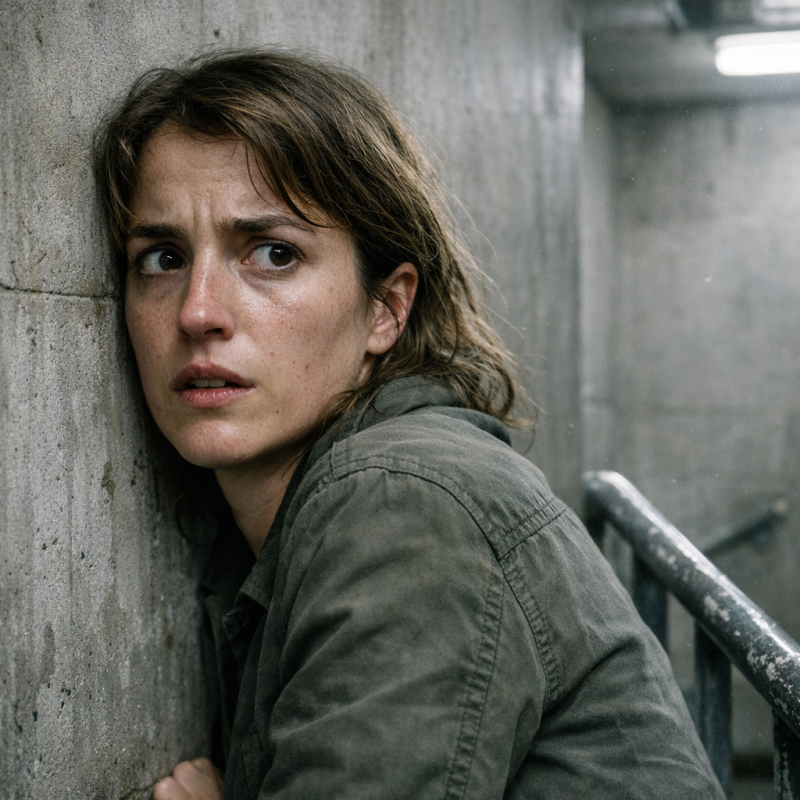 Image by FCT AI
The Argument
I pressed myself against the wall next to the door, trying to make out the words. Two voices, both familiar. Dr. Keller's measured tone, strained now with obvious stress. And Ms. Torres, the hospital administrator, sharper and more forceful. 'We can't keep justifying these protocols,' Dr. Keller was saying. 'We've lost three patients already, and now we have two more showing symptoms—' 'The protocols exist for a reason,' Ms. Torres cut him off. 'Containment is the priority. Treatment is secondary.' 'That's not medicine, that's—' 'That's reality. We knew the risks when we agreed to contain this here. The alternative was a public outbreak, mass panic, CDC involvement. This way we control the narrative. If more patients get infected, that's the cost of keeping it quiet.' I felt like I'd been punched in the stomach. They knew. They'd known all along. Ms. Torres said: 'We knew the risks when we agreed to contain this here. If more patients get infected, that's the cost of keeping it quiet.'
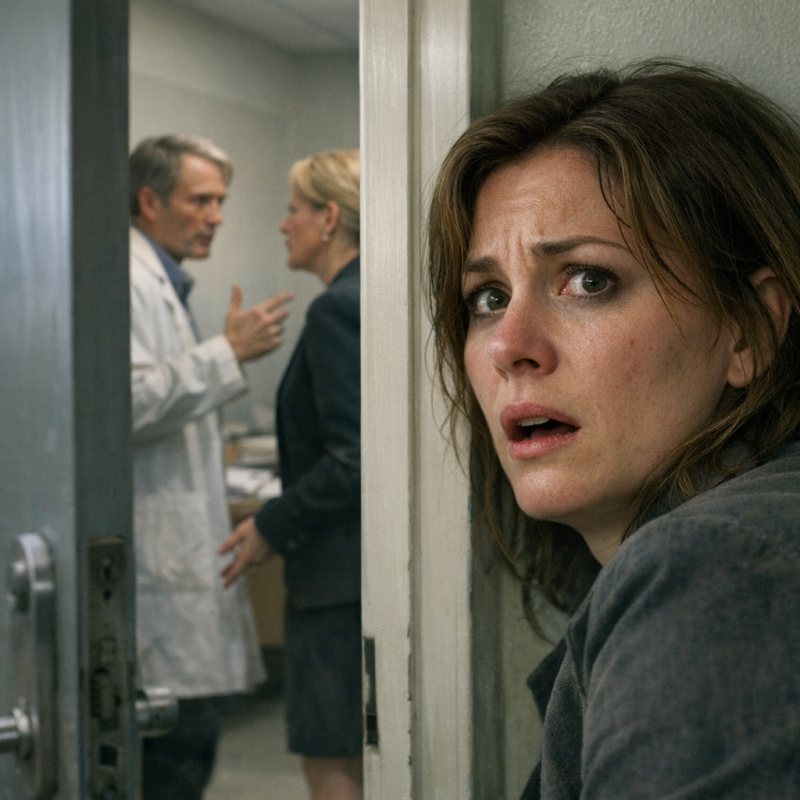 Image by FCT AI
The Lab
I found it on the third floor, at the end of a service corridor I'd never noticed before. The lab door was unlocked—which should've been my first warning—but I was running on pure adrenaline and desperation. Inside, the space looked like something between a research facility and a field hospital. Steel counters lined the walls, covered with microscopes, specimen containers, and equipment I couldn't identify. The fluorescent lights hummed overhead, casting everything in harsh white. I moved quickly, opening drawers, rifling through papers. Most of it was technical jargon I didn't understand, but I found photographs—close-ups of tissue samples, of skin split open to reveal something moving underneath. My hands shook as I flipped through them. Then I saw the preservation jars arranged on the far counter, each labeled with dates and subject codes. I made myself walk over, even though every instinct screamed to run. The specimens inside looked like pale, segmented worms, their bodies still twitching in the fluid. I grabbed the nearest jar to read the label properly, and my blood went cold. On the counter sat a jar filled with something writhing in preservative fluid—and the label read: 'Subject: Carl M. Extraction: Day 3.'
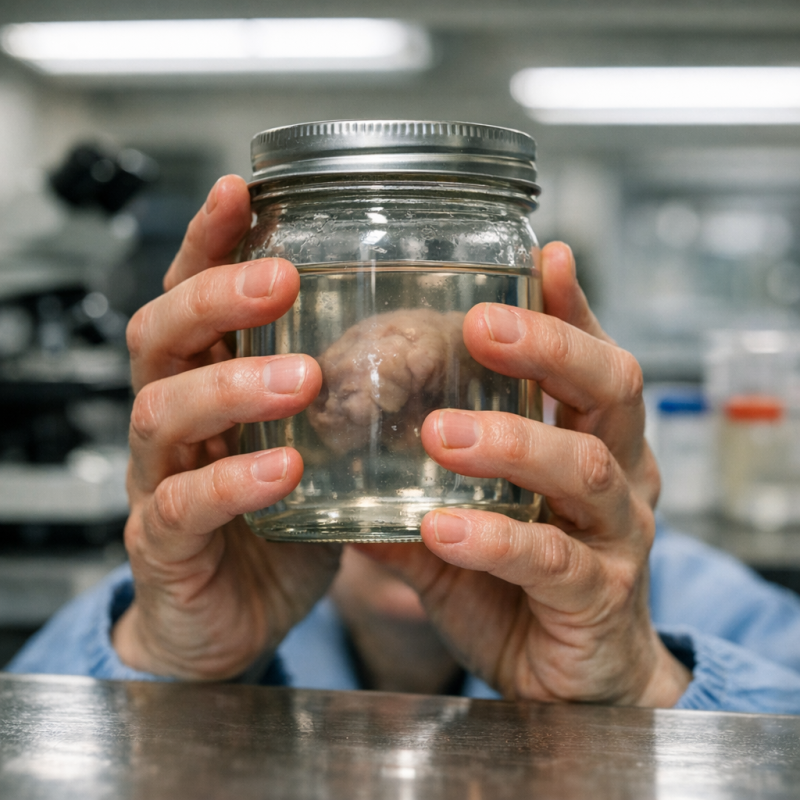 Image by FCT AI
The Files
I pulled out my phone with trembling hands and started photographing everything. The specimens, the labels, the equipment. I found a filing cabinet and yanked open drawers until I hit folders marked 'Classified Protocol.' The documents inside confirmed everything I'd feared and worse. The organism wasn't some random infection or freak accident—it was a bioweapon, something engineered in a military research facility upstate. The truck that crashed, the one Carl had been driving? It was transporting specimens from a decommissioned lab. The accident released the organism, and instead of reporting it to the CDC or the military, the hospital administration decided to contain it here. 'Study opportunity,' one memo called it. 'Unprecedented chance to observe transmission and progression in live subjects.' I photographed page after page, my phone screen glowing in the dim lab. Then I flipped to a section near the back, projections and statistics about infection rates and survival outcomes. There was a list of names—patients, staff, projected casualties. My eyes scanned down the alphabetical roster, and then I froze. I kept photographing until I reached the section labeled 'Projected Casualties'—and saw my own name on the list.
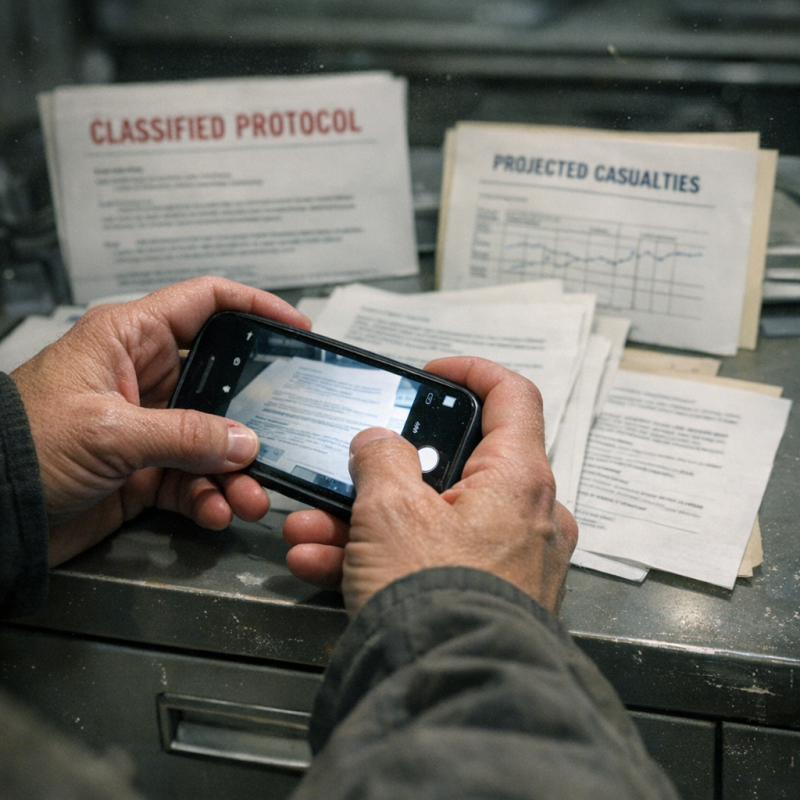 Image by FCT AI
The Discovery
I heard the door open behind me and spun around, phone still in my hand. Dr. Larsen stood in the doorway, his expression unreadable behind his glasses. He looked exhausted, like he hadn't slept in days. For a long moment, neither of us spoke. 'You shouldn't be here,' he said finally, his voice quiet. Not angry. Almost sad. I backed up against the counter, my heart hammering. 'You knew,' I said. 'You all knew what this was, and you let it spread anyway.' He closed the door carefully behind him and stepped into the lab. 'It's not that simple.' 'It is that simple,' I shot back. 'Carl is dying. Other patients are infected. You could've stopped this.' Dr. Larsen rubbed his face with both hands. 'If we'd reported it, do you understand what would've happened? Military lockdown. Entire city quarantined. Panic. We thought we could contain it here, study it, find a cure before—' 'Before what?' He looked at me with something like regret in his eyes. Dr. Larsen looked at the phone in my hand and said quietly: 'You've seen too much. I'm sorry—I really am—but I can't let you leave.'
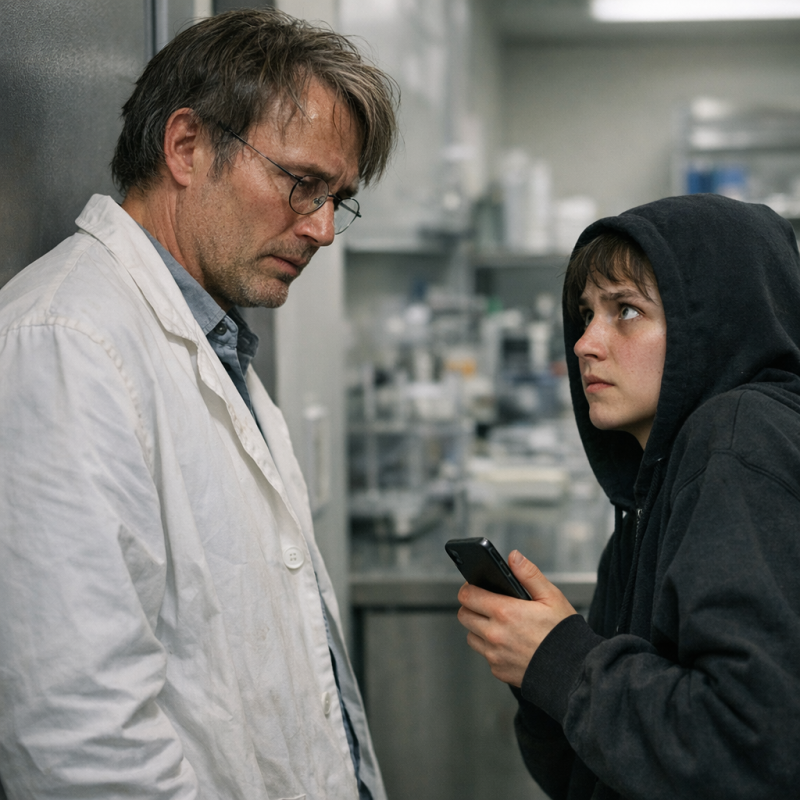 Image by FCT AI
The Negotiation
I clutched the phone tighter, backing further against the counter. 'You don't have to do this,' I said, trying to keep my voice steady. 'You're a doctor. You took an oath.' Dr. Larsen's jaw tightened. 'I took an oath to protect public health. Sometimes that means making impossible choices.' 'This isn't protecting anyone. This is murder.' He flinched at the word. 'We're trying to save lives. If this organism gets out into the general population—' 'So you sacrifice us instead?' I held up the phone. 'I have photos. Evidence. If something happens to me, people will know.' 'And then thousands affected instead of dozens,' he said, but his voice wavered. 'Is that better?' I saw something crack in his expression, a moment of genuine doubt. 'You don't believe that,' I pressed. 'If you did, you wouldn't look like you're about to be sick. You know this is wrong.' Dr. Larsen stared at me, his hand trembling slightly. He took a step forward, reaching for the phone, and for one wild moment I thought he might actually help me—that he'd choose conscience over orders. Dr. Larsen's hand trembled as he reached for the phone, and for a moment I thought he might help—until Ms. Torres walked in.
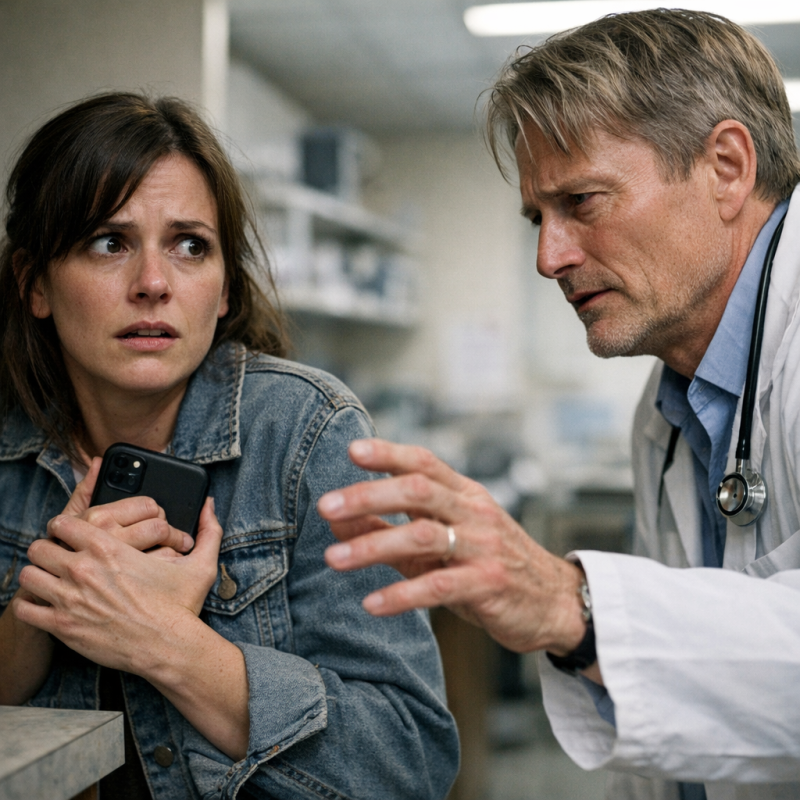 Image by FCT AI
The Confrontation
Ms. Torres looked between us, taking in the scene with cold efficiency. 'Dr. Larsen, step away from the patient,' she said calmly. He didn't move. 'Ms. Torres, maybe we should reconsider—' 'Now, Doctor.' Her voice cut like glass. Dr. Larsen stepped aside, avoiding my eyes. Ms. Torres turned her attention to me, smoothing her blazer with practiced precision. 'You've been very resourceful,' she said. 'Unfortunately, resourcefulness doesn't change reality.' 'You knew,' I said, rage overwhelming fear. 'From the beginning. You deliberately let this spread so you could study it.' 'We contained a potential pandemic,' she corrected. 'We made a difficult choice for the greater good.' 'By sacrificing us?' She met my eyes without flinching. 'One hospital, maybe a dozen people—that's a tragedy. Every epidemic requires containment. Every study requires subjects. Would you prefer we released this into the city? Infected thousands? Millions?' 'I'd prefer you'd actually tried to save us.' Ms. Torres smiled, thin and cold. She said: 'One hospital, maybe a dozen people—that's a tragedy. But if word gets out? That's a catastrophe. You should understand. You're going to be one of those dozen.'
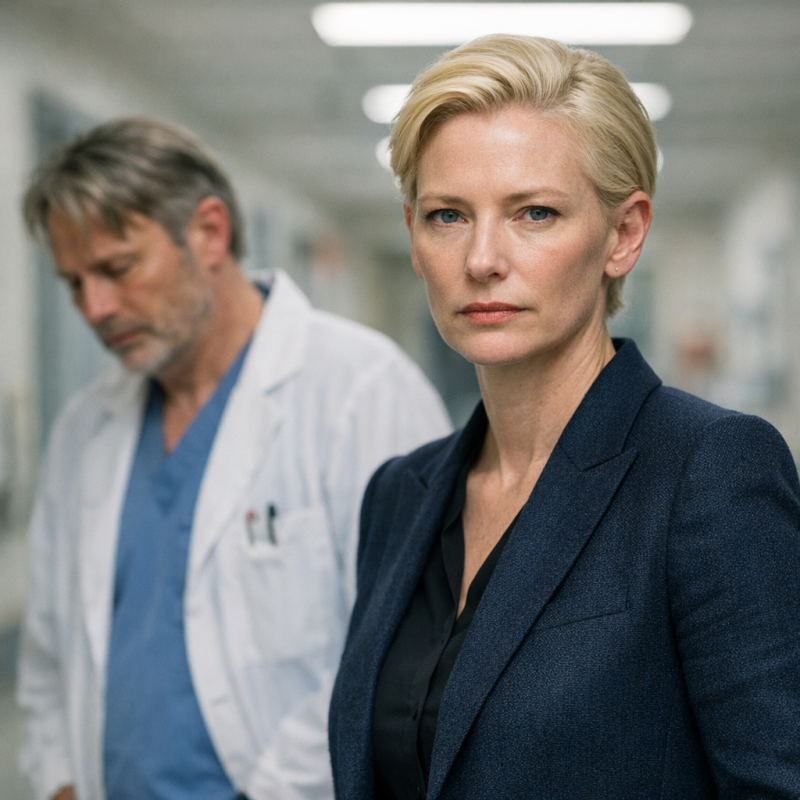 Image by FCT AI
The Extraction Team
Ms. Torres pressed something on her phone, and within seconds the door opened. Security personnel filed in, but not regular hospital security—these were men in full hazmat suits, the kind you see in outbreak movies. Behind them came medical staff, also suited up, wheeling a gurney. 'No,' I said, backing up until I hit the counter. 'No, please—' They moved with practiced efficiency, grabbing my arms. I tried to fight, but there were too many of them. Marco was there—I recognized his eyes behind the face shield—but he wouldn't look at me. 'Please,' I begged as they forced me down onto the gurney. 'I won't tell anyone. I'll delete the photos. Just let me go.' Ms. Torres watched impassively. 'Take him to the treatment facility. Standard containment protocol.' The straps tightened around my wrists, my chest, my ankles. I thrashed, screaming, but the restraints held firm. As they wheeled me toward the door, I caught sight through an open doorway—a room I hadn't noticed before, filled with isolated beds and IV stands. The patients inside looked like corpses, their skin translucent, their bodies barely moving. As they strapped me to the gurney, I caught sight of the facility through an open door—and realized 'treatment' was just a pretty word for 'disposal.'
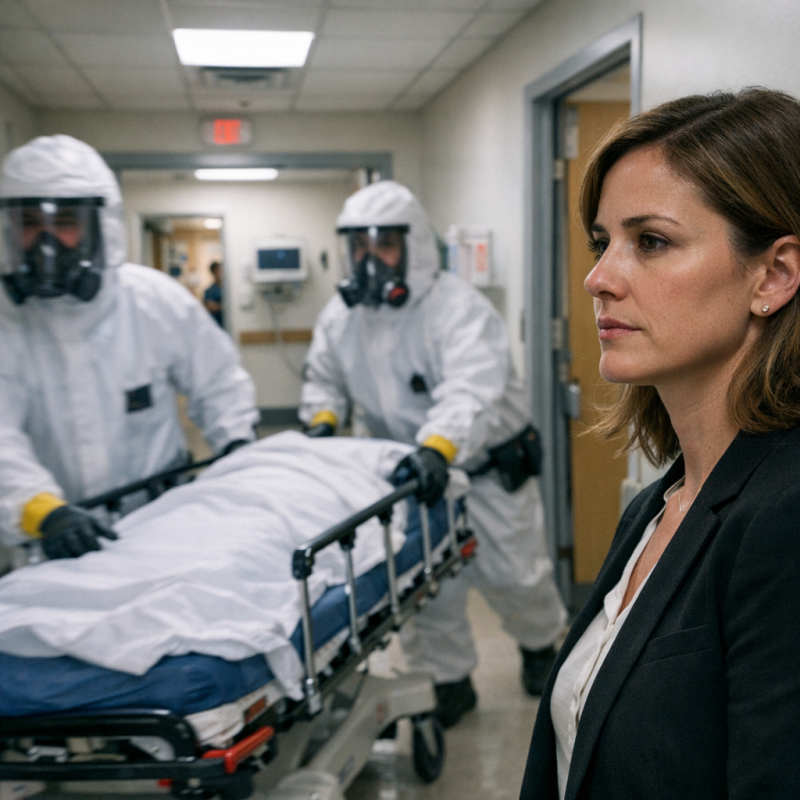 Image by FCT AI
The Facility
They wheeled me through corridors I'd never seen, deep in the hospital's lower levels. The walls down here were older, institutional green beneath harsh fluorescent strips. We passed through a set of heavy double doors marked 'Authorized Personnel Only,' and the temperature dropped noticeably. The facility beyond was makeshift but organized—a converted basement space divided into isolation rooms with plastic sheeting and ventilation equipment. Through the transparent barriers, I could see other patients. Some I recognized from the wards upstairs. They lay motionless in their beds, hooked to IVs and monitors. Others were in worse shape, their bodies contorted, their skin showing the telltale signs of advanced infection. One woman's entire torso seemed to pulse with movement beneath the surface. A man near the door had both arms restrained, his fingers scratching uselessly at air, that same desperate clawing motion I'd first seen in Carl. The medical staff moved between beds with clinical detachment, taking notes, adjusting dosages. This wasn't treatment. This was observation. Documentation. They were studying how the organism killed us. The gurney slowed as we approached the last occupied room. In the last bed before they sealed me in my room, I saw Carl—or what was left of him—his back a grotesque landscape of movement beneath translucent skin.
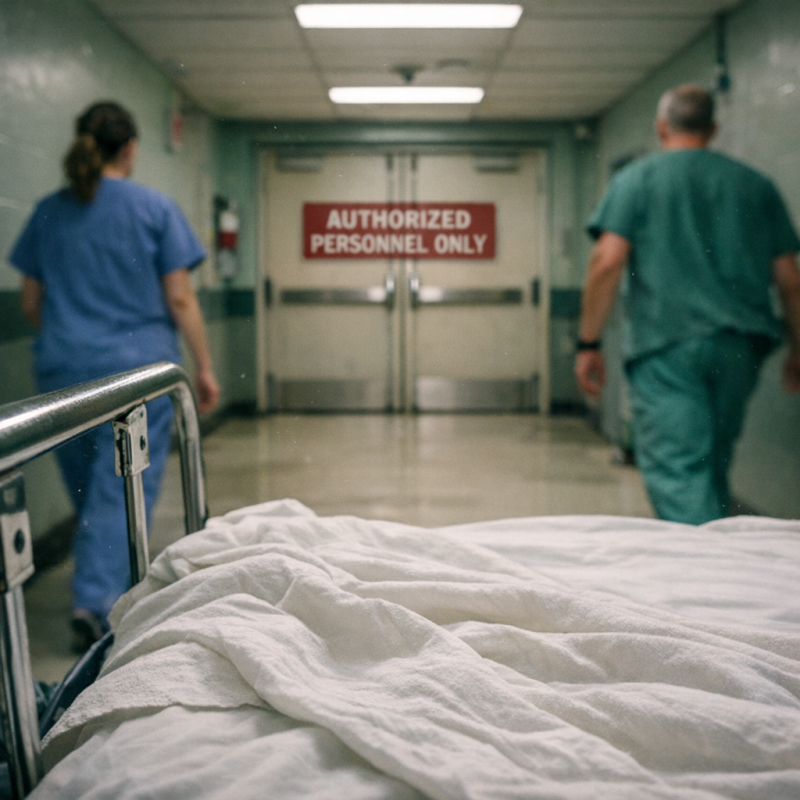 Image by FCT AI
The Truth
They left me alone in the isolation room for hours—or maybe minutes. Time felt meaningless. I'd stopped screaming, stopped fighting the restraints. What was the point? Then the door opened and Dr. Larsen entered, alone this time, his face pale with exhaustion and something that looked like shame. He pulled up a chair beside the bed. 'I need you to understand,' he said quietly. 'The truck that crashed? It wasn't being decommissioned. It was being delivered. Here.' I stared at him. 'What?' 'The military needed a civilian facility to study the organism. Somewhere off the books. We agreed to take it. To contain it. Ms. Torres, Dr. Keller, the board—they all knew. We were paid to be a research site.' My mouth went dry. 'Carl—' 'Was never supposed to survive,' Dr. Larsen said. 'None of the infected were. That was the point. To observe progression, test treatments, gather data. When you were admitted, when you started showing symptoms, you became part of the study.' Everything clicked into place. Every dismissed concern, every delayed response, every time they told me it was nothing. He said: 'They didn't fail Carl. They sacrificed him. And you. And all of us. Because studying this organism alive was more valuable than saving any individual life.'
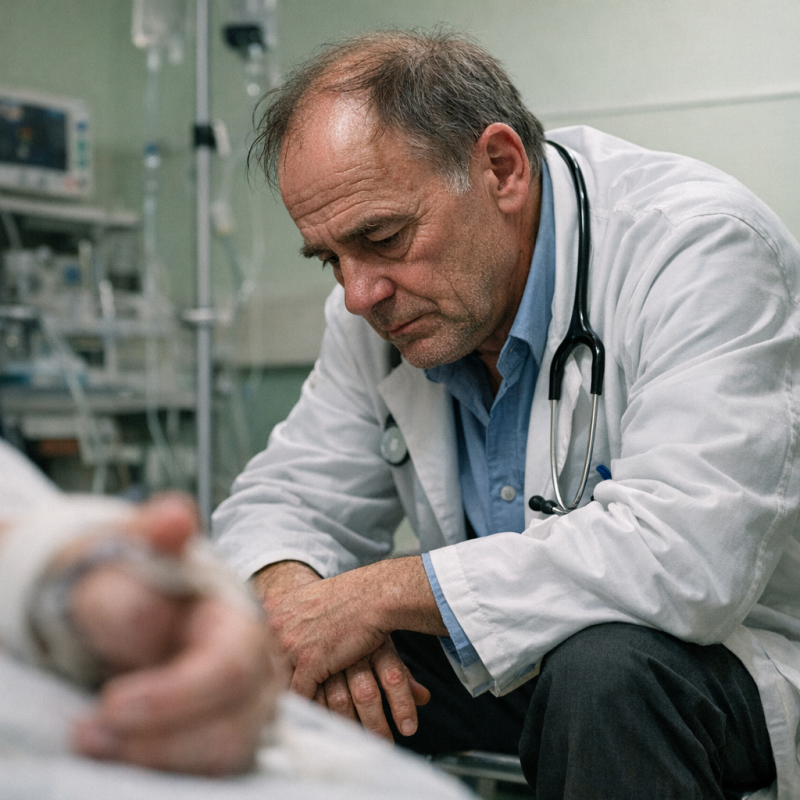 Image by FCT AI
The Symptoms
The itch came back that night, but it wasn't just an itch anymore. It was movement. I could feel something beneath my skin, like fingers tracing patterns along my spine, my ribs, spreading outward with deliberate purpose. I tried to convince myself it was nerve damage, inflammation, anything normal. But when I pressed my hand against my back, I felt ridges that hadn't been there before—raised lines that shifted when I touched them. The restraints kept me from scratching, which was probably the only thing that saved me from tearing myself open. I remember lying there in the dark, feeling whatever was inside me mapping my body like territory to claim. It wasn't random. It was methodical. Intelligent. Every few hours, the pattern would expand, new ridges forming, new areas colonized. My fever spiked to 104. I stopped sweating. My skin felt too tight, like something was stretching it from the inside. And the worst part? I could sense it learning. Adapting. Using my own body as a resource for something I couldn't begin to understand. I could feel it now, not just an itch but a presence—intelligent, hungry, and growing stronger by the hour.
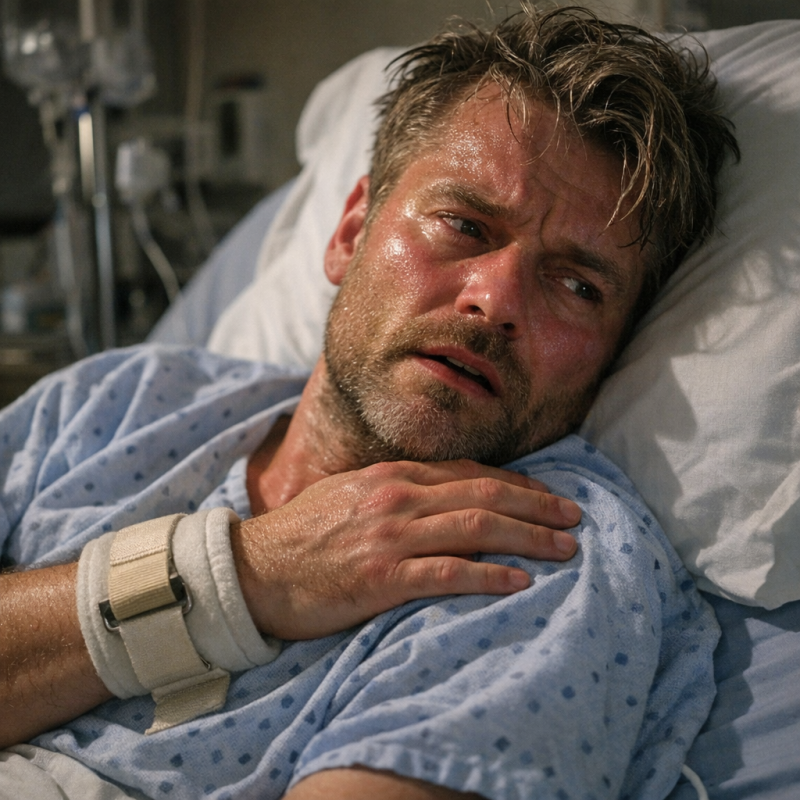 Image by FCT AI
Monica's Plan
Monica slipped into my room around 3 AM, moving like a ghost past the security camera's blind spot. She looked exhausted, terrified, but also determined in a way I hadn't seen before. 'Don't talk,' she whispered, checking the hallway. 'Just listen.' She told me that before they'd discovered my phone, before they'd found the photos, she'd already sent everything. Every document I'd photographed, every piece of evidence—she'd forwarded it all to her personal email and then to three different journalists she trusted. Major outlets. People who couldn't be bought or silenced. 'They found your phone, but they were too late,' she said. 'I sent everything the same night you gave it to me. I knew something was wrong. I knew they'd try to bury it.' My heart hammered against my ribs. 'When?' 'Two weeks ago. It takes time for journalists to verify, to build a story this big. But it's happening. I got a text from one of them yesterday—they're going to publish.' She glanced at the door, her hands shaking. She whispered: 'It's already out there. They can't contain this anymore. But we need to survive long enough for the story to break.'
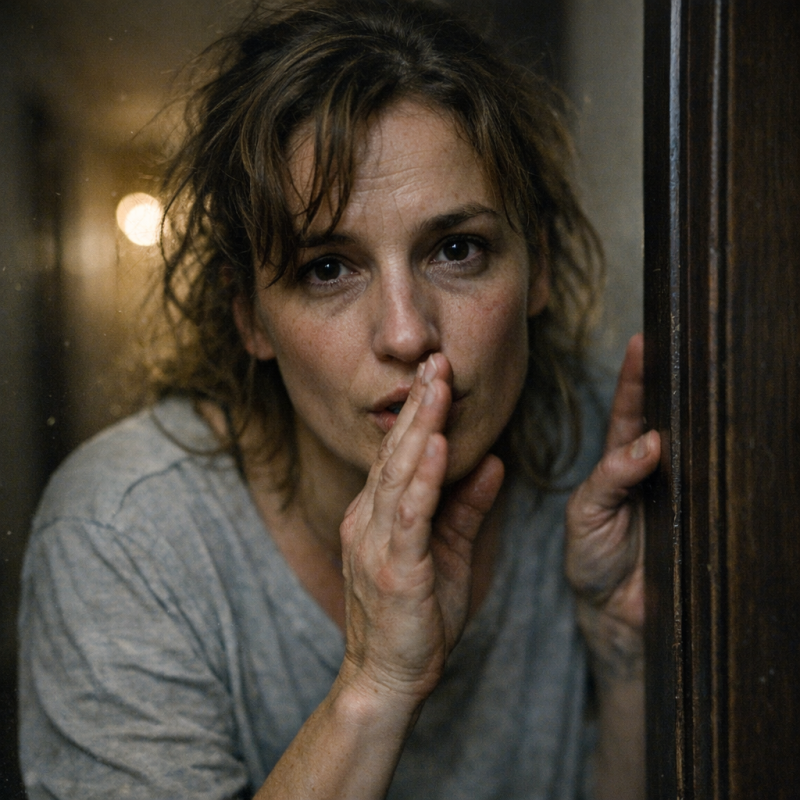 Image by FCT AI
The Breach
The alarms started at 4:47 AM. Not the normal codes we'd heard before, but something different—a piercing, continuous shriek that made my bones vibrate. Monica froze, her face going white. Through my door's window, I saw staff running, heard shouting, saw the emergency lights kick on in rotating red. Someone screamed. Not a normal scream—something primal, animal. Monica grabbed my restraints, fumbling with the locks. 'What's happening?' I asked. 'Patient Seven,' she said, her voice shaking. 'Advanced stage. They were keeping him in sub-basement isolation. Something went wrong.' The floor trembled. More screaming. And then I saw them—nurses and orderlies sprinting past my door, some of them covered in blood. The intercom crackled: 'Full facility lockdown. This is not a drill. All personnel to safe zones. Repeat: containment breach in progress.' Monica got one restraint loose, then another. My skin crawled as the sound echoed down the hallway—wet, sliding, like something massive moving through the corridors. Alarms screamed and emergency lights flashed red as something burst from the patient's back—something that moved with purpose.
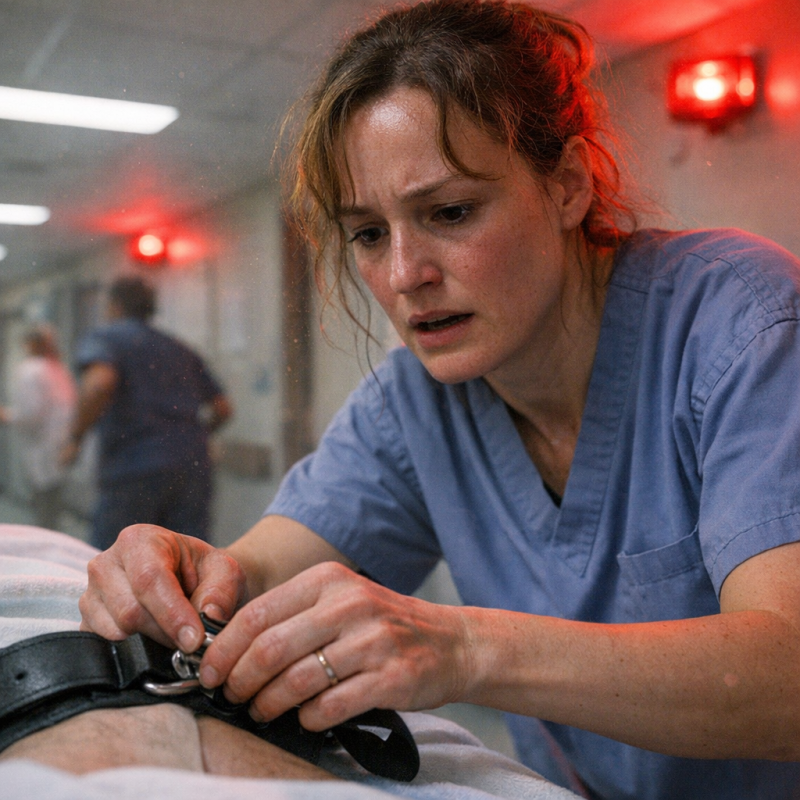 Image by FCT AI
The Escape Attempt
Monica hauled me out of bed, my legs barely working after days of restraints. 'Maintenance corridors,' she gasped. 'They're not on the main lockdown system.' We stumbled into the hallway, and I immediately wished we hadn't. Blood streaked the walls. A gurney lay overturned, restraints torn open like paper. But no bodies. That was somehow worse. Monica pulled me toward a service door I'd never noticed before, using her badge to access it. The door beeped green and we plunged into a narrow corridor lit by emergency lighting. Behind us, that wet sliding sound grew louder. We ran, my hospital gown tangling around my legs, Monica supporting half my weight. The maintenance tunnels twisted through the facility's guts—pipes overhead, concrete walls, the smell of industrial cleaner and mildew. We passed junction after junction, Monica navigating from memory. Finally, we reached an emergency exit door—solid metal with a crash bar. Monica slammed into it. Nothing. She tried again. Locked. 'No,' she whispered, checking her badge. 'This should be open. This is supposed to be open during lockdowns.' We reached the exit door, but it wouldn't open—and behind us, I heard that wet, slithering sound growing closer.
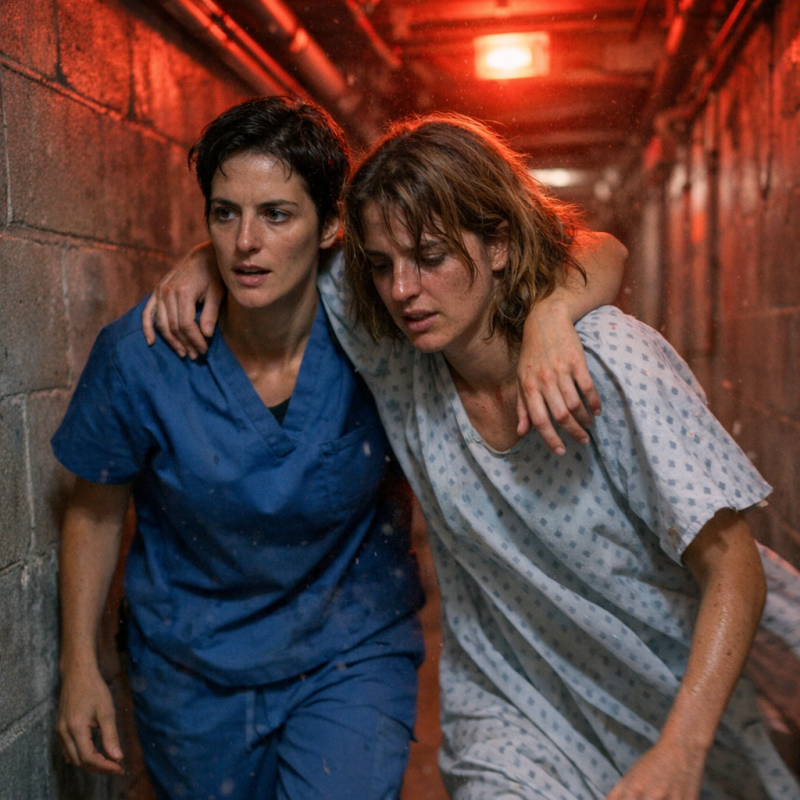 Image by FCT AI
The Sacrifice
Monica looked at me, then at the corridor we'd come from, then back at the locked door. I saw the decision form in her eyes before she spoke. 'There's another exit,' she said. 'Two junctions back, left corridor. It goes to the parking structure.' The slithering sound echoed closer. Something scraped against the pipes overhead. 'We can both make it,' I said, but she was already pushing me backward. 'No. We can't outrun it together. You're barely standing.' She pulled me to the junction, showed me the left turn. 'Run. Don't stop. Don't look back.' 'Monica—' 'Your story matters more than mine,' she said. 'Get out. Tell everyone what happened here.' She turned and ran back toward the locked door, shouting, drawing whatever was coming toward herself instead of me. I heard a door slam—she'd locked herself in one of the maintenance rooms. Buying me time. The wet sound changed direction, following her voice. I wanted to help her, wanted to go back, but my legs were already moving the other direction because she was right—her sacrifice couldn't mean nothing. Through the door's window, I watched Monica's face contort in terror as the organism reached her—and I ran, because her sacrifice couldn't be for nothing.
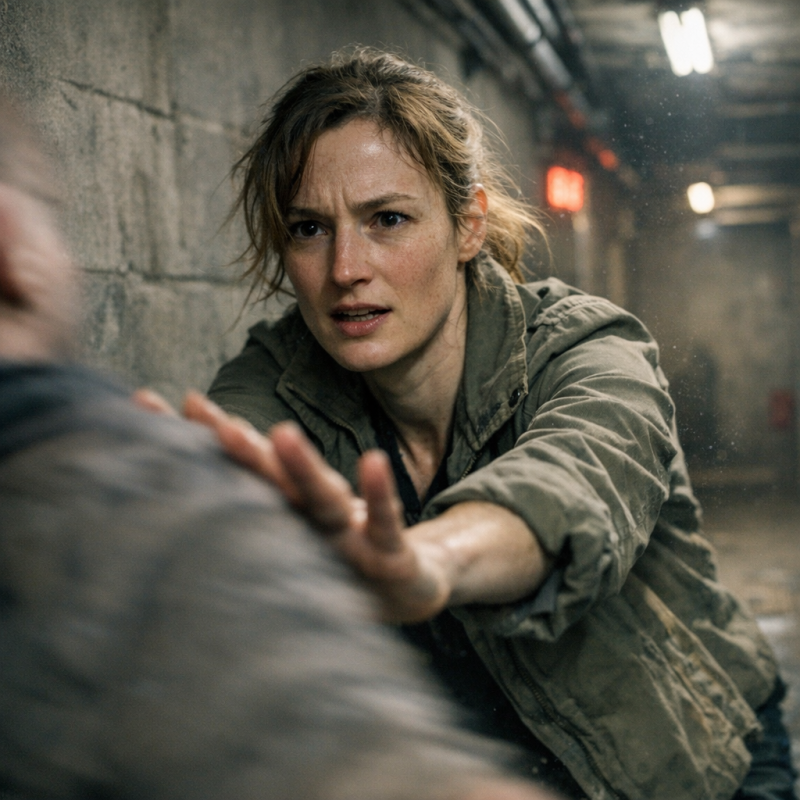 Image by FCT AI
The Confrontation with Torres
I made it three more corridors before I saw her. Ms. Torres, still in her business suit but disheveled now, pulling a rolling suitcase and moving fast toward what looked like a private elevator I'd never seen before. She froze when she saw me, her hand going to something in her jacket pocket. 'You're running,' I said, my voice raw. 'The facility's burning and you're just leaving everyone.' Her expression hardened. 'I'm doing what I can still do. Damage control. Making sure this doesn't spread beyond—' 'Beyond the people you already killed?' I stepped closer, rage giving me strength I shouldn't have had. 'Carl. Monica. Everyone you sacrificed for your research.' 'For necessary research,' she corrected. 'Do you understand what this organism represents? If we can control it, weaponize it, study it properly—' 'People are dying right now.' 'It happens in every medical trial. Every advancement requires sacrifice.' She actually believed it. I could see it in her eyes. Ms. Torres looked at me with something like pity and said: 'You think exposing this saves anyone? Some secrets protect people.'
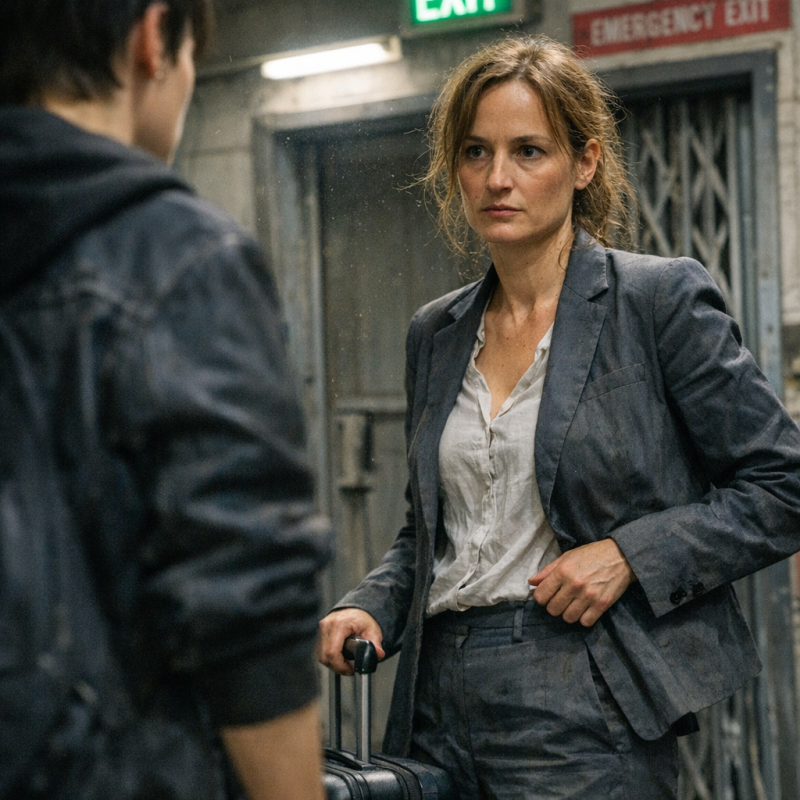 Image by FCT AI
The Fire
The explosion came from below us—a deep, earth-shaking boom that buckled the floor and sent Ms. Torres stumbling into the wall. Her suitcase fell open, scattering files and what looked like hard drives. Emergency sprinklers kicked on, then immediately began spraying something that wasn't water—some kind of chemical suppressant that burned my eyes. Smoke poured through the ventilation system, thick and black. 'Containment protocols,' Ms. Torres said, coughing. 'They're trying to sterilize the infected areas.' The lights flickered and went dark, replaced by emergency lighting that painted everything a disturbing red. Another explosion, closer this time. The floor cracked between us, a jagged line that widened into a gap. Heat blasted up from below—actual fire, not just chemical burns. Ms. Torres backed against the elevator, but the panel was dead, the power cut. She looked at me across the widening gap. 'Help me,' she said. The ceiling groaned. Chunks of concrete began to fall. I could jump the gap, pull her across, maybe we'd both make it to the stairs. Or I could run now, while I still could. Ms. Torres screamed as the ceiling collapsed between us, and I had seconds to choose—try to save her or save myself.
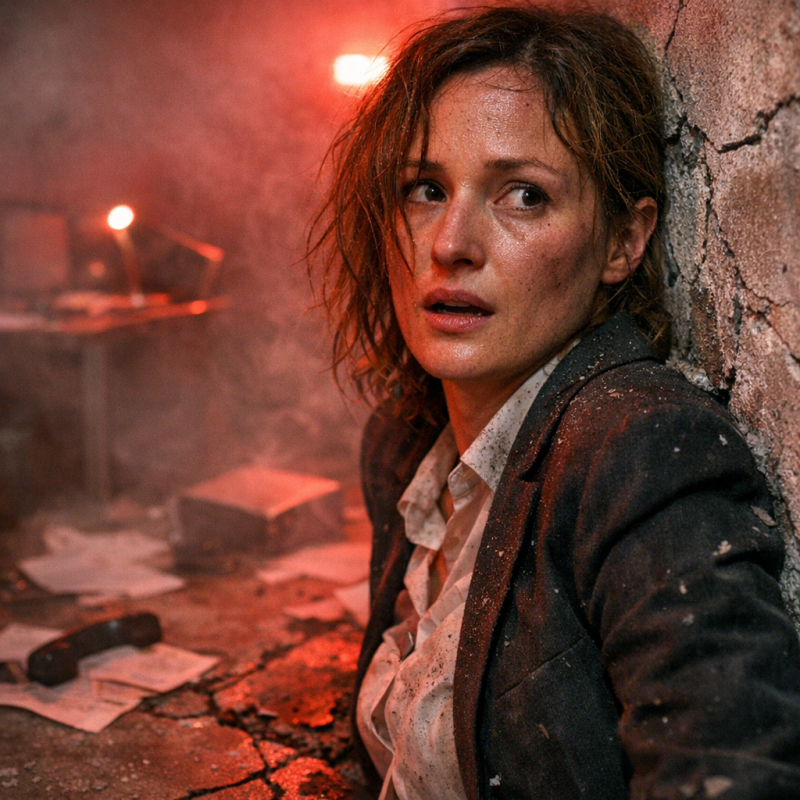 Image by FCT AI
The Choice
I ran. God help me, I turned and ran toward the emergency stairs while Ms. Torres screamed my name, screamed for help, screamed until her voice cut off with a sound I'll never forget—concrete and steel and silence. The stairs were filling with smoke, the metal handrails hot enough to burn my palms. I could barely see, barely breathe, my lungs searing with every breath. Behind me, more explosions, more ceiling collapses, the entire facility coming down around itself in what had to be a deliberate demolition. They were erasing everything. Fire licked at my heels as I climbed, my legs screaming, the organism in my back shifting and writhing like it knew we were in danger. Two flights. Three. The door at the top was jammed but I slammed into it with everything I had, and it burst open onto the parking structure. Fresh air hit me like a slap. I staggered forward, coughing, my vision blurring. Behind me, the hospital's lower levels were an inferno. I ran through smoke and flame, and behind me I heard Ms. Torres's screams cut off abruptly—and I didn't look back.
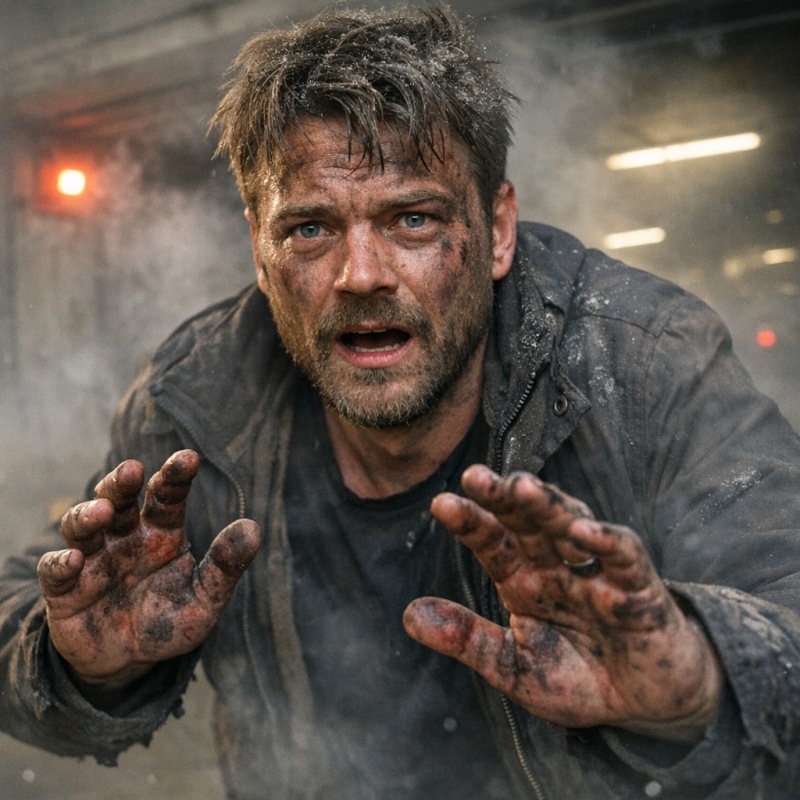 Image by FCT AI
The Surface
I burst into the parking lot coughing so hard I thought my lungs would tear. The night air was thick with smoke and ash, sirens wailing from every direction. People were running everywhere—patients in gowns, nurses crying, doctors trying to organize chaos. I collapsed against a car, my legs finally giving out, and that's when I saw them. News vans. At least five of them lined up along the perimeter fence, satellite dishes raised like antennae. Helicopters circled overhead, their searchlights cutting through the smoke. Someone grabbed my arm—a paramedic—asking if I could walk, if I was hurt. I couldn't answer. My throat was raw, my back was agony, but all I could do was stare at those cameras. Monica had done it. She'd gotten the story out before they could stop her. Federal vehicles were pulling up now, black SUVs with government plates. The building behind me groaned and collapsed further, sending up a massive plume of debris. A reporter was shouting into a microphone, the words 'biological contamination' and 'cover-up' cutting through the chaos. I stumbled into the parking lot just as news helicopters circled overhead—Monica's story had broken, and the world was watching.
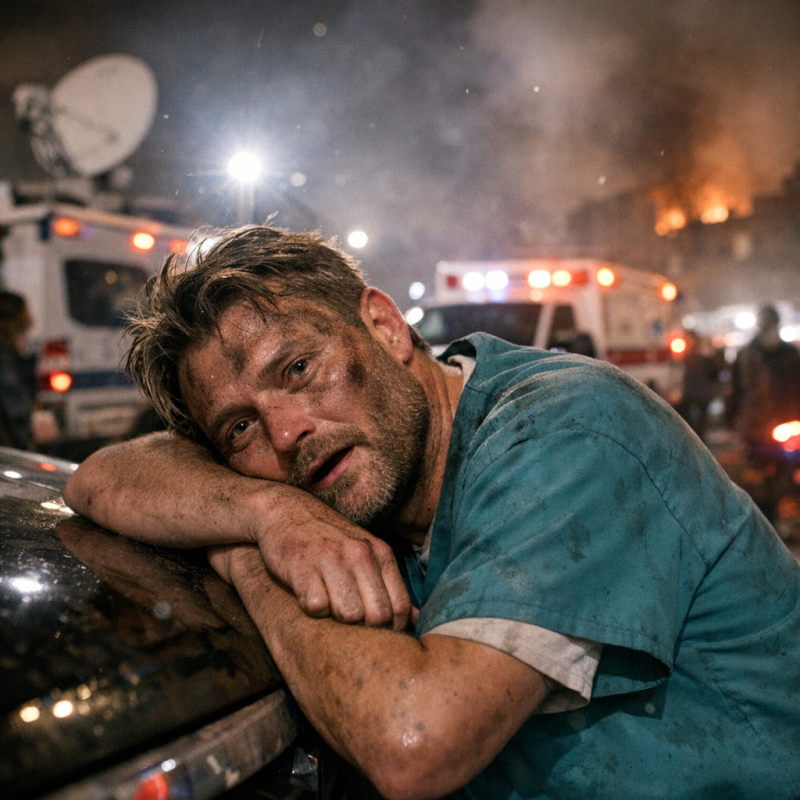 Image by FCT AI
The Aftermath
They took me to a facility three states away. I don't even know which one—they wouldn't tell me. For two weeks I was in isolation, full hazmat protocols, federal doctors running tests I didn't understand. They removed the organism in a six-hour surgery I barely remember. When I woke up, they told me it had been 'successfully extracted,' whatever that meant. The scar on my back runs from my shoulder blade to my spine, thick and raised like a rope. I touched it once and felt sick for hours. The news coverage was nonstop—I watched it on the small TV in my quarantine room. Lawsuits. Congressional hearings. The hospital administrator Ms. Torres was confirmed dead, along with seventeen others. Carl's family got a settlement. Monica won a Pulitzer. Me? I got therapy sessions twice a week and federal monitoring for the rest of my life. But here's the thing nobody talks about: sometimes I still feel it. Not pain exactly. More like a pressure. A wrongness deep under my skin that shouldn't be there anymore. They told me I was lucky—the organism had been removed before it reached critical mass. But I could still feel something wrong inside me.
The Testimony
The testimony took three days. Federal courtroom, sealed proceedings, lawyers everywhere. They wanted every detail—when I first noticed Carl scratching, what the nurses said, what I saw in the basement. I told them everything. Turned out there were others. Seventeen confirmed cases across four states, all connected to the same research initiative, all covered up. The conspiracy went higher than anyone expected—CDC officials, hospital board members, even a congressman who'd accepted campaign donations. Monica sat in the gallery every day, taking notes, her arm still in a sling. We didn't speak much. What was there to say? We'd survived something that shouldn't exist, exposed people who should have protected us. The lead investigator asked if I felt vindicated now that the truth was out. I didn't know how to answer that. Carl was still dead. Those seventeen others were still dead. Ms. Torres had burned trying to destroy evidence. Justice felt like the wrong word for what was happening. Accountability, maybe. Documentation. But not justice. They asked if I felt justice had been served, and I thought of Carl, of Monica, of all the others—and I couldn't answer.
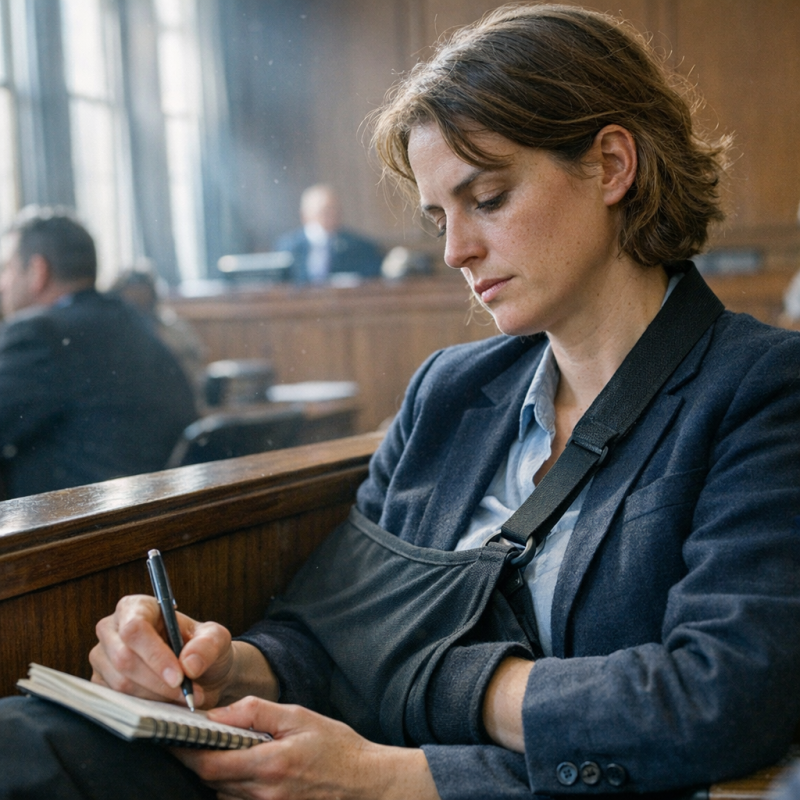 Image by FCT AI
The Itch
Six months later, I'm trying to live like a normal person. New city, new job, new apartment where nobody knows my name or my story. I see a therapist twice a week who specializes in medical trauma. We talk about survivor's guilt, about hypervigilance, about how the body remembers what the mind tries to forget. Most days are okay. I can sleep sometimes, can go hours without thinking about that hospital room or Carl's screams. But then there are the other nights. The ones where I lie awake at three in the morning, perfectly still, feeling that familiar sensation between my shoulder blades. It starts as a tickle. Then a pressure. Then something that feels almost like movement under the skin. The doctors swear they got it all—the scans are clean, the bloodwork normal. Psychological trauma, they say. Phantom sensations. The mind playing tricks. I tell myself it's phantom sensation, psychological trauma, anything but the truth—because the alternative is that they didn't get it all, and it's still there, waiting, growing. And some nights, when I can't sleep, I swear I feel it move.
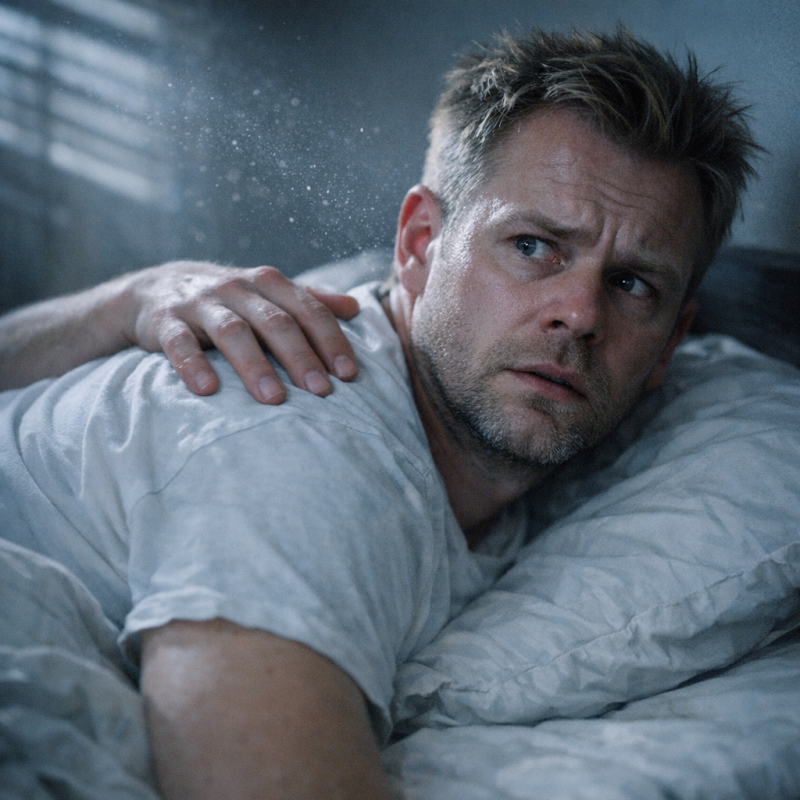 Image by FCT AI