The Negotiation
I clutched the phone tighter, backing further against the counter. 'You don't have to do this,' I said, trying to keep my voice steady. 'You're a doctor. You took an oath.' Dr. Larsen's jaw tightened. 'I took an oath to protect public health. Sometimes that means making impossible choices.' 'This isn't protecting anyone. This is murder.' He flinched at the word. 'We're trying to save lives. If this organism gets out into the general population—' 'So you sacrifice us instead?' I held up the phone. 'I have photos. Evidence. If something happens to me, people will know.' 'And then thousands affected instead of dozens,' he said, but his voice wavered. 'Is that better?' I saw something crack in his expression, a moment of genuine doubt. 'You don't believe that,' I pressed. 'If you did, you wouldn't look like you're about to be sick. You know this is wrong.' Dr. Larsen stared at me, his hand trembling slightly. He took a step forward, reaching for the phone, and for one wild moment I thought he might actually help me—that he'd choose conscience over orders. Dr. Larsen's hand trembled as he reached for the phone, and for a moment I thought he might help—until Ms. Torres walked in.
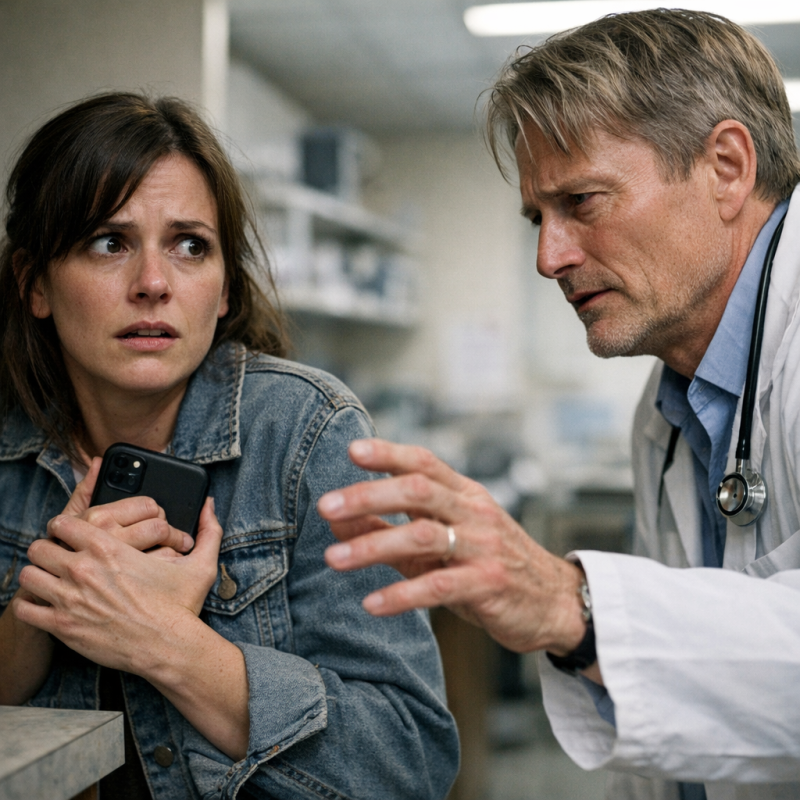 Image by FCT AI
The Confrontation
Ms. Torres looked between us, taking in the scene with cold efficiency. 'Dr. Larsen, step away from the patient,' she said calmly. He didn't move. 'Ms. Torres, maybe we should reconsider—' 'Now, Doctor.' Her voice cut like glass. Dr. Larsen stepped aside, avoiding my eyes. Ms. Torres turned her attention to me, smoothing her blazer with practiced precision. 'You've been very resourceful,' she said. 'Unfortunately, resourcefulness doesn't change reality.' 'You knew,' I said, rage overwhelming fear. 'From the beginning. You deliberately let this spread so you could study it.' 'We contained a potential pandemic,' she corrected. 'We made a difficult choice for the greater good.' 'By sacrificing us?' She met my eyes without flinching. 'One hospital, maybe a dozen people—that's a tragedy. Every epidemic requires containment. Every study requires subjects. Would you prefer we released this into the city? Infected thousands? Millions?' 'I'd prefer you'd actually tried to save us.' Ms. Torres smiled, thin and cold. She said: 'One hospital, maybe a dozen people—that's a tragedy. But if word gets out? That's a catastrophe. You should understand. You're going to be one of those dozen.'
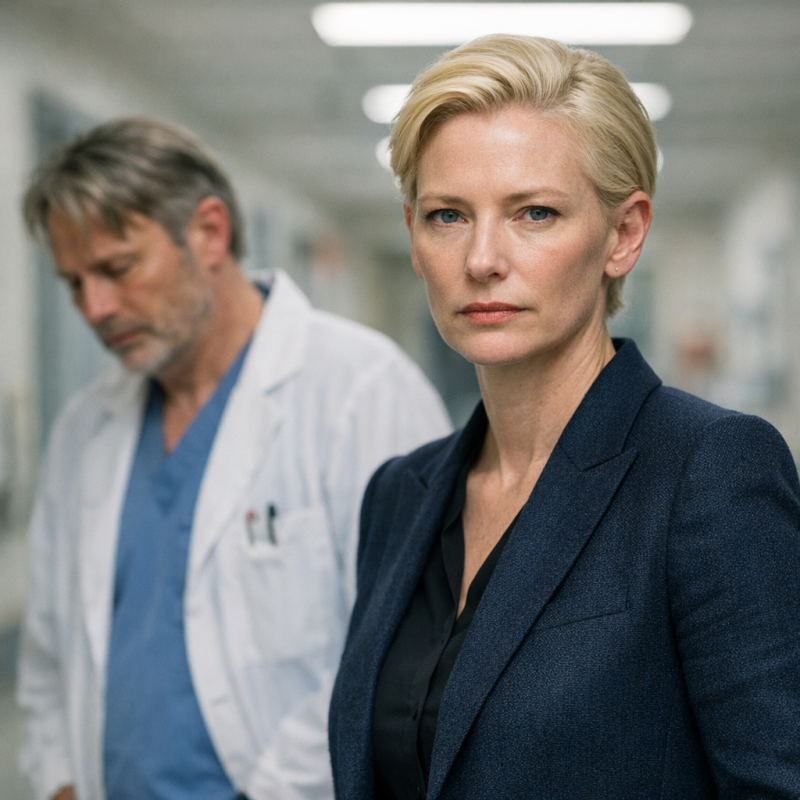 Image by FCT AI
The Extraction Team
Ms. Torres pressed something on her phone, and within seconds the door opened. Security personnel filed in, but not regular hospital security—these were men in full hazmat suits, the kind you see in outbreak movies. Behind them came medical staff, also suited up, wheeling a gurney. 'No,' I said, backing up until I hit the counter. 'No, please—' They moved with practiced efficiency, grabbing my arms. I tried to fight, but there were too many of them. Marco was there—I recognized his eyes behind the face shield—but he wouldn't look at me. 'Please,' I begged as they forced me down onto the gurney. 'I won't tell anyone. I'll delete the photos. Just let me go.' Ms. Torres watched impassively. 'Take him to the treatment facility. Standard containment protocol.' The straps tightened around my wrists, my chest, my ankles. I thrashed, screaming, but the restraints held firm. As they wheeled me toward the door, I caught sight through an open doorway—a room I hadn't noticed before, filled with isolated beds and IV stands. The patients inside looked like corpses, their skin translucent, their bodies barely moving. As they strapped me to the gurney, I caught sight of the facility through an open door—and realized 'treatment' was just a pretty word for 'disposal.'
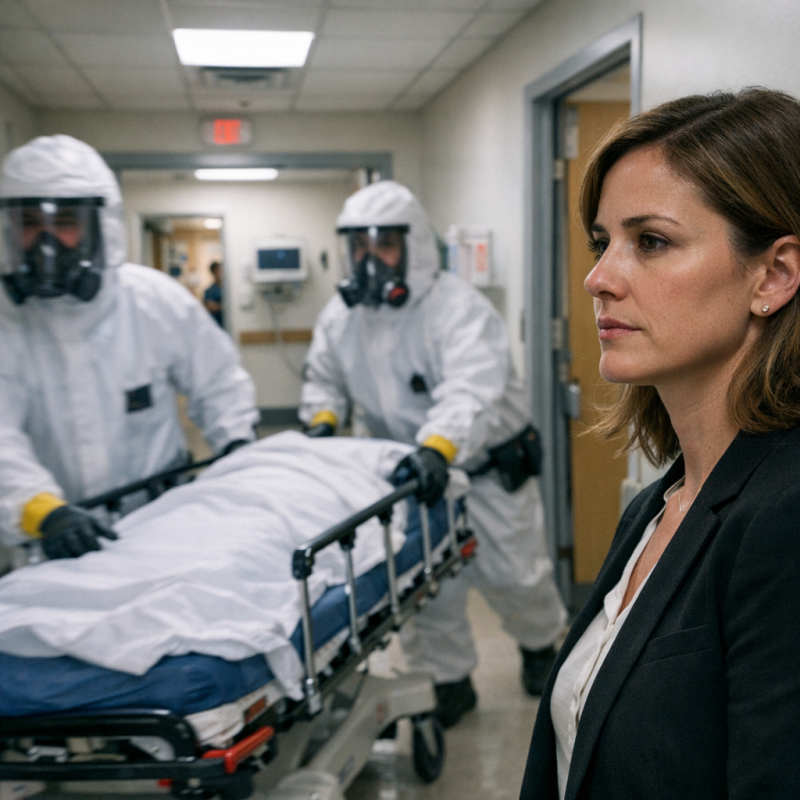 Image by FCT AI
The Facility
They wheeled me through corridors I'd never seen, deep in the hospital's lower levels. The walls down here were older, institutional green beneath harsh fluorescent strips. We passed through a set of heavy double doors marked 'Authorized Personnel Only,' and the temperature dropped noticeably. The facility beyond was makeshift but organized—a converted basement space divided into isolation rooms with plastic sheeting and ventilation equipment. Through the transparent barriers, I could see other patients. Some I recognized from the wards upstairs. They lay motionless in their beds, hooked to IVs and monitors. Others were in worse shape, their bodies contorted, their skin showing the telltale signs of advanced infection. One woman's entire torso seemed to pulse with movement beneath the surface. A man near the door had both arms restrained, his fingers scratching uselessly at air, that same desperate clawing motion I'd first seen in Carl. The medical staff moved between beds with clinical detachment, taking notes, adjusting dosages. This wasn't treatment. This was observation. Documentation. They were studying how the organism killed us. The gurney slowed as we approached the last occupied room. In the last bed before they sealed me in my room, I saw Carl—or what was left of him—his back a grotesque landscape of movement beneath translucent skin.
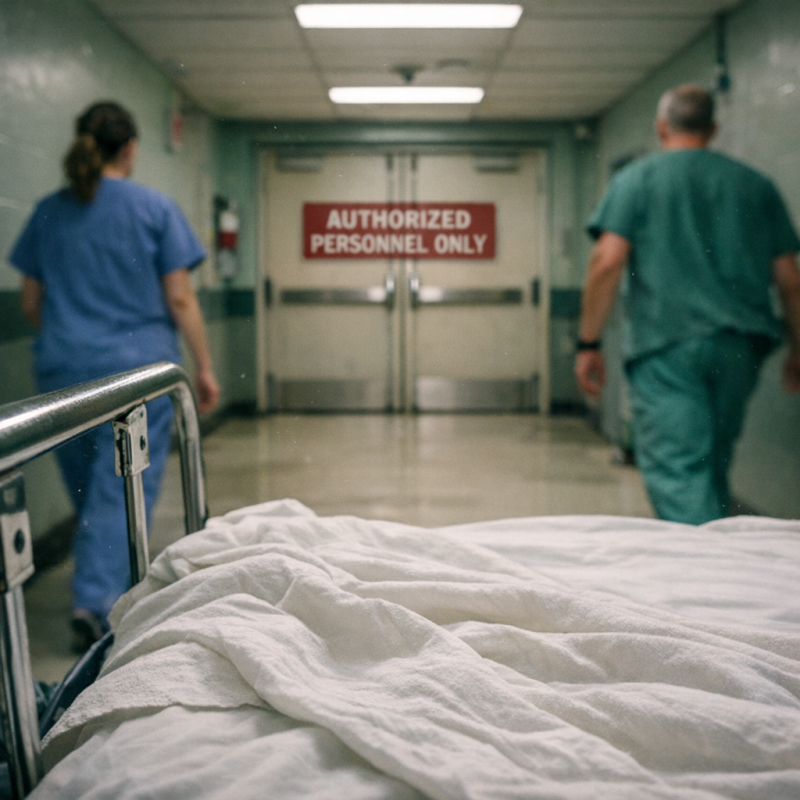 Image by FCT AI
The Truth
They left me alone in the isolation room for hours—or maybe minutes. Time felt meaningless. I'd stopped screaming, stopped fighting the restraints. What was the point? Then the door opened and Dr. Larsen entered, alone this time, his face pale with exhaustion and something that looked like shame. He pulled up a chair beside the bed. 'I need you to understand,' he said quietly. 'The truck that crashed? It wasn't being decommissioned. It was being delivered. Here.' I stared at him. 'What?' 'The military needed a civilian facility to study the organism. Somewhere off the books. We agreed to take it. To contain it. Ms. Torres, Dr. Keller, the board—they all knew. We were paid to be a research site.' My mouth went dry. 'Carl—' 'Was never supposed to survive,' Dr. Larsen said. 'None of the infected were. That was the point. To observe progression, test treatments, gather data. When you were admitted, when you started showing symptoms, you became part of the study.' Everything clicked into place. Every dismissed concern, every delayed response, every time they told me it was nothing. He said: 'They didn't fail Carl. They sacrificed him. And you. And all of us. Because studying this organism alive was more valuable than saving any individual life.'
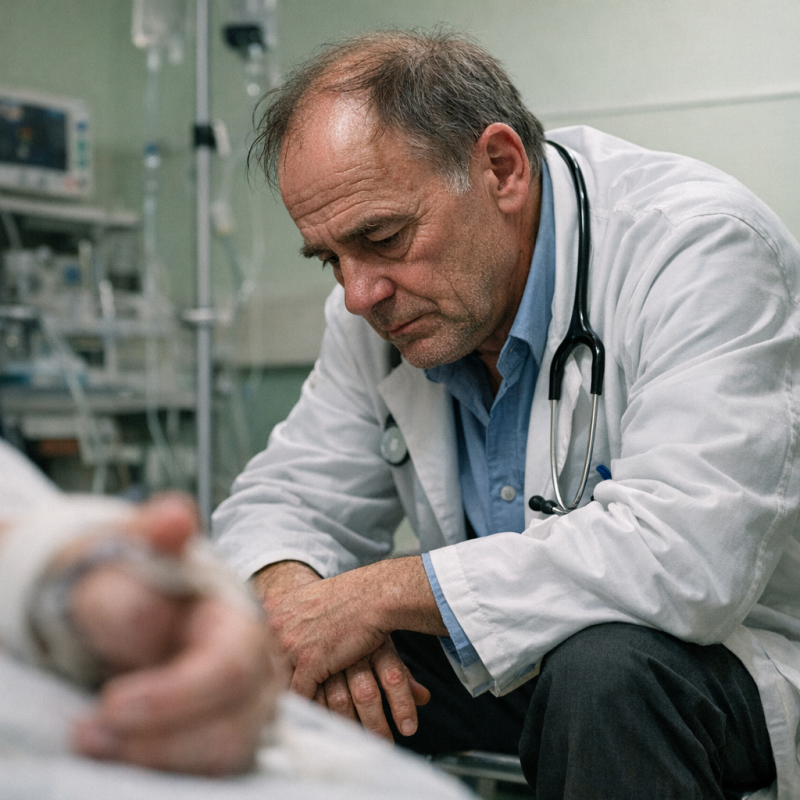 Image by FCT AI
The Symptoms
The itch came back that night, but it wasn't just an itch anymore. It was movement. I could feel something beneath my skin, like fingers tracing patterns along my spine, my ribs, spreading outward with deliberate purpose. I tried to convince myself it was nerve damage, inflammation, anything normal. But when I pressed my hand against my back, I felt ridges that hadn't been there before—raised lines that shifted when I touched them. The restraints kept me from scratching, which was probably the only thing that saved me from tearing myself open. I remember lying there in the dark, feeling whatever was inside me mapping my body like territory to claim. It wasn't random. It was methodical. Intelligent. Every few hours, the pattern would expand, new ridges forming, new areas colonized. My fever spiked to 104. I stopped sweating. My skin felt too tight, like something was stretching it from the inside. And the worst part? I could sense it learning. Adapting. Using my own body as a resource for something I couldn't begin to understand. I could feel it now, not just an itch but a presence—intelligent, hungry, and growing stronger by the hour.
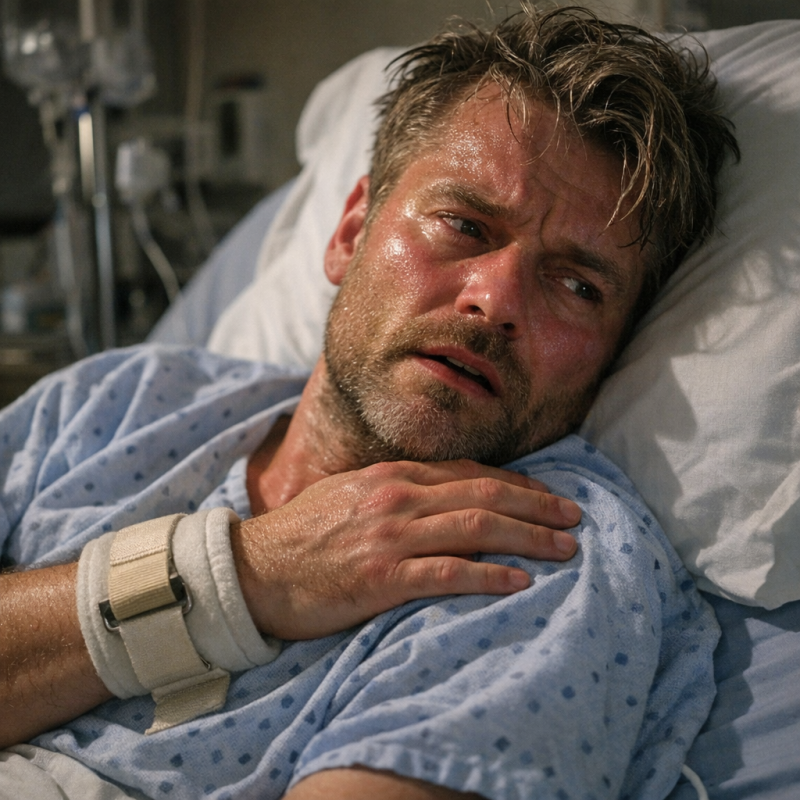 Image by FCT AI
Monica's Plan
Monica slipped into my room around 3 AM, moving like a ghost past the security camera's blind spot. She looked exhausted, terrified, but also determined in a way I hadn't seen before. 'Don't talk,' she whispered, checking the hallway. 'Just listen.' She told me that before they'd discovered my phone, before they'd found the photos, she'd already sent everything. Every document I'd photographed, every piece of evidence—she'd forwarded it all to her personal email and then to three different journalists she trusted. Major outlets. People who couldn't be bought or silenced. 'They found your phone, but they were too late,' she said. 'I sent everything the same night you gave it to me. I knew something was wrong. I knew they'd try to bury it.' My heart hammered against my ribs. 'When?' 'Two weeks ago. It takes time for journalists to verify, to build a story this big. But it's happening. I got a text from one of them yesterday—they're going to publish.' She glanced at the door, her hands shaking. She whispered: 'It's already out there. They can't contain this anymore. But we need to survive long enough for the story to break.'
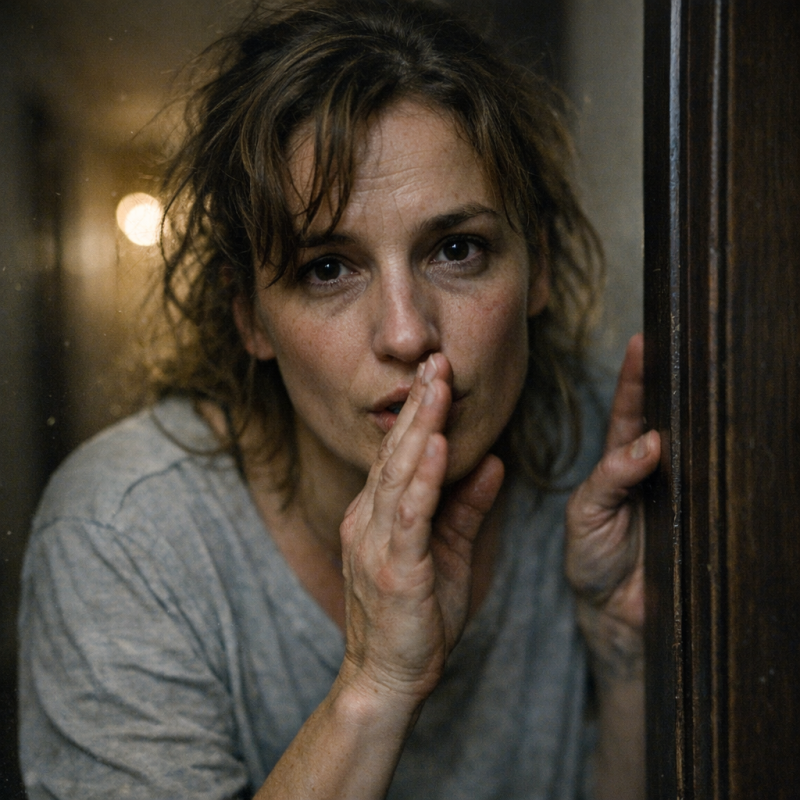 Image by FCT AI
The Breach
The alarms started at 4:47 AM. Not the normal codes we'd heard before, but something different—a piercing, continuous shriek that made my bones vibrate. Monica froze, her face going white. Through my door's window, I saw staff running, heard shouting, saw the emergency lights kick on in rotating red. Someone screamed. Not a normal scream—something primal, animal. Monica grabbed my restraints, fumbling with the locks. 'What's happening?' I asked. 'Patient Seven,' she said, her voice shaking. 'Advanced stage. They were keeping him in sub-basement isolation. Something went wrong.' The floor trembled. More screaming. And then I saw them—nurses and orderlies sprinting past my door, some of them covered in blood. The intercom crackled: 'Full facility lockdown. This is not a drill. All personnel to safe zones. Repeat: containment breach in progress.' Monica got one restraint loose, then another. My skin crawled as the sound echoed down the hallway—wet, sliding, like something massive moving through the corridors. Alarms screamed and emergency lights flashed red as something burst from the patient's back—something that moved with purpose.
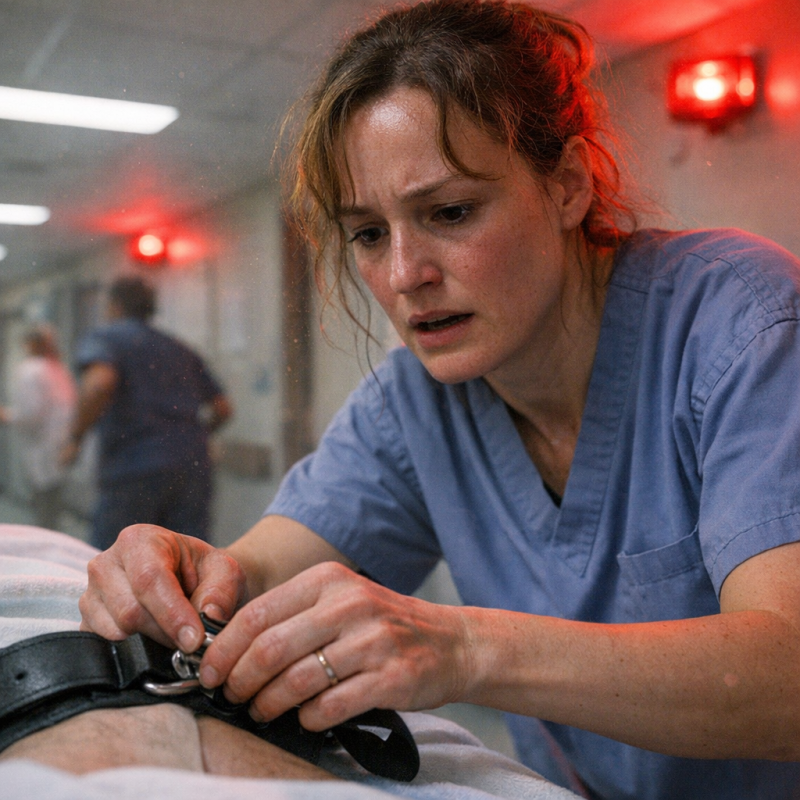 Image by FCT AI
The Escape Attempt
Monica hauled me out of bed, my legs barely working after days of restraints. 'Maintenance corridors,' she gasped. 'They're not on the main lockdown system.' We stumbled into the hallway, and I immediately wished we hadn't. Blood streaked the walls. A gurney lay overturned, restraints torn open like paper. But no bodies. That was somehow worse. Monica pulled me toward a service door I'd never noticed before, using her badge to access it. The door beeped green and we plunged into a narrow corridor lit by emergency lighting. Behind us, that wet sliding sound grew louder. We ran, my hospital gown tangling around my legs, Monica supporting half my weight. The maintenance tunnels twisted through the facility's guts—pipes overhead, concrete walls, the smell of industrial cleaner and mildew. We passed junction after junction, Monica navigating from memory. Finally, we reached an emergency exit door—solid metal with a crash bar. Monica slammed into it. Nothing. She tried again. Locked. 'No,' she whispered, checking her badge. 'This should be open. This is supposed to be open during lockdowns.' We reached the exit door, but it wouldn't open—and behind us, I heard that wet, slithering sound growing closer.
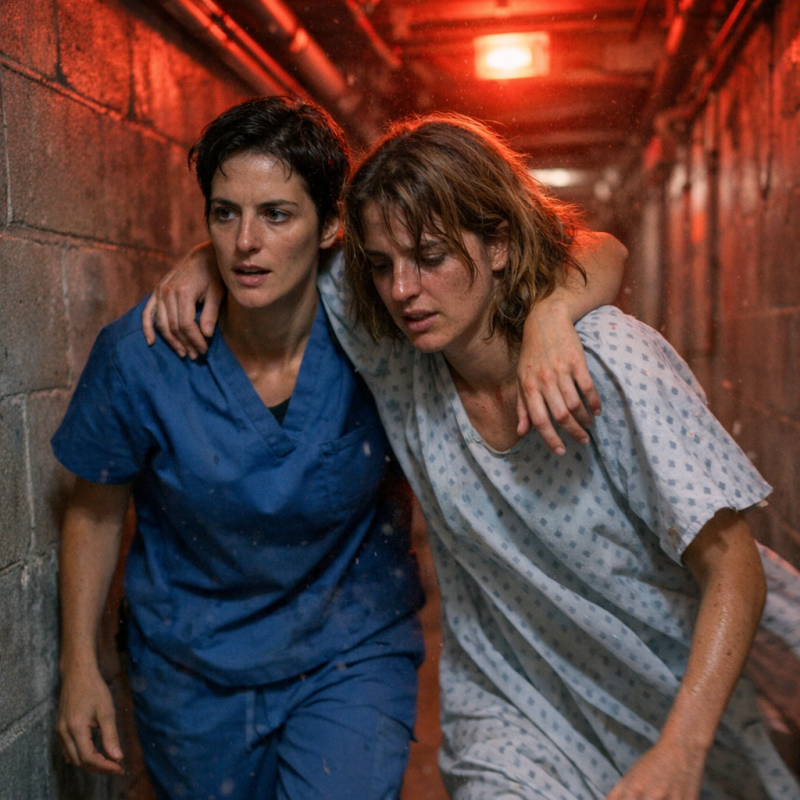 Image by FCT AI
The Sacrifice
Monica looked at me, then at the corridor we'd come from, then back at the locked door. I saw the decision form in her eyes before she spoke. 'There's another exit,' she said. 'Two junctions back, left corridor. It goes to the parking structure.' The slithering sound echoed closer. Something scraped against the pipes overhead. 'We can both make it,' I said, but she was already pushing me backward. 'No. We can't outrun it together. You're barely standing.' She pulled me to the junction, showed me the left turn. 'Run. Don't stop. Don't look back.' 'Monica—' 'Your story matters more than mine,' she said. 'Get out. Tell everyone what happened here.' She turned and ran back toward the locked door, shouting, drawing whatever was coming toward herself instead of me. I heard a door slam—she'd locked herself in one of the maintenance rooms. Buying me time. The wet sound changed direction, following her voice. I wanted to help her, wanted to go back, but my legs were already moving the other direction because she was right—her sacrifice couldn't mean nothing. Through the door's window, I watched Monica's face contort in terror as the organism reached her—and I ran, because her sacrifice couldn't be for nothing.
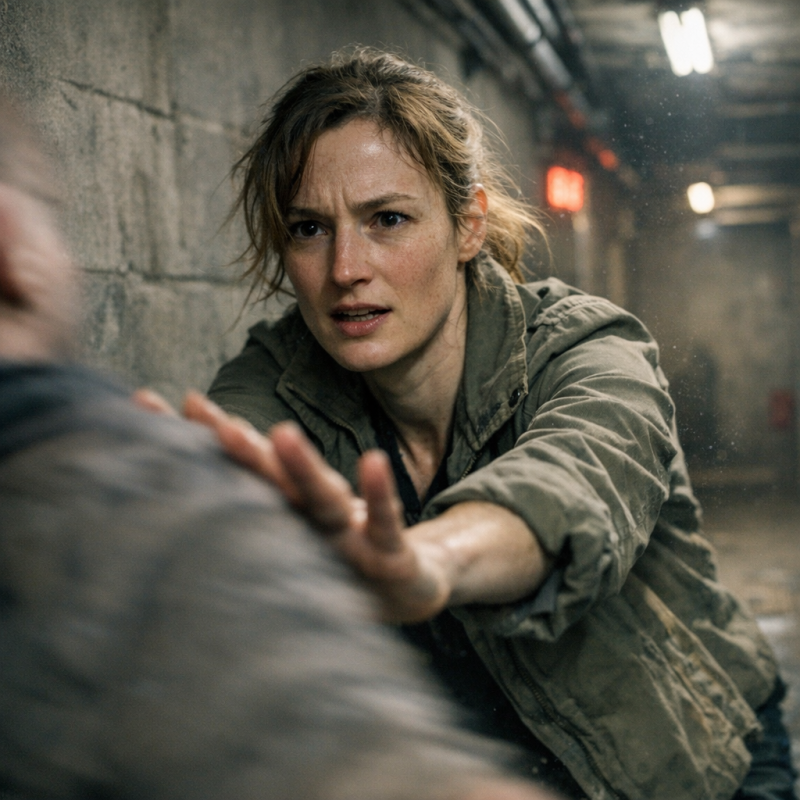 Image by FCT AI
The Confrontation with Torres
I made it three more corridors before I saw her. Ms. Torres, still in her business suit but disheveled now, pulling a rolling suitcase and moving fast toward what looked like a private elevator I'd never seen before. She froze when she saw me, her hand going to something in her jacket pocket. 'You're running,' I said, my voice raw. 'The facility's burning and you're just leaving everyone.' Her expression hardened. 'I'm doing what I can still do. Damage control. Making sure this doesn't spread beyond—' 'Beyond the people you already killed?' I stepped closer, rage giving me strength I shouldn't have had. 'Carl. Monica. Everyone you sacrificed for your research.' 'For necessary research,' she corrected. 'Do you understand what this organism represents? If we can control it, weaponize it, study it properly—' 'People are dying right now.' 'It happens in every medical trial. Every advancement requires sacrifice.' She actually believed it. I could see it in her eyes. Ms. Torres looked at me with something like pity and said: 'You think exposing this saves anyone? Some secrets protect people.'
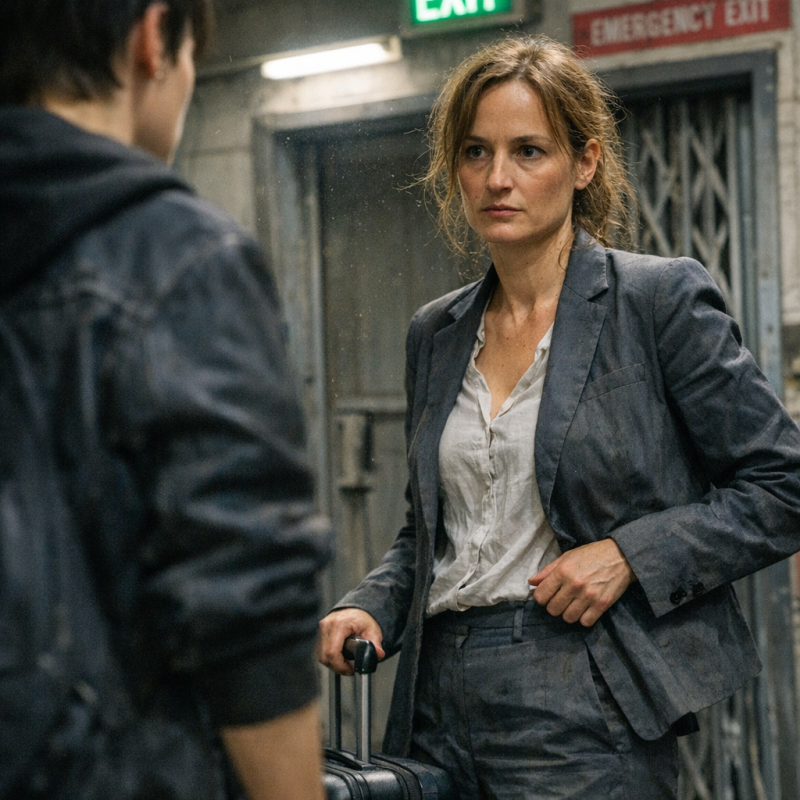 Image by FCT AI
The Fire
The explosion came from below us—a deep, earth-shaking boom that buckled the floor and sent Ms. Torres stumbling into the wall. Her suitcase fell open, scattering files and what looked like hard drives. Emergency sprinklers kicked on, then immediately began spraying something that wasn't water—some kind of chemical suppressant that burned my eyes. Smoke poured through the ventilation system, thick and black. 'Containment protocols,' Ms. Torres said, coughing. 'They're trying to sterilize the infected areas.' The lights flickered and went dark, replaced by emergency lighting that painted everything a disturbing red. Another explosion, closer this time. The floor cracked between us, a jagged line that widened into a gap. Heat blasted up from below—actual fire, not just chemical burns. Ms. Torres backed against the elevator, but the panel was dead, the power cut. She looked at me across the widening gap. 'Help me,' she said. The ceiling groaned. Chunks of concrete began to fall. I could jump the gap, pull her across, maybe we'd both make it to the stairs. Or I could run now, while I still could. Ms. Torres screamed as the ceiling collapsed between us, and I had seconds to choose—try to save her or save myself.
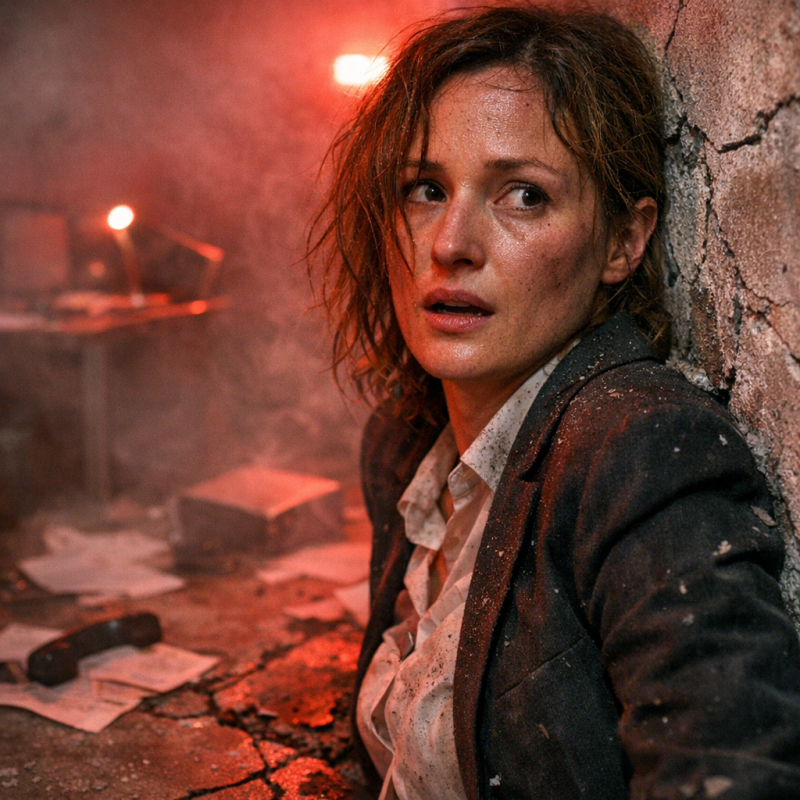 Image by FCT AI
The Choice
I ran. God help me, I turned and ran toward the emergency stairs while Ms. Torres screamed my name, screamed for help, screamed until her voice cut off with a sound I'll never forget—concrete and steel and silence. The stairs were filling with smoke, the metal handrails hot enough to burn my palms. I could barely see, barely breathe, my lungs searing with every breath. Behind me, more explosions, more ceiling collapses, the entire facility coming down around itself in what had to be a deliberate demolition. They were erasing everything. Fire licked at my heels as I climbed, my legs screaming, the organism in my back shifting and writhing like it knew we were in danger. Two flights. Three. The door at the top was jammed but I slammed into it with everything I had, and it burst open onto the parking structure. Fresh air hit me like a slap. I staggered forward, coughing, my vision blurring. Behind me, the hospital's lower levels were an inferno. I ran through smoke and flame, and behind me I heard Ms. Torres's screams cut off abruptly—and I didn't look back.
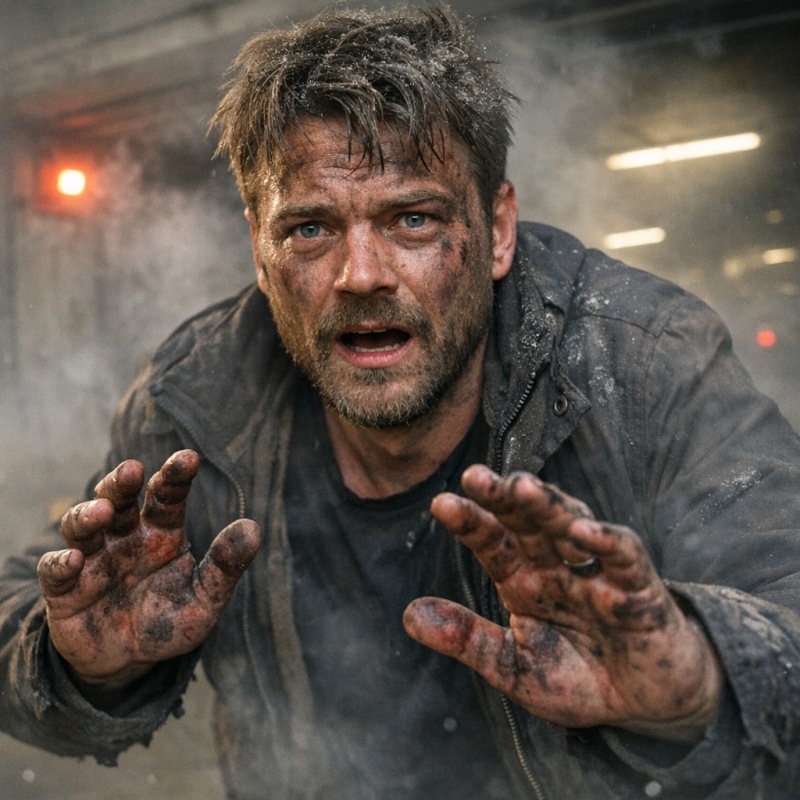 Image by FCT AI
The Surface
I burst into the parking lot coughing so hard I thought my lungs would tear. The night air was thick with smoke and ash, sirens wailing from every direction. People were running everywhere—patients in gowns, nurses crying, doctors trying to organize chaos. I collapsed against a car, my legs finally giving out, and that's when I saw them. News vans. At least five of them lined up along the perimeter fence, satellite dishes raised like antennae. Helicopters circled overhead, their searchlights cutting through the smoke. Someone grabbed my arm—a paramedic—asking if I could walk, if I was hurt. I couldn't answer. My throat was raw, my back was agony, but all I could do was stare at those cameras. Monica had done it. She'd gotten the story out before they could stop her. Federal vehicles were pulling up now, black SUVs with government plates. The building behind me groaned and collapsed further, sending up a massive plume of debris. A reporter was shouting into a microphone, the words 'biological contamination' and 'cover-up' cutting through the chaos. I stumbled into the parking lot just as news helicopters circled overhead—Monica's story had broken, and the world was watching.
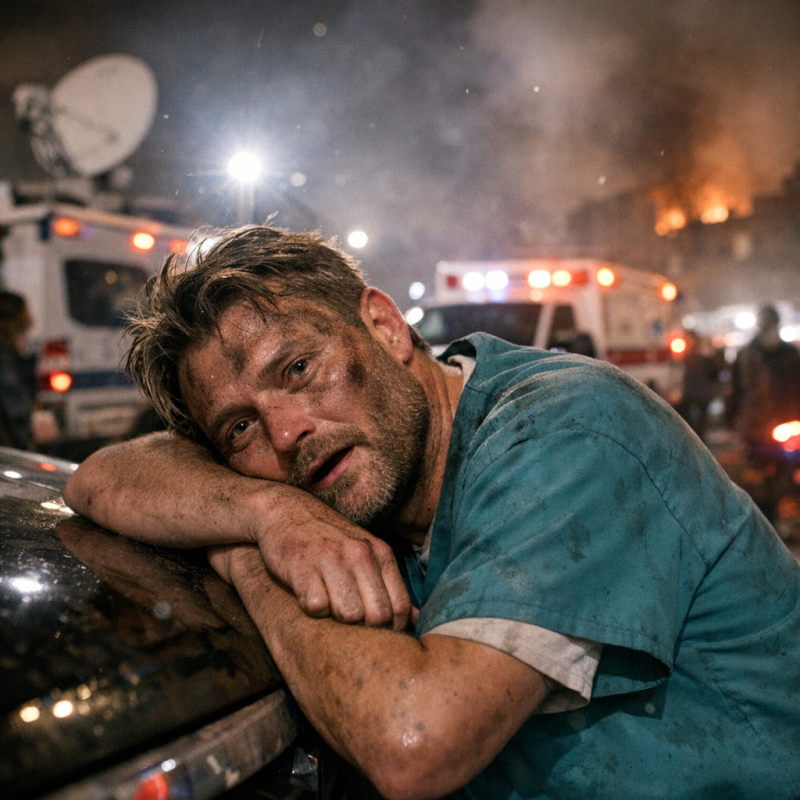 Image by FCT AI
The Aftermath
They took me to a facility three states away. I don't even know which one—they wouldn't tell me. For two weeks I was in isolation, full hazmat protocols, federal doctors running tests I didn't understand. They removed the organism in a six-hour surgery I barely remember. When I woke up, they told me it had been 'successfully extracted,' whatever that meant. The scar on my back runs from my shoulder blade to my spine, thick and raised like a rope. I touched it once and felt sick for hours. The news coverage was nonstop—I watched it on the small TV in my quarantine room. Lawsuits. Congressional hearings. The hospital administrator Ms. Torres was confirmed dead, along with seventeen others. Carl's family got a settlement. Monica won a Pulitzer. Me? I got therapy sessions twice a week and federal monitoring for the rest of my life. But here's the thing nobody talks about: sometimes I still feel it. Not pain exactly. More like a pressure. A wrongness deep under my skin that shouldn't be there anymore. They told me I was lucky—the organism had been removed before it reached critical mass. But I could still feel something wrong inside me.
The Testimony
The testimony took three days. Federal courtroom, sealed proceedings, lawyers everywhere. They wanted every detail—when I first noticed Carl scratching, what the nurses said, what I saw in the basement. I told them everything. Turned out there were others. Seventeen confirmed cases across four states, all connected to the same research initiative, all covered up. The conspiracy went higher than anyone expected—CDC officials, hospital board members, even a congressman who'd accepted campaign donations. Monica sat in the gallery every day, taking notes, her arm still in a sling. We didn't speak much. What was there to say? We'd survived something that shouldn't exist, exposed people who should have protected us. The lead investigator asked if I felt vindicated now that the truth was out. I didn't know how to answer that. Carl was still dead. Those seventeen others were still dead. Ms. Torres had burned trying to destroy evidence. Justice felt like the wrong word for what was happening. Accountability, maybe. Documentation. But not justice. They asked if I felt justice had been served, and I thought of Carl, of Monica, of all the others—and I couldn't answer.
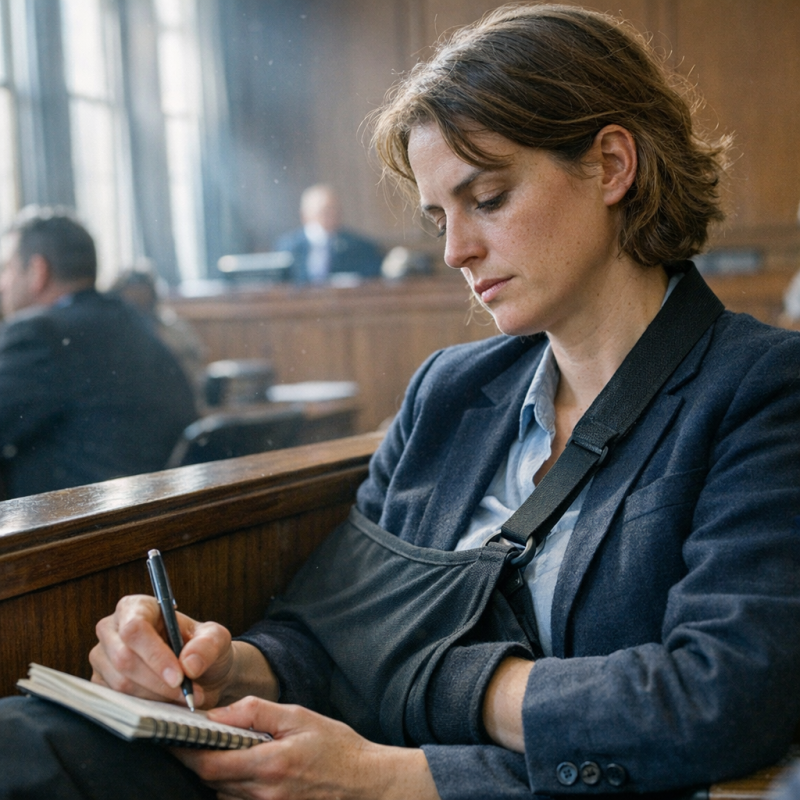 Image by FCT AI
The Itch
Six months later, I'm trying to live like a normal person. New city, new job, new apartment where nobody knows my name or my story. I see a therapist twice a week who specializes in medical trauma. We talk about survivor's guilt, about hypervigilance, about how the body remembers what the mind tries to forget. Most days are okay. I can sleep sometimes, can go hours without thinking about that hospital room or Carl's screams. But then there are the other nights. The ones where I lie awake at three in the morning, perfectly still, feeling that familiar sensation between my shoulder blades. It starts as a tickle. Then a pressure. Then something that feels almost like movement under the skin. The doctors swear they got it all—the scans are clean, the bloodwork normal. Psychological trauma, they say. Phantom sensations. The mind playing tricks. I tell myself it's phantom sensation, psychological trauma, anything but the truth—because the alternative is that they didn't get it all, and it's still there, waiting, growing. And some nights, when I can't sleep, I swear I feel it move.
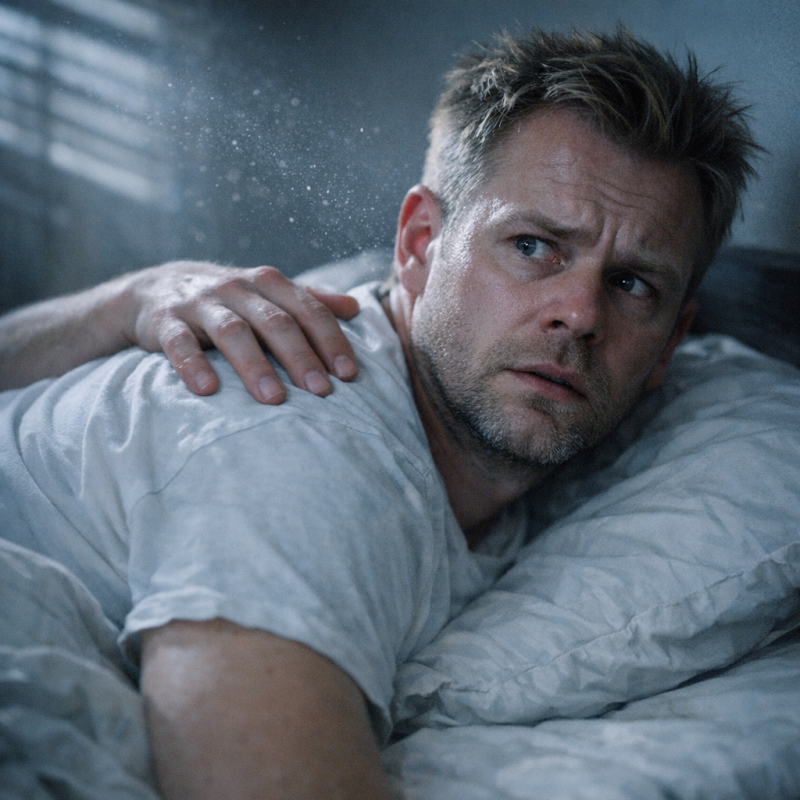 Image by FCT AI