The Proposal
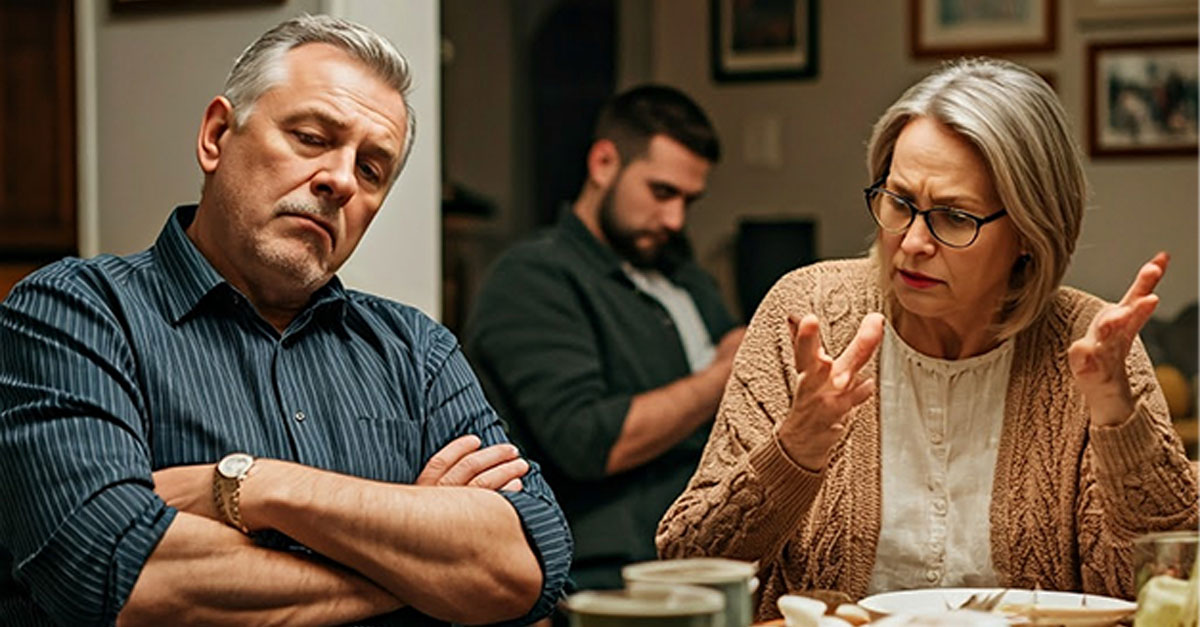
Over appetizers, my mother proposed a 'solution': Emily could keep the house, but we would let Kyle live there rent-free for two years. She said it calmly, like she was suggesting we split a restaurant bill. 'It would give Kyle time to get on his feet,' she explained, passing the salad bowl. 'And you two would still have the property. Everyone benefits.' My fork stopped halfway to my mouth. I looked at Emily, whose face had gone very still. 'He could take one of the bedrooms,' my mother continued. 'You'd barely notice he was there. And it would mean so much to him to have a stable place while he figures things out.' My father nodded along, cutting his chicken with surgical precision. 'It's a reasonable compromise,' he added. 'You get to keep your investment, Kyle gets the support he needs. We all move forward.' I couldn't believe what I was hearing. After everything—after the screaming, the warnnings, the months of silence—they were still trying to extract something from us. Emily set down her fork very carefully and asked why we would ever agree to that.
 Image by FCT AI
The Real Objective
My father explained that this was about 'preserving family harmony,' but I started to suspect it was about preserving their control. He leaned back in his chair, folding his hands like he was delivering a lecture. 'Families make sacrifices for each other,' he said. 'That's what separates us from strangers. Your brother needs help, and you have the means to provide it. That's not exploitation—that's love.' My mother nodded, her expression earnest and warm, like she genuinely believed what he was saying. 'We're not asking for much,' she added. 'Just a temporary arrangement to help Kyle stabilize. You'd be doing something truly meaningful.' Emily was gripping her napkin so hard her knuckles had gone white. I could feel my own anger building, but underneath it was something else. A creeping realization that this had nothing to do with Kyle and everything to do with them. With their need to orchestrate, to control, to make sure things went the way they'd decided. When I asked what they would do if we refused, my mother's expression went cold, and she said we'd be making a choice.
 Image by FCT AI
The Choice
My mother clarified the choice: agree to their terms, or accept that we would no longer be welcome at family events. She said it matter-of-factly, like she was explaining a store return policy. 'We can't pretend everything's fine if you're actively refusing to help your brother,' she said. 'It would be too painful. Too divisive. Family gatherings would be impossible.' My father nodded slowly. 'You'd be choosing your... financial interests over your family,' he said, stumbling slightly over the words. 'That has consequences.' I sat there, stunned, trying to process what I was hearing. They were holding our relationship over my head. Literally saying they would cut us off if we didn't hand over part of Emily's house to Kyle. The absurdity of it was almost surreal. I looked at Emily, expecting to see shock or anger, but instead she was smiling. Actually smiling. Then she laughed—a short, sharp sound that made my parents both freeze. 'You're destroying your relationship with your son over a house that isn't his?' she said.
 Image by FCT AI
Walking Out
We left before the main course arrived, and as we drove away, Emily asked how long they'd been treating me like this. I didn't answer right away. Just watched the familiar streets blur past, my parents' house disappearing in the rearview mirror. My hands were shaking on the steering wheel. Emily didn't push, just let the question hang there between us while I tried to find an answer. But the truth was, I didn't need to search for it. I already knew. 'Remember when I got into that accelerated program in high school?' I said finally. 'And they made me drop it because Kyle was struggling in his regular classes and it wasn't fair to make him feel bad?' Emily was quiet. 'Or when I won that writing contest and they asked me not to mention it at family dinners because it might hurt Kyle's feelings?' The examples kept coming, one after another, years and years of them. 'I think it's always been like this,' I finally said.
 Image by FCT AI
The Pattern Revealed
That night, I finally let myself see it clearly: my parents had been redistributing my achievements to Kyle my entire life, training me to accept it as normal. Every scholarship I'd earned that they'd downplayed. Every accomplishment I'd been asked to minimize. Every opportunity I'd been told to step back from because Kyle needed it more. It wasn't random. It wasn't even favoritism. It was a deliberate, sustained system of taking from one child to give to the other, and I'd been conditioned not to question it. They'd presented Kyle's struggles as emergencies that required my sacrifice. They'd framed my successes as lucky breaks I hadn't really earned. They'd trained me to believe that being a good son meant making myself smaller so Kyle could feel bigger. And I'd done it. For years and years, I'd done it. Emily held me while I finally let myself cry about it, and the grief felt bottomless. The house wasn't an aberration—it was the most egregious example of a system they'd perfected over decades.
 Image by FCT AI
The Evidence Review
The next morning, Emily made coffee and pulled out the notebook where we'd written everything down. We went through the list again, and this time—with the pattern finally visible—it felt like watching a magic trick explained. The scholarship money they'd 'borrowed' for Kyle's car. The birthday where they'd given him the expensive gift I'd asked for, then acted like I was materialistic for being disappointed. The college fund that had somehow been 'depleted' by the time I needed it, though Kyle had already graduated. The job opportunity at Dad's firm that went to Kyle instead of me, even though I had the better qualifications. Every single incident we'd chalked up to bad timing or circumstance or just the way things worked out—they all fit the same template. Take from one, give to the other. Minimize my success, amplify his need. Make me feel guilty for wanting what I'd earned. Emily's hand was shaking slightly as she held her pen. 'They really did this your whole life,' she said quietly. I nodded. She asked if I thought they even realized they were doing it, and I said it didn't matter—the damage was the same either way.
 Image by FCT AI
Kyle's Angry Visit
Three days later, Kyle showed up at our apartment. No text, no warning—just pounding on the door at eight in the evening. Emily answered, and I heard his voice before I saw him, loud and accusatory. 'We need to talk,' he said, pushing past her into our living room. His face was flushed, his movements jerky with anger. He demanded to know why we were 'destroying the family' over something so petty, why I couldn't just be reasonable for once, why I always had to make everything difficult. I stood there listening, and for the first time, I didn't feel defensive. I felt something closer to pity. He genuinely believed this was about stubbornness, about me being inflexible. He couldn't see the pattern because he'd been on the receiving end of it his entire life. To him, getting what he needed was just how things worked. Emily moved closer to me, a silent show of support. Kyle was still talking, gesturing wildly, listing all the ways I was being selfish. Finally, I interrupted him. I asked him how many times he'd received something that was meant for me, and he looked genuinely confused by the question.
 Image by FCT AI
The Final Demand
My father called two days later. His voice had that cold, formal quality he used when he wanted to sound authoritative. He didn't ask how I was doing. He didn't acknowledge the conversation we'd had or the things I'd said. He delivered an ultimatum like he was reading from a script: agree to let Kyle stay in the house rent-free until he 'got on his feet,' or face the consequences. When I asked what consequences, he said it plainly—he would cut me out of his will entirely. Remove me as a beneficiary, revise all the estate planning, make it official. He was offering me one last chance to 'do the right thing for this family.' The silence stretched between us while I processed what he'd just said. He really thought this would work. He genuinely believed that saying he would disinherit me would bring me back in line, make me compliant again. It was the same leverage he'd always used, just more explicit. I thought about all the years I'd twisted myself into shapes to earn their approval, to be the good son, to deserve my place in the family. I told him to do what he thought was right, and for the first time in our relationship, he had nothing to say.
 Image by FCT AI
The Will Revision
The letter arrived exactly one week later, delivered by certified mail. It was from my parents' attorney, formatted on expensive letterhead with formal language. I read it standing in our kitchen while Emily watched my face. The contents were straightforward: I had been formally removed from their will, effective immediately. All provisions naming me as a beneficiary had been revoked. The estate would be divided between Kyle and several charitable organizations. There would be no inheritance, no family heirlooms, no final gesture of parental love translated into assets. They'd actually done it. They'd made it official. I set the letter down on the counter and waited for the grief to hit, for the sense of loss and rejection I'd imagined I'd feel. But it didn't come. Instead, I felt something unexpected—a lightness in my chest, like a weight I'd been carrying had finally been lifted. They'd spent my whole life holding their approval and their money over my head, and now they'd removed it entirely. Emily came over and read the letter herself, her expression hardening. She asked if I was upset, and I realized I felt lighter than I had in years.
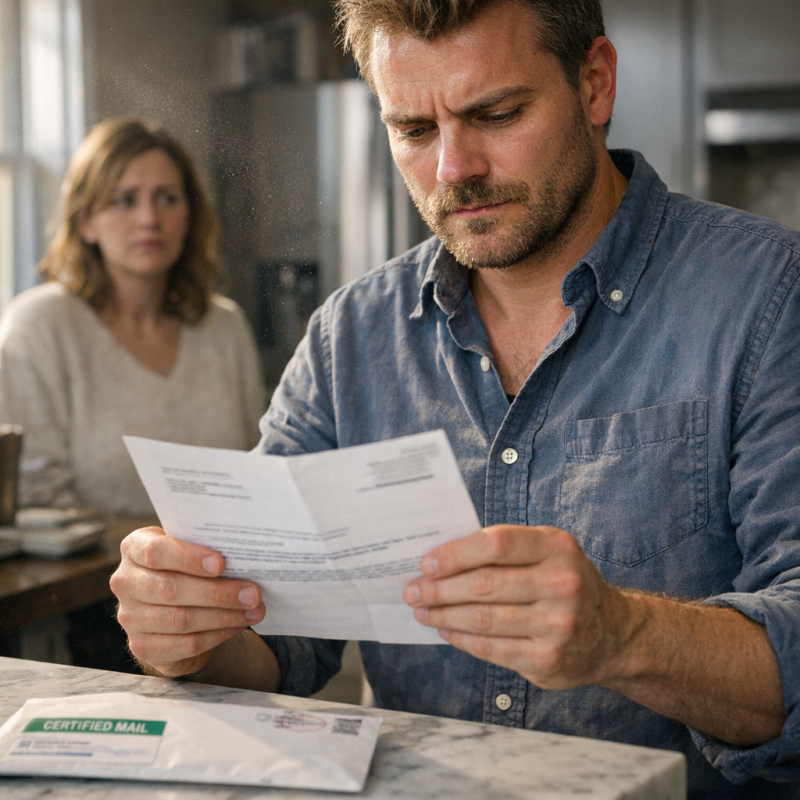 Image by FCT AI
The Social Fracture
Word spread through the extended family faster than I expected. My aunt called first, her voice careful and probing. Then my uncle. Then two cousins I hadn't spoken to in months. They all asked for 'my side of the story,' framing it like they wanted to be fair, to hear both perspectives before judging. At first, I kept it vague, not wanting to air everything publicly. But after the third call, I stopped protecting my parents' image. I told them the truth—about the house, about the pattern of taking from me to give to Kyle, about the ultimatum and the will. I laid it out plainly, without exaggeration or emotion. And here's what surprised me: the silence on the other end of each call. Not shock, not disbelief—something more like recognition. My aunt finally said, 'I always wondered about that.' My uncle admitted he'd seen 'some of that dynamic' over the years. One cousin said quietly, 'Yeah, that tracks.' They already knew. Maybe not the specifics, but the general shape of it. They'd watched my parents favor Kyle my whole life, and nobody had said anything. I told them the truth, and the silence on the other end told me most of them already knew what my parents were like.
 Image by FCT AI
Kyle's Realization
Kyle called at eleven-thirty on a Thursday night. I almost didn't answer—his name on my phone triggered an immediate stress response by that point. But something made me pick up. His voice was thick. He'd been drinking. He asked if I really thought our parents had favored him, and there was something different in his tone—not anger, but genuine uncertainty. Like he'd been sitting with the question I'd asked him and couldn't dismiss it anymore. I could hear real doubt in his voice, maybe for the first time ever. He listed things defensively at first: times they'd been hard on him, expectations they'd had, ways he'd struggled. But his voice kept trailing off, like he was remembering other things too. Things that didn't fit the narrative he'd been telling himself. I didn't argue with him. I didn't list all the evidence again. I just listened while he worked through it aloud, his certainty crumbling in real-time. Finally, he asked me directly: 'Did they really do that? Your whole life?' I took a breath. I told him the truth would hurt, but he deserved to know it anyway.
 Image by FCT AI
The Apology That Wasn't
My mother's email arrived on a Sunday morning. The subject line said 'Apology,' and for one stupid moment, I felt a flicker of hope. Maybe she'd actually reflected. Maybe something had broken through. I opened it. The first paragraph had the right words—'I'm sorry,' 'I regret,' 'I never meant to hurt you.' But by the second paragraph, the tone shifted. She said she'd been 'forced into this position' by my inflexibility. That she'd 'tried everything' to make me see reason. That a better son would have understood what family required and made the necessary sacrifices. The email went on for three more paragraphs, each one blaming me more explicitly for 'tearing the family apart' over my 'stubbornness and pride.' By the end, it was clear—this wasn't an apology. It was a final attempt to make me feel guilty enough to cave. I read it twice, waiting to feel something other than tired resignation. Then I forwarded it to Emily without adding any comment of my own. Her response came back ninety seconds later, just one word: 'Unbelievable.'
 Image by FCT AI
Emily's Family
Emily's mother called that evening. Not Emily—her mother called me directly, which she'd never done before. Her voice was warm and concerned, asking how I was holding up, if there was anything I needed. I found myself tearing up just from the simple kindness of it. When I thanked her for checking in, she said something that made my throat tight: 'Family should build you up, not tear you down.' It was such a simple statement, but it hit me hard. She told me about watching Emily grow up, about how she and her husband had always tried to celebrate both their daughters equally, to support without controlling, to love without conditions. She said it so matter-of-factly, like that was just what parents did. Like it was the baseline, not some impossible standard. We talked for twenty minutes about nothing important—her garden, a book she was reading, plans for the holidays. Just normal, easy conversation with no ulterior motives or hidden tests. After we hung up, I sat there holding my phone, and something clicked into place. I realized I'd found the family I needed—it just wasn't the one I was born into.
 Image by FCT AI
The Final Message
The text came three days after my conversation with Emily's mother. Just a few lines, typed out with that deliberate formality my father used when he wanted to sound reasonable. 'We did our best raising you,' it read. 'We provided everything you needed and tried to teach you the values that mattered to us. If you can't see that, if you choose to interpret our guidance as something negative, that's a reflection of your perspective, not our intentions. We won't apologize for trying to raise you right.' I read it twice, sitting on the couch with Emily beside me. She didn't say anything, just put her hand on my knee and waited. There was no anger this time, no hurt—just this calm, clear understanding that this was who they were. They would never see it differently. They would never acknowledge what they'd done, never question their own narrative. I could spend the rest of my life trying to make them understand, or I could just... stop. So I opened my phone settings, scrolled to Dad's contact, and hit 'Block.' Then I did the same for Mom's number. The finality of that small action felt enormous.
 Image by FCT AI
Six Months Later
Six months later, Emily and I hosted Thanksgiving for the first time. Our dining table—the one we'd picked out together at that second-hand furniture store—was crowded with mismatched chairs and people who'd chosen to be there. Emily's parents, her sister and brother-in-law, three friends from work, a couple we'd met at a neighborhood barbecue. The house smelled like roasted turkey and the pumpkin pie Emily's mom had brought, and there was this easy laughter filling every room. Nobody asked why my family wasn't there. Emily had told her parents months ago, and they'd simply nodded and said we were always welcome at their table. At some point during dinner, I looked around at all these faces—people who showed up because they wanted to, not because they were obligated—and something settled in my chest. I'd stopped checking my phone obsessively weeks ago. Stopped wondering if today would be the day they'd call. Stopped rehearsing what I'd say if they ever apologized. Somewhere along the way, without really noticing, I'd stopped waiting for my phone to ring with an apology I would never receive.
 Image by FCT AI
Kyle's Coffee
Kyle reached out in January, asking to meet for coffee. I almost didn't go—Emily left it entirely up to me, no pressure either way. But something made me say yes, maybe curiosity, maybe the tiny hope that some part of my old life could be salvaged. We met at a cafe halfway between our places, and he looked different. Tired, maybe, or just older. He ordered, we sat down, and after a long silence, he said, 'I'm sorry.' Not defensively, not with excuses attached. Just those two words. Then he told me he'd started therapy, that his girlfriend had pointed out some things about how our family operated, how he'd benefited from a dynamic he'd never questioned. He said he was starting to see what I'd sacrificed for him, how I'd been treated differently, how he'd just... let it happen. I won't lie—part of me wanted to unload everything, to make him feel the full weight of those years. But mostly I just felt tired. 'We can't change the past,' I told him, stirring my coffee. 'But we can decide what our relationship looks like going forward.'
 Image by FCT AI
Our House
Emily and I stood in our backyard on a Sunday morning in early spring, coffee mugs in hand, watching the sun burn off the morning fog. The house behind us—the one that had caused so much conflict, so much pain—looked solid and peaceful in the light. We'd painted the shutters last weekend, planted herbs along the fence, hung string lights on the patio. Small things, but they were ours. Nobody had given us permission to do them. Nobody had judged whether we deserved them. We'd just... done them. Emily leaned against me, and I thought about that text from my father, about all those years of trying to prove I was worthy of basic respect. About how I'd finally stopped auditioning for a role I was never going to get. I understood now that I'd never needed their permission to deserve what I'd earned—not the house, not my success, not my happiness. They could keep their narrative, their justifications, their version of events. I had my own life now, built on my own terms. For the first time in my life, I wasn't waiting for someone to tell me I'd figured it out—I already had.
 Image by FCT AI